MER 319: Art at Work–People, Power and Cultural Production
Dear Friends and Comrades,
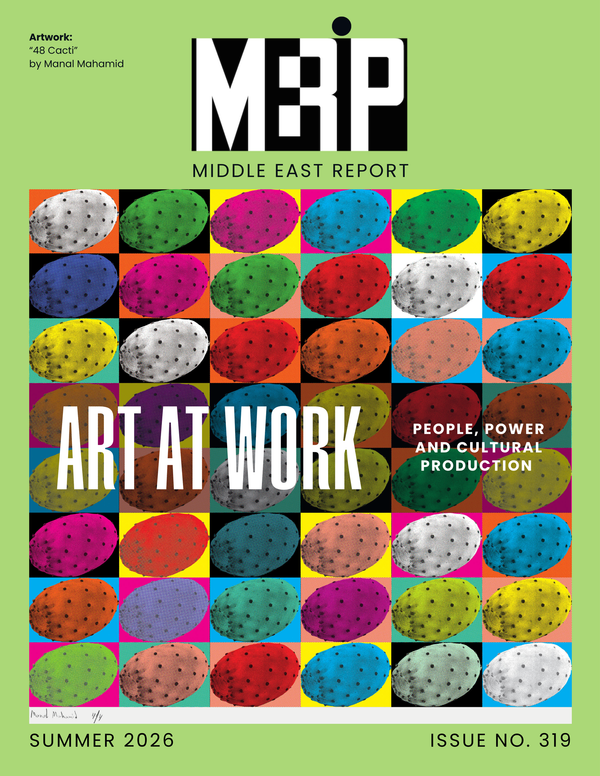
We’re thrilled to share Issue 319 of Middle East Report, “Art at Work–People, Power and Cultural Production.” Across the region today, art is being made, redefined and reimagined under extreme conditions of war, political upheaval and the interplay of state and market capital. Through articles, visual essays, interviews and reviews, “Art at Work” examines how artists struggle with the powerful forces of colonialism, imperialism and neoliberalism and seek to chart their own paths.
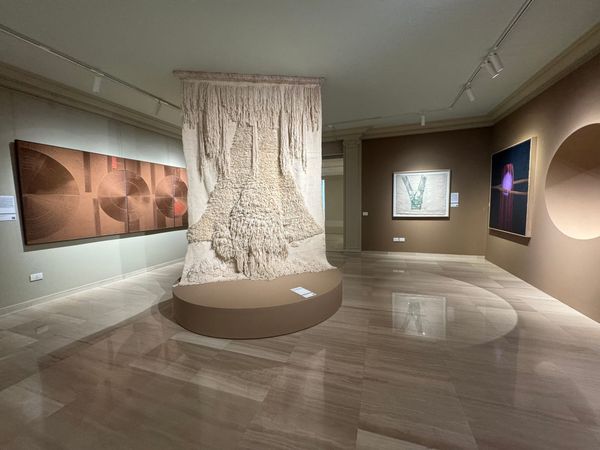
At the beginning of this issue are two visual essays—a rare format for MERIP—that center Palestinian and Lebanese art in a time of genocide. Jana Traboulsi provides a moving tour through her recent work, as well as the art of Mazen Kerbaj and Bahij Jaroudi, to reflect on what it means to look at and to draw war and genocide as witnessed through social media. Curator Rana Anani provides a visual walk through of Mahmoud Alhaj’s 2024 exhibition “Control Anatomy” that spans decades of work under occupation, war and surveillance in Gaza.
Two pieces consider the politics of culture in Iran past and present. Parham Ghalamdar’s interview with Hamidreza Pejman, which we previewed two weeks ago, grapples with how art and culture institutions have navigated the ongoing US and Israeli war on Iran. Nafiseh Sharifi provides us with a history of the soundtrack of protest in Iran over the last 30 years—from the student anthems of the reformist 1990s to the viral songs of Woman, Life, Freedom and the Dey protests earlier this year.
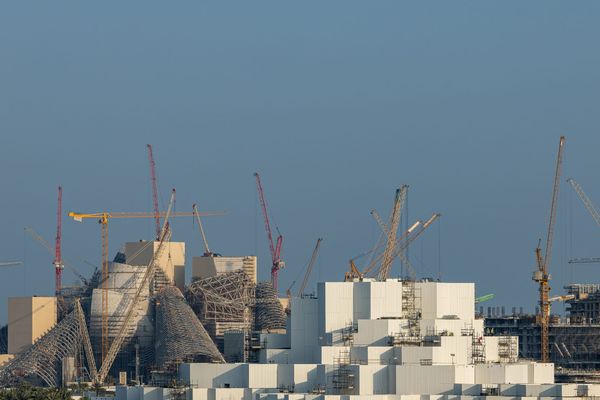
Massive state-sponsored and capital-intensive projects in the UAE and Qatar over the past few decades have resulted in enormous new museums and the arrival of prestigious international festivals. Abdullah al-Mutairi and Shir Alon each explore new perspectives on how states, markets and neoliberal logics have reshaped the practice and politics of art exhibition in the region.
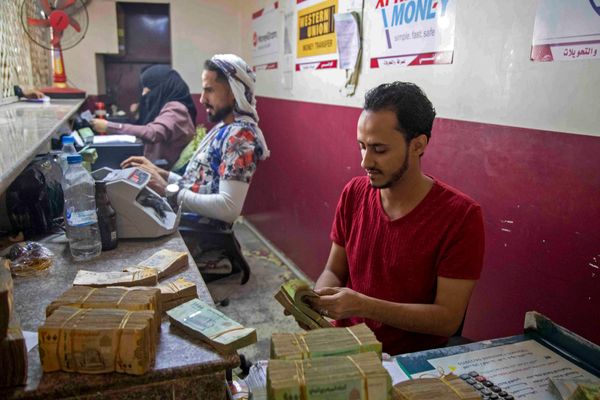
Looking at a very different market, Nermin Elsherif’s exposé on the Arab AI slop industry, which we previewed last week, examines the visual aesthetics, politics and precarious labor in less traditional creative work that is filling social media feeds.
In a similar vein, the Amman-based researcher Arran Walshe reports on the ebbs and flows of the heavy metal, alternative and dance music scenes in the Jordanian capital. Through interviews with local artists, he examines the impact that international aid and state control have on creative projects and reveals the struggles artists face as a result.
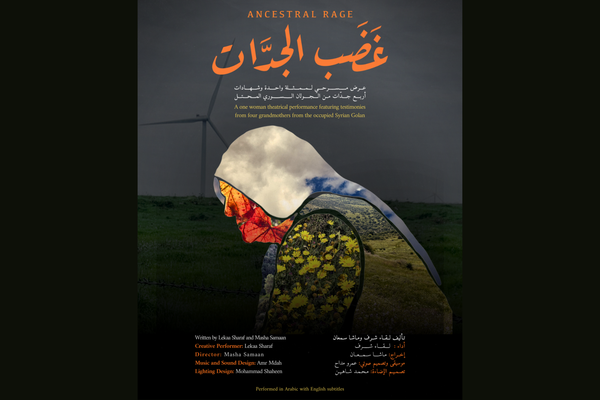
Since the fall of Bashar al-Asad in late 2024, politics in Syria’s liminal spaces have become particularly fraught as Ahmad al-Sharaa’s new government has sought to re-incorporate them into a unified Syria. In this issue, an interview with the playwright Lekaa Sharaf about her 2025 production “Ancestral Rage” considers the role of theater in the Golan Heights as Israel’s occupation has deepened over the last two years. And, MERIP’s editorial assistant Heidi Affi dives into a detailed exploration of the wide range of music found among the peoples of the Jazira—the region between the Tigris and Euphrates rivers–complete with embedded music videos.
This issue is the product of an overwhelming response to our call for pitches earlier this year. “Art at Work” is a testament to the community MERIP serves and the support of our readers. We encourage you to share these articles in your networks and, as always, let us know what you think by responding to this email.
In Solidarity,
James Ryan
Executive Director
Every issue of Middle East Report is published without paywalls. We rely on donations from our readers to keep it that way. Make a one-time or monthly donation today!