Soundtrack of Dissent—The Music of Protest in Iran
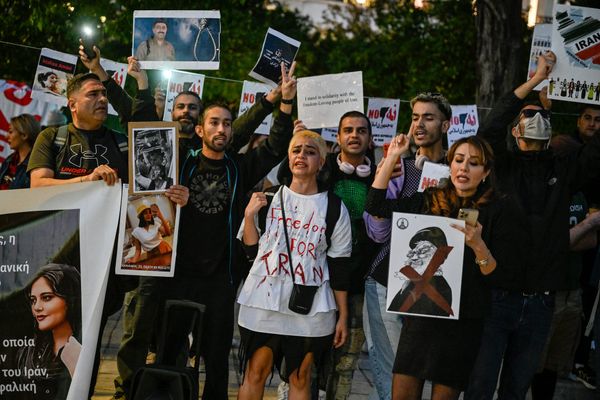
In February 2026, one month after mass protests in Iran led to a government crackdown killing thousands, Shervin Hajipour released a new song from inside the country. Hajipour had become internationally known during the Woman, Life, Freedom protests of 2022, when his song “Baraye” went viral before he was arrested by the authorities. His new song, “Iranam” (I Am Iran), was dedicated to the victims of what he called “the bloody month of Dey,” referring to the state violence of the previous month.
Published on Hajipour’s Instagram and YouTube channel, the video is short, about two minutes. It begins with him in his room, singing:
YouTube video of "Iranam" by Shervin Hajipour, February 2026.
The boot is on my throat
The noose is round my neck
Lash marks scar my skin
Yet still, I speak up
The music swells, and the screen fills with black-and-white images of the young men and women killed by the state. The video ends with a long list of their names. The lyrics insist that even death cannot stop resistance: “my lifeless body will still speak up,” he sings. In the video, he is careful to note that the song was produced entirely alone and that no one other than himself bears responsibility for its release, a precaution intended to protect others from possible prosecution.
The song was responding directly to the events of January 2026, when, after years of rising inflation and economic deterioration, a sharp currency devaluation pushed millions over the edge. The protests that erupted across the country were the largest since 2022.
Iran has a long history of employing music within protest movements, with many songs enduring across generations, from student activism in the reform era to the Green Movement in 2009. While in prior decades protestors often turned to existing songs with layered, covert meanings, since 2022, movements have seen songs like “Iranam” that name repression and grievances more openly and circulate through digital platforms that allow this music to reach new audiences and levels of virality.
While in prior decades protestors often turned to existing songs with layered, covert meanings, since 2022, movements have seen songs like “Iranam” that name repression and grievances more openly.
In 2000, the student movement in Iran was at its peak. Campus mobilizing had begun in July 1999, when university students, who had been central to Mohammad Khatami’s presidential election in 1997 and the rise of the reform government in Iran, protested the closure of the reformist newspaper Salam.[1] In response, security forces along with Ansar-e Hezbollah, a plainclothes paramilitary organization, raided Tehran University dormitories, beating and killing students.
In December of 2000, students at universities across Tehran skipped classes and gathered in Tarbiat Modarres University to hear President Khatami speak on Student Day, which commemorates the killing of three university students by the Shah’s forces in 1953. Khatami was the first president to go to university campuses on that day to speak and hear students. I was among the students at the December gatherings, where a song—“Yar-e Dabestani-ye Man” (My Schoolmate)—was played on speakers as the crowd sang along:
YouTube video of “Yar-e Dabestani-ye Man” (My Schoolmate).
My schoolmate, you are with me and alongside me
The rod of teacher strikes us
You are my held-back tears and my sighs
Your name and mine are carved on this blackboard
The wand of injustice and oppression still marks our bodies
The lyrics were simple, repetitive and easy to chant. They spoke of sharing the same fate before an oppressive authority, of a power that marks their bodies. There were no direct political references, but the language of collective endurance resonated with students:
Your hands and mine must tear down these curtains
Who but you and I can come to our aid?
The song’s political meaning was rooted in its history. It had originally been sung by Iranian singer and composer Fereydoun Foroughi for the film Az Faryad ta Teror (From Cry to Assassination), about three school friends whose lives take different paths in pre-revolutionary Iran. One of them was drawn into an underground group plotting an assassination. The film, which came out in 1980, one year after the revolution that put the Islamic government into power, was banned within a month of its release. Foroughi’s voice was also censored; the authorities ordered it removed from the film, and the director was forced to have another singer, Jamshid Jam, re-record the song. Foroughi, though not officially banned at the time the film was made, was a well-known and politically active singer whose music had been restricted under the government of Mohammad Reza Shah Pahlavi. After the revolution, his association with pre-revolutionary popular culture made him unacceptable to the new authorities.
The song’s political meaning was rooted in its history.
This censorship was part of a larger effort by the government under the supreme leader, Ayatollah Ruhollah Khomeini, to control music in the wake of the revolution. A new Ministry of Culture and Islamic Guidance, known as Ershad, issued permits of approval for every album, song lyric and concert. Western and pre-revolutionary pop music, like that of Fereydoun Foroughi, was banned, and women were prohibited from singing in public. For years Persian classical and traditional music was the only music that remained within the bounds of the permissible. When Ali Khamenei became supreme leader, he issued fatwas (religious opinions) declaring music incompatible with Islamic values and in 1996 ruled that music education in schools was “contrary to the goals and teachings of Islam.”[2] Under Khatami’s reform government, which lasted from 1997 to 2005, some of these restrictions were eased. Ershad began granting permits more freely and a popular music scene reemerged.
It was in this context that Jamshid Jam’s “Yar-e Dabestani-ye Man” formed the soundtrack of the student rallies of the early 2000s. In 2002, the song took on an additional significance. After the landslide victory of reformists in the February 2000 parliamentary elections, the conservative-controlled judiciary responded by closing down more than 60 publications—in what became known as the “great newspaper massacre”—and bringing charges of apostasy against intellectuals who questioned clerical authority.[3] While students had been mobilizing since 1999 against the assault on free expression, mass student protests broke out across the country in 2002 after Hashem Aghajari, a history professor at Tarbiat Modarres University, was sentenced to death. Aghajari had called for “Islamic Protestantism” in a public lecture, declaring that followers of Islam ought to respect human rights rather than serve the absolute authority of a religious establishment.[4]
Students at Tehran University marched in November 2002 from the Faculty of Social Sciences in the Gisha neighborhood toward the main campus on Enghelab Street, holding hands and singing “Yar-e Dabestani-ye Man.” Police forces, along with members of Ansar-e Hezbollah, trapped students inside the main campus and arrested organizers. It was one of the biggest protests since 1999. In late November, Khamenei ordered a judicial review of Aghajari’s sentence.
“Yar-e Dabestani-ye Man,” which had come to prominence at Khatami’s rallies, became the song of a movement that went on to criticize the government it had helped elect. To this day, it remains tied to universities and students, sung by anti-government and pro-government groups alike. During the recent war on Iran, it appeared in AI-generated, Lego-style propaganda animations released by Iranian media groups, set to footage of a university lecturer teaching his students online from the ruins of his bombed classroom.
During the 2009 presidential election contesting then-President Mahmoud Ahmadinejad’s hardline government, another song became an anthem. During the campaign of reformist candidate Mir-Hossein Mousavi, the song “Aftab Karan-e Jangal,” also known as “Sar Umad Zemestun” (Winter Has Ended), was played at rallies and served as the theme song for his campaign film.
The song had radical origins. It belonged to the Organization of Iranian People’s Fadai Guerrillas, a leftist armed group active before and during the revolution, whose members were later persecuted by the Islamic Republic. The song referred to the Siahkal incident in 1971, during which members of the group were brutally crushed by the Pahlavi regime.
Winter has ended
Spring has blossomed
The mountains are fields of tulips
The tulips are awake
In the mountains they are planting sunshine, flower by flower
Like “Yar-e Dabestani-ye Man,” the language is coded. Winter stands for oppression and spring for its end. The tulips are the martyrs, and the “they” who plant sunshine in the mountains are the guerrillas.
The revolutionary generation have their own memories of this song. It circulated on cassettes among both Islamist and leftist student groups. My mother remembers singing it loudly and freely as a university student while hiking in the Alborz mountains north of Tehran in the 1970s.
In 2009, the song’s meaning was transposed onto another place and time. Winter now stood for Ahmadinejad and his government; spring for Mousavi and the hope for another reform era. That a song born from the leftist guerrilla movement became the anthem of Mousavi, a former prime minister in the Islamist camp, demonstrates how the covert messages embedded in music could be repurposed across very different political positions.
That a song born from the leftist guerrilla movement became the anthem of Mousavi... demonstrates how the covert messages embedded in music could be repurposed across very different political positions.
The main organizers of his campaign’s youth branch belonged to the generation that had entered universities during the student movement and had seen firsthand how “Yar-e Dabestani-ye Man” had become an anthem of unity and collective identity. Singing this older song at Mousavi's rallies, a song that his own generation remembered, was a way of building solidarity around their cause.
When Ahmadinejad was declared the winner in results widely seen as fraudulent, millions came out to the streets in what became known as the Green Movement. The government responded by suppressing the protests and arresting people. The song, which continues to recall the Green Movement, became a backdrop to protest videos and reels that have circulated online in the years since.
The mid-2000s through to the Green Movement marked a political and technological turning point. Under Ahmadinejad, many musicians were forced to stop performing or leave the country, leading to the emergence of an underground music scene in Iran that used the new tools of the internet.[5] For example, when the rapper Hichkas was refused a permit for his album Jangal-e Asfalt (Asphalt Jungle), he released it in 2006 for free on Iranian websites. It spread rapidly through the Persian blogosphere. Other musicians followed, distributing their work online and sharing it by Bluetooth from phone to phone, a practice that continues today, expedited by Telegram channels and social media.
In the subsequent decade, social media became the main space where Iranians documented and shared content the state tried to suppress. The authorities responded with arrests, internet shutdowns and censorship. Facebook, Twitter and YouTube were blocked during the Green Movement, and in 2011 the state established a cyber police unit, FATA, to monitor online content. In 2018, Telegram was added to the list. With the Woman, Life, Freedom uprisings of 2022, Instagram was blocked. The repeated efforts to block these platforms testified to their power and potential. Iranians reached blocked platforms through VPNs, even as what they produced and shared there was subject to surveillance.
In September 2022, when Mahsa Amini—a 22-year-old Kurdish woman—was killed in the custody of the morality police in Tehran, her death sparked the Woman, Life, Freedom movement. The mass protests were led by a generation of Iranians who had grown up with social media. Many of them were children during the Green Movement. Some were born in its aftermath.
At the start of the protests, people set images and videos of protesters to existing songs. Reels of women burning their hijabs and cutting their hair were accompanied by Tom Odell’s “Another Love.” The 2012 song by the British singer-songwriter had gone viral in 2022 in TikTok videos supporting Ukraine in the Russian war before being picked up by Iranian activists. But as the movement progressed, original songs also emerged from the protests. Unlike the soundtracks of previous uprisings, they were not borrowed or repurposed but came directly from the movement.
Unlike the soundtracks of previous uprisings, they were not borrowed or repurposed but came directly from the movement.
Hajipour’s “Baraye” was emblematic. At the start of the protests, a trend emerged on X under the hashtag baraye (for the sake of), where users shared why they were protesting. Hajipour gathered these tweets and turned them into lyrics. He released the resulting song on Instagram on September 27, 2022, singing from his bedroom:
YouTube video of Shervin Hajipour’s “Baraye,” September 2022.
For dancing in the street
For the fear of kissing your beloved in public
For my sister, your sister, our sisters
For changing these rusted brains
For shame of poverty
For yearning for an ordinary life
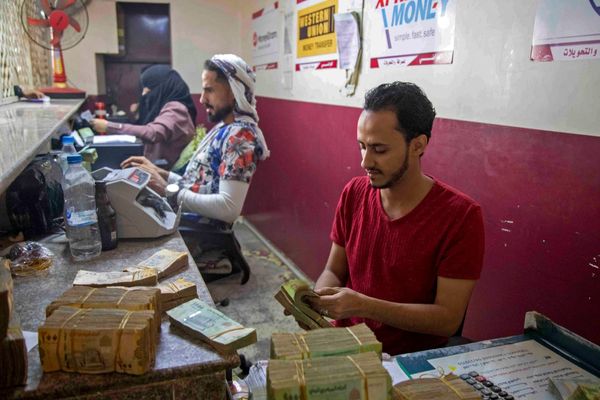
In two days, the song gained 40 million views online. It spoke to economic hardship, forced religious regulations, air pollution, the impossibility of imagining a future. It resonated across generations, classes and ethnicities but especially with the young, who had grown up with soaring inflation, mass youth unemployment and the constant erosion of their living standards. By 2020, around a quarter of young men and over 40 percent of young women aged 15 to 24 were out of work despite their education. Inflation passed 42 percent by 2022 as the economy contracted under renewed US sanctions.[6] Listening to the song then, and even now, is emotional for Iranians—as those demands remain unfulfilled.
The song’s reach extended beyond social media. It could be heard in cars, supermarkets and shops across Tehran. While passing anti-riot forces positioned at roundabouts, we would turn up the volume in our car. Playing it loudly became a form of solidarity and collective defiance. When we heard it from another car, we showed victory signs or honked. For people too afraid to join the street demonstrations, playing “Baraye” became an alternative means of protest.
Another song shared online around the same time was “Sorud-e Zan” (Woman’s Anthem), sung by Mehdi Yarrahi backed by a choir of men and women. The song was released on social media in October 2022. Like “Baraye,” it differed from the anthems of earlier movements in its directness, though its language was more revolutionary in its call to action:
YouTube video of “Sorud-e Zan” (Woman’s Anthem), sung by Mehdi Yarrahi backed by a choir of men and women, October 2022.
Woman, Life, Freedom
Sing!
So that the city be filled with the anthem, so grand
So that this homeland grows into the homeland,
At night,
They dance along the streets, knocking on doors, shouting ‘Now, it’s your turn’
The song tells of a woman warrior in the street without hijab, hair tied above her head, and a man with broad shoulders ready to fight. She asks to kiss him in blood for the last time. The imagery drew directly from the protests. The woman tying her hair echoed footage of Hadis Najafi, a young protester filmed putting her hair in a ponytail moments before she was killed. As in “Baraye,” with its reference to the fear of kissing in public, these songs captured the movement’s emphasis on freedom of bodily expression in public as political demands. For Iranian youth the struggle was about reclaiming their bodies and their desires from a theocracy that had disciplined both. Both Hajipour and Yarrahi were arrested and released on bail.
In late 2022, the US-based Iranian composer Adib Ghorbani created “Sorud-e Rah-e Kuche,” (The Way to the Alley), with a choir of female and male voices set to images of the protests. The song went viral in the form of a performance published on the Rastyad Collective’s YouTube channel that was recorded by what they called an “anonymous group of music students” in their classroom. One is at the piano and the others are arranged standing with the young women at the front. They uploaded the song on YouTube under the English-language title, “The Liberatory Path.” The lyrics encourage people to “come, come, to the alley” in the name of freedom. Female voices dominate, backed by male ones, a significant departure from the male-led anthems of earlier movements.
“Sorud-e Rah-e Kuche,” (The Way to the Alley) composed by Adib Ghorbani. This performance published on the Rastyad Collective’s YouTube channel was recorded by what they called an “anonymous group of music students” in their classroom, 2022.
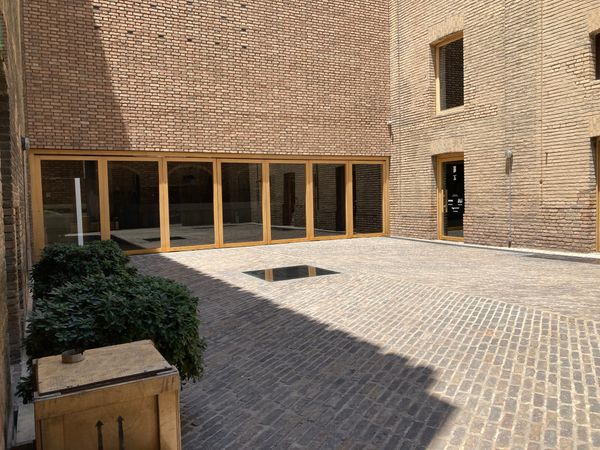
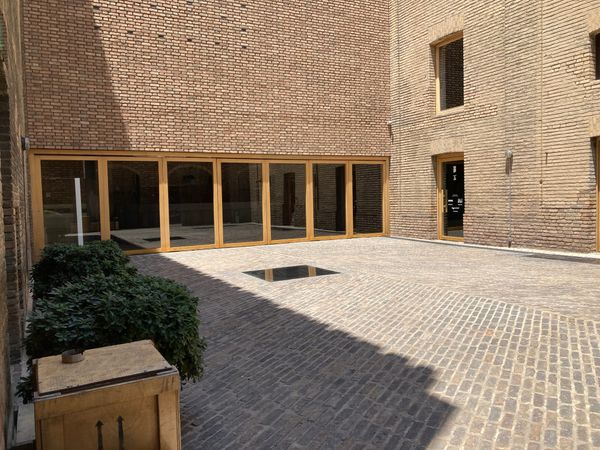
Two years after the movement began, in December 2024, 25-year-old Iranian singer Parastoo Ahmadi performed publicly without hijab accompanied by her band in an empty historical karvansara. She streamed the concert live on YouTube, calling it an “imaginary concert” and writing: “I am Parastoo, a girl who wants to sing for the people she loves. Hear my voice and imagine this beautiful homeland.” She was arrested within days. Although Ahmadi was released and went on to write more songs, in June 2026, a court sentenced her to 74 lashes for her 2024 concert, banning her and her band from any musical activity and from leaving the country for two years.
YouTube video of Parastoo Ahmadi performing publicly without hijab accompanied by her band in an empty historical karvansara, 2024.
Woman, Life, Freedom was a turning point in the forms of protest music it generated. It sparked the online circulation of musical performance in defiance of state restrictions. As with the increasingly visible refusal of compulsory hijab on the streets of Iran today, these acts show that despite efforts to punish dissent the state has been unable to reverse the cultural shifts.
With the uprisings that began in January 2026, a new wave of songs emerged, many by the same creators who came to prominence in 2022, again directly confronting current events and drawing on material emerging from the protests.
Hajipour’s “Iranam,” with its black-and-white photos of the dead, is one example. Another is “Man Zendeam Hanooz” (I Am Still Alive), sung by the same anonymous group of music students who recorded “Sorud-e Rah-e Kucheh.” Released in February 2026, the song was again composed by Adib Ghorbani, with lyrics by the Austria-based Iranian poet Pouyan Moghadassi. As with “Iranam,” the video featured footage from the January killings, including images of protesters and the dead, which only entered into circulation nearly two weeks later because of the internet blackout. The lyrics talk about the burning and killing of protesters and the executions carried out in the name of religion, and yet they insist that the revolution still continues, as long as their voices do:
“Man Zendeam Hanooz” (I Am Still Alive), sung by the anonymous group of music students, composed by Adib Ghorbani, with lyrics by Pouyan Moghadassi, February 2026.
In the name of religion, they send us to the gallows,
they burn, they slaughter.
[…]
But someone still cries out,
from the depth of catastrophe in this terrible silence.
This voice echoes at the height of anxiety.
I am still alive, with the pulse of the revolution.
Yarrahi also released a new song in February 2026. The song, “Auschwitz,” was shared on YouTube shorts. Its lyrics—written by Hossein Shanbehzadeh, an imprisoned writer and social media activist—mourn lost loved ones, while the title draws a parallel between the Islamic Republic and Nazi Germany. “I come from Auschwitz of night transfers,” Yarrahi sings, “I come from a killing field of youth.” Like “Iranam” and “Man Zendeam Hanooz,” the video documents protesters attacked in the streets and the faces of those killed.
As he sings “behind us, bitter memories, deaths,” the video reaches back beyond January 2026, through images of those killed in the Woman, Life, Freedom protests, the Green Movement and the years between. Like the songs that came before it, “Auschwitz” carries those memories into the present, linking one generation of protest with another.
These songs, and the ones not yet written, insist that the voices behind them are still alive, circulating despite the blackouts and censorship meant to silence them.
The destruction wrought by the US-Israeli war on Iran and the ongoing state executions of political prisoners from the Woman, Life, Freedom movement and recent protests, carry more uncertainty for Iranians caught between externally and internally imposed violence. For 88 days, they were cut off from the global internet, the same channel through which the songs in these years have travelled. But despite the feeling of a future suspended shared by many, these songs, and the ones not yet written, insist that the voices behind them are still alive, circulating despite the blackouts and censorship meant to silence them.
[Nafiseh Sharifi is an Honorary Research Fellow at the University of Exeter.]
All of MERIP's analysis is provided without paywalls! Make a donation now to help us keep it that way.
[1] Paola Rivetti and Francesco Cavatorta, “‘The Importance of Being Civil Society:’ Student Politics and the Reformist Movement in Khatami’s Iran,” Middle Eastern Studies 49/4 (July 2013).
[2] Ali Khamenei, “Singing, Musical Instruments, and Dance,” khamenei.ir, July 14, 2014.
[3] Ervand Abrahamian, A History of Modern Iran (Cambridge University Press, 2008).
[4] Ibid, p. 251.
[5] Mehdi Semati, “Sounds Like Iran: On Popular Music of Iran,” Popular Communication 15/3 (July 2017).
[6] Mona Tajali, “Women and Politics in Post-Jina Iran,” Middle East Report, no. 315 (Summer 2025).