Censorship and Surveillance at US Universities
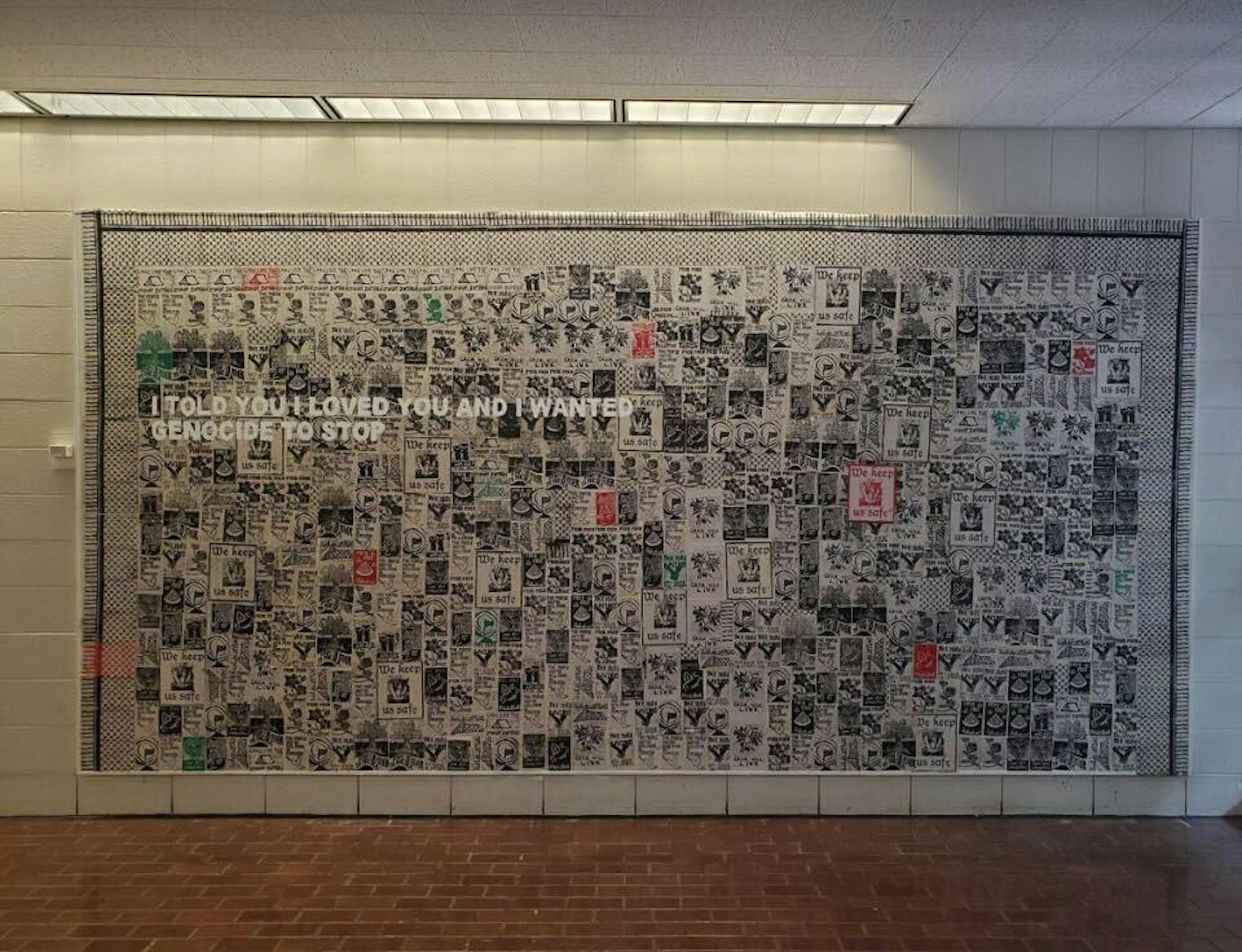
The night before the start of the Fall 2025 semester, facilities workers at the University of North Carolina at Chapel Hill quietly boarded up a pro-Palestine mural. The mural, created by art students, was composed of prints bearing slogans of solidarity such as “We keep us safe.” Its black and white background was punctuated with red and green, together reproducing the colors of the Palestinian flag. The entire piece was bordered with an intricate keffiyeh pattern, and bold white text overlaid the artwork: “I TOLD YOU I LOVED YOU AND I WANTED GENOCIDE TO STOP.”[1]
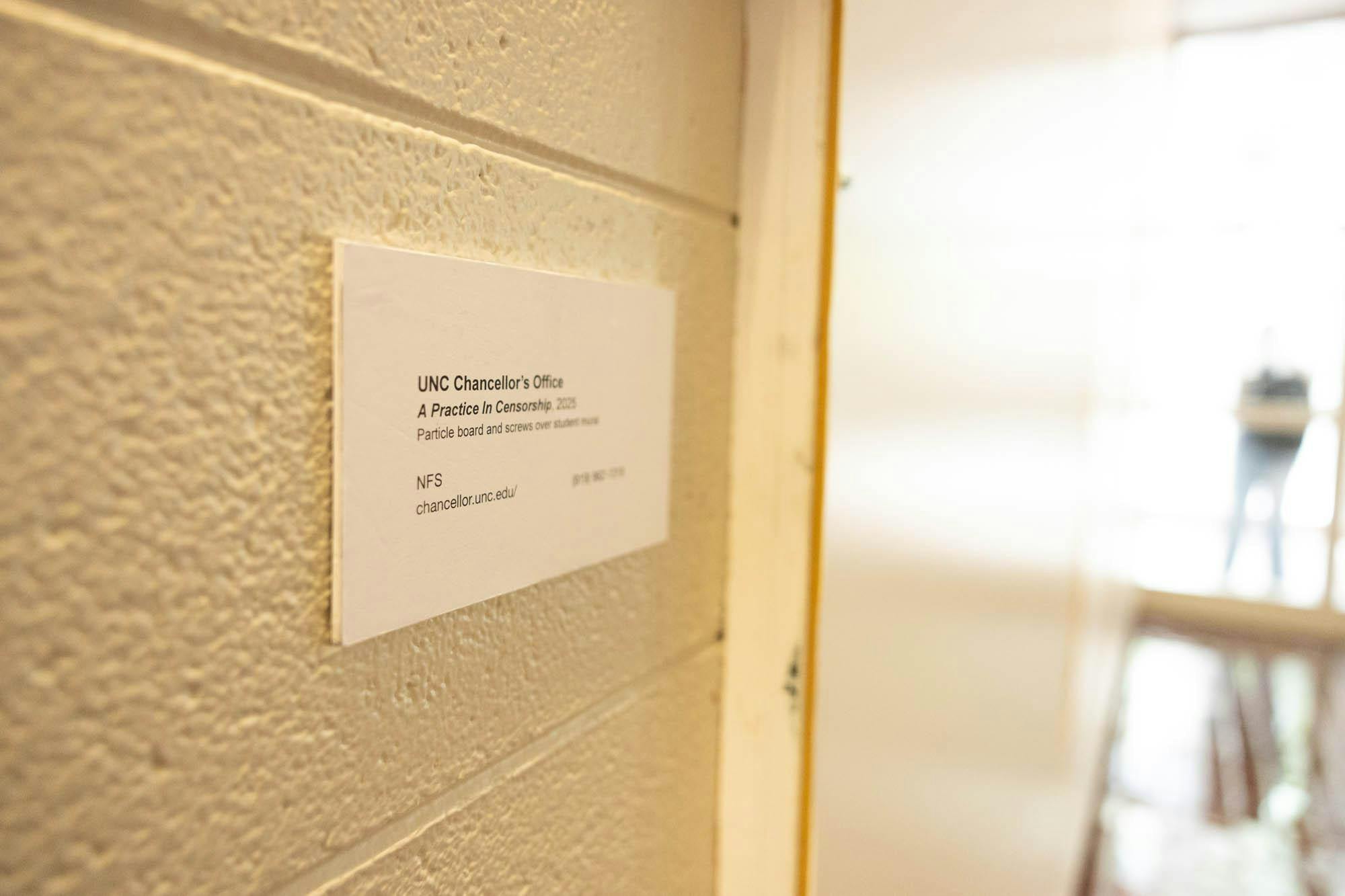
Operating on the instructions of the university’s chancellor and interim provost, workers covered the mural with sheets of white plywood, completely obscuring it. Students were quick to satirize this blatant act of censorship: Next to the piece, they affixed a standard museum placard that read, “UNC Chancellor’s Office, a practice in censorship, 2025. Particle board and screws over student mural.”[2] By the end of the week, the mural had been removed and destroyed by the university. According to the administration, the piece was damaged too severely to return to students or the art and art history department.
This act exemplifies a broader trend of censorship occurring at institutions of higher education throughout the United States. Whether against pro-Palestinian speech, DEI (diversity, equity and inclusion) programs or courses covering LGBTQ+ issues, many universities have willingly aligned themselves with the Trump administration’s culture-war goals.[3] This past fall, for example, Northwestern University required that all students complete antisemitism training before being permitted to enroll in courses. Roughly 300 students refused to submit to the controversial training video, which characterized any criticism of Israel as antisemitic and made tendentious claims about Israel being founded “on British land.” As Salma Moustafa, a Northwestern graduate student, explained: “The training is not just about silencing speech, but achieving consent so that we are complicit.”[4]
Still grappling with the fallout from the April 2025 freezing of $790 million of research funding by the administration of US President Donald Trump, Northwestern foisted this training upon students in an attempt to persuade the administration that it was conforming to the president’s executive order, “Additional Measures to Combat Anti-Semitism.” In November 2025, the university subsequently agreed to a settlement with the Department of Justice that would allow for the release of frozen funds. In exchange, the university had to pay $75 million and “maintain clear policies and procedures relating to demonstrations, protests, displays, and other expressive activities, as well as implement mandatory antisemitism training for all students, faculty, and staff.”[5] Ongoing censorship of free speech—and especially of pro-Palestinian speech—was a requirement of the agreement.
Discussions of censorship often focus on the chilling effects of such actions, whereby people self-censor out of fear of reprisal. But universities like Northwestern and UNC are enacting forms of institutional censorship: They are attempting to curtail the free speech of their students, faculty and staff in order to protect themselves. In doing so, they have shown a willingness to act as instruments of repression in the service of a radical conservative agenda.
As students across US campuses organized mass movements in opposition to the genocide in Gaza, universities funded intensive surveillance campaigns against them. The University of Michigan, for instance, spent $3 million on surveillance that included hiring undercover security personnel to follow students, record their conversations and capture video of them both on campus and in the surrounding community. One student activist, Josiah Walker, who was tailed by at least 30 suspected security personnel, turned his arrest for misdemeanor trespassing into an opportunity to obtain details of the university’s surveillance campaign. Through legal discovery, he was able to verify that undercover investigators were following him and sharing information with University of Michigan Police. The police eventually dismissed the charges against him.
Universities have also turned to surveillance technology, deploying video cameras, facial recognition systems, drones, identity-card readers and social media analysis to identify and keep tabs on student demonstrators. Once protest organizers have been identified, universities have hit them with campus bans, suspensions and expulsions.
External Zionist groups like Betar and Canary Mission...have shared files with university administrators, and their “deportation lists” containing thousands of student names have been circulated to government officials.
These actions are not just driven by university administrations under pressure from the Trump administration and conservative donors. External Zionist groups like Betar and Canary Mission have used their longstanding influence on college campuses to profile and encourage the doxing of students and faculty members who have criticized Israel’s war in Gaza. They have shared files with university administrators, and their “deportation lists” containing thousands of student names have been circulated to government officials.
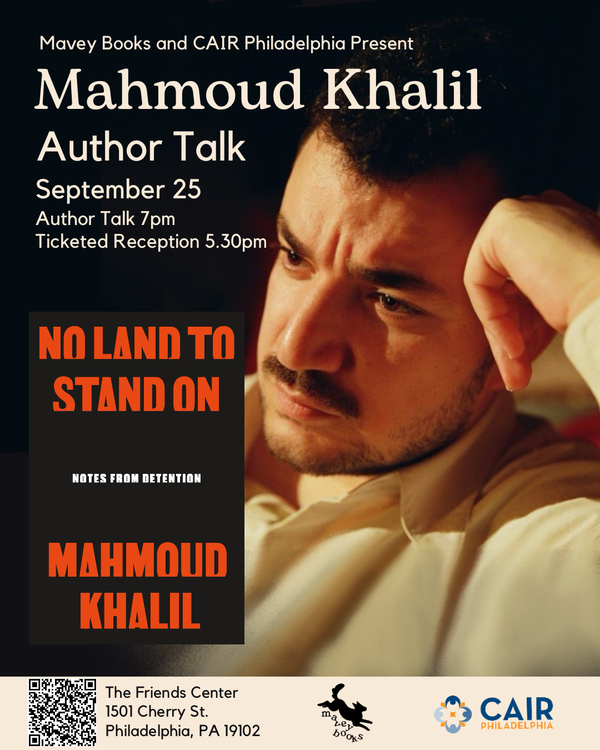
Such surveillance has culminated in acts of terror against international Arab and Muslim students: On March 8, 2024, plainclothes agents from US Immigration and Customs Enforcement (ICE) arrested Columbia University graduate student Mahmoud Khalil. On March 25, 2025, masked ICE agents abducted Tufts University student Rümeysa Öztürk, forcing her into an unmarked vehicle. On February 26, 2025, Columbia University student Elmina Aghayeva was arrested in her dorm room by ICE agents who entered her residence hall under false pretenses, illegally impersonating NYPD officers. These high-profile cases were clearly intended to serve as a deterrent to pro-Palestinian speech at universities, but many students have suffered less-publicized acts of state reprisal, including the revocation of at least 300 student visas due to their participation in campus activism. This trend has contributed to a 55 percent increase, since 2023, in requests for legal support from Palestine Legal, an organization which renders legal service to those targeted for their advocacy for Palestine.
The Trump administration has also weaponized the student-visa review process to exclude international students who might display what George Orwell called “thoughtcrimes”—views contrary to current state ideology. Under a State Department policy revision in June 2025, individuals applying for student visas must now “adjust the privacy settings on all of their social media profiles to ‘public’” so that the content of their previous messages can be vetted for allegedly antisemitic posts or any “conduct that bears a hostile attitude toward U.S. citizens or U.S. culture.”[6]
The State Department is also using artificial intelligence surveillance tools to scour visa applications for any displays of nonconformity, including criticism of Israel. Anecdotally, I have spoken to international students who were admitted to US universities but refused to submit to such social-media surveillance. As a result, their visas were denied.
Not content with preventing new international students from entering the country, the administration has also launched what it calls a “catch and revoke” program to monitor the online activity of current non-citizen students and revoke their visas for suspected infractions. This policy has contributed to the roughly 8,000 total student visa revocations claimed by the Trump administration. Legal challenges have led to the restoration of hundreds of these visas, but uncertainty and fear remain for many students. Such policies are clear violations of First Amendment rights protecting political speech, but that has not deterred the administration from using them.
In 2025, Eric Cheyfitz, a professor of American Studies at Cornell University, faced a disruptive student in his graduate seminar, “Gaza, Indigeneity, Resistance.” The student was aggressive and confrontational in his pro-Israel stance, leading a Palestinian student to feel threatened to the point of withdrawing from the course. When the disruptive student began recording the seminars with his mobile phone, Cheyfitz asked him to leave. A few months later, Cheyfitz was informed that the student in question had formerly served in the Israeli military and that he had filed a complaint alleging discrimination based on his ethnic background. The university launched an investigation and concluded that Cheyfitz had “violated federal civil-rights laws and university policy,” for which he was forced into retirement as a condition of the university dropping disciplinary proceedings against him.[7]
While US media has widely covered efforts to advance conservative curricula and ban material on diversity in states like Florida and Texas, less attention has been given to the increasing surveillance of instructors like Cheyfitz.[8] There have been numerous reported cases of students non-consensually recording class discussions and lectures of instructors expressing solidarity with Palestine. Conservative groups like Canary Mission and Turning Point USA have generated professor watchlists, emboldening students and others to identify and publicize viewpoints they consider to be anti-Israel or leftist in nature. Once confidential classroom footage is shared widely on social media, instructors and university administrators typically find themselves under attack by donors, politicians and conservative media outlets and on the receiving end of violent threats. The outcome is usually the same: The university disciplines or fires the instructor, with administrators occasionally being forced to resign as well.
In another recent case at Texas A&M University, Melissa McCoul, an instructor of English, was confronted by a student who disagreed with her lesson on gender identity. The student recorded the exchange. The video, which was later circulated on social media by the parent of a student in the course, depicted the student telling McCoul, “I’m not entirely sure this is legal to be teaching because according to our president, there’s only two genders and he said he would be freezing agencies’ funding programs that promote gender ideology.”[9] Under pressure by a member of the Texas House of Representatives, McCoul was fired, and the president of the university, Mark Welsh, was compelled to resign as well, albeit with a $3.5 million settlement. Soon after, the university’s board of regents passed a policy prohibiting any future instruction on “race or gender ideology, or topics related to sexual orientation or gender identity,” unless explicit administrative approval was obtained in advance.[10] McCoul is now suing the university for infringing on her free speech and violating due process.
Under pressure from conservative state legislatures and governing boards, some universities are going a step further by implementing systems that encourage collective surveillance.
Under pressure from conservative state legislatures and governing boards, some universities are going a step further by implementing systems that encourage collective surveillance. Purdue University, for instance, is establishing a complaint system that allows “students, faculty and staff to file a complaint against any faculty member they believe isn’t ‘fostering a culture of free inquiry.’”[11] The system is Purdue’s response to a 2024 Indiana law mandating that universities foster “intellectual diversity,” a euphemism for granting voice to fringe conservative positions, which the right views as under attack.[12] Trump’s “Compact for Academic Excellence in Higher Education,” circulated in 2025, states that universities should be “transforming or abolishing institutional units that purposefully punish, belittle, and even spark violence against conservative ideas.”[13]
The University of North Carolina system, meanwhile, is mandating that all course syllabi be made publicly available and searchable on an online platform. The rationale given for this move is the promotion of transparency and trust in institutions of higher education, but faculty worry that the mandate is really intended to invite scrutiny of course content by hostile outsiders. The American Association for University Professors (AAUP) has flagged this policy as an attack on academic freedom that will suppress free speech and threaten the safety of university members.
Complaint and syllabi-exposing systems invite crowdsourced policing of critical content at universities. They encourage self-censorship by academics under threat of institutional sanction, harassment and possibly even physical attack. As AAUP representative Belle Boggs has stated, “This will make everyone on our campuses less safe.”[14]
Institutional censorship on university campuses does more than silence speech. It creates a culture of surveillance and generates uncertainty and fear. To determine compliance with censorship dictates, universities monitor their members or invite others to do so. The threat of punishment can exert a chilling effect on students and instructors, shutting down expressions that do not align with the new conservative orthodoxy while encouraging expressions that do. Students are left wondering whether they will be targeted for their artwork, social media posts, classroom comments or activism. Instructors wonder whether hostile parties are recording their courses or scrutinizing their syllabi. Administrators, even those most cooperative with conservative groups, may reasonably worry that the next complaint against students or faculty may end their careers.
While a general climate of fear is damaging to all, non-citizen students and instructors are the most vulnerable. Among those most frequently and immediately targeted are those who exercise their First Amendment rights to protest Israel’s war in Gaza. Trump’s Compact seethes with xenophobic opprobrium directed at such groups, which, in the document’s words, are “saturating the campus with noxious values such as anti-Semitism and other anti-American values, creating serious national security risks.”[15] International students of color have been singled out for the most aggressive ICE abductions, shuttled from one detention center to another without the benefit of full legal due process.
In such circumstances, resistance is vital, be it in the form of students mocking administrators, instructors refusing to avoid controversial topics or legal action on the part of professional societies. These acts highlight cracks in the repressive regime and undermine its legitimacy. Such work is needed now more than ever.
[Torin Monahan is a professor in the Department of Communication at The University of North Carolina at Chapel Hill]
From April 1 to May 7, 2026, MERIP is participating in Delco Gives. During this time, every donation of $10 or more helps unlock additional funding. Donate today to support rigorous, grounded analysis that remains freely accessible to all.
[1] Caleb Herrera, Alice Scott, and Regan Butler, “Administration orders Palestinian resilience mural to be boarded up overnight, no prior warning given,” The Daily Tar Heel, August 22, 2025.
[2] Ibid.
[3] Torin Monahan, “Surveillance in Trump’s America,” Surveillance & Society 23/1 (2025): pp. 1–16.
[4] Tom Perkins, “Northwestern students blocked from enrollment after refusing controversial antisemitism training,” The Guardian, September 27, 2025.
[5] Alana Wise, “Northwestern settles with Trump administration in $75M deal to regain federal funding,” National Public Radio, November 29, 2025.
[6] Lisa Femia, Sophia Cope and Saira Hussain, “Trump Administration’s Targeting of International Students Jeopardizes Free Speech and Privacy Online,” The Electronic Frontier Foundation, April 25, 2025.
[7] Gavin Escott, “The Classroom, Caught on Camera,” The Chronicle of Higher Education, December 10, 2025.
[8] Zane Austin Williard, “Ambivalent Surveillance: Teaching in the Times of Anti-Woke,” Communication and Critical/Cultural Studies 22/1 (December 2024)
[9] Emma Whitford, “2 Texas A&M Administrators and Professor Out After Viral Video,” Inside Higher Ed, September 10, 2025.
[10] Gavin Escott, “The Classroom, Caught on Camera,” The Chronicle of Higher Education, December 10, 2025.
[11] Seth Nelson, “Purdue to review faculty for 'intellectual diversity' in wake of S.E.A. 202,” The Purdue Exponent, November 26, 2024.
[12] Lindsay Weinberg and Anish Vanaik. “The Invited Eye: University Students and the Digital Complaint," paper presented at Society for Social Studies of Science conference, Seattle, WA, November 5, 2025.
[13] White House, “Compact for Academic Excellence in Higher Education,” October 1, 2025
[14] Regan Butler and Aidan Lockhart, “UNC System may require all instructors to publish syllabuses, course materials next academic year,” The Daily Tar Heel, December 10, 2025.
[15]White House, “Compact for Academic Excellence in Higher Education,” October 1, 2025