Rethinking Political Change in Iran from Protest to War

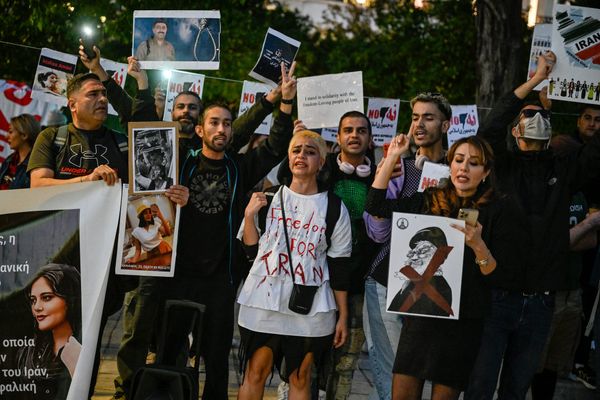
One month before the United States and Israel began the current war against Iran on February 28, 2026, mass uprisings within the country resulted in the severest government crackdown in its modern history. Protests and repression were accompanied by calls for outside intervention. US President Donald Trump declared on January 2 that the United States was “locked and loaded and ready to go” should Iran kill its protesters.[1] Reza Pahlavi, son of the deposed shah and the most prominent opposition figure outside Iran, stated that “In conditions where the people of Iran are being mowed down in the most brutal manner possible, I do not consider assistance for the liberation of a nation to be aggression.”[2] On January 10, a group of prominent Iranian intellectuals and opposition figures—including Nobel Peace Prize laureate Shirin Ebadi and filmmaker Mohsen Makhmalbaf—wrote to Trump directly, declaring that "all avenues for curbing the repression and saving the lives of our compatriots have reached a dead end" and that "an exit from this situation requires international assistance."
These appeals are symptomatic of a broader shift in political prognosis: Both inside and outside of Iran, there is an increasing perception that efforts by Iranian society to bring about political change have all failed. Protest has failed. Reform has failed. Civic activism has failed. This claim has circulated widely among regime-change opposition activists (barandazan) and was significantly amplified in the diaspora through satellite channels like Iran International and Manoto and prominent figures like Pahlavi, finding resonance inside Iran through social media and Persian-language online spaces. In the latter, the sentiment coalesced in a common refrain: “We have traveled all the roads.”[3] Defending the US-Israeli war on Iran, US Secretary of State Marco Rubio invoked the same logic, arguing that the world had witnessed “successive waves of protests” met only with slaughter.
The claim that nothing has worked draws its force from a history of repression. The Islamic Republic has repeatedly suppressed mass protest through arrest, imprisonment and lethal violence. The uprisings of 2017–2018, 2019, 2022 and, most recently, January 2026 were all violently suppressed. But the conclusion often drawn from these events—that collective action in Iran has failed—conflates short-term defeat with failure and ignores the traces these defeats leave behind in individuals radicalized, social relations altered and the boundaries of what states can and cannot do. Recent protest movements in Iran have not brought down the Islamic Republic. They have, however, reshaped social norms, altered political calculations and expanded the terrain on which future struggles unfold.
In 2022, the uprising known globally as the “Woman, Life, Freedom” movement was triggered by the death of Mahsa Jina Amini, a young Kurdish Sunni woman whose killing resonated far beyond the immediate circumstances of her arrest for not wearing the veil properly. The protests spread nationally, lasting several weeks, and were met with intense repression: Hundreds were killed during the protests, thousands were arrested and the months that followed saw a wave of execution sentences.[4]
The movement was simultaneously an anti-regime protest, a women's movement and an ethnic and minority rights mobilization.
The protests of 2022 differed from earlier episodes not just in scale and duration but in the convergence of different forms of collective action. The movement was simultaneously an anti-regime protest, a women's movement and an ethnic and minority rights mobilization.[5] As an anti-regime protest, its political character was unmistakable. The dominant slogans—"Death to the Dictator" and "Death to Khamenei”—targeted the entire system and its leadership, condensed in the figure of Supreme Leader Ali Khamenei, rather than a specific policy or grievance. As a women's movement, it produced some of its most visceral and widely circulated imagery: women cutting their hair and burning their hijabs in public. These acts represented a rejection of state control over their bodies and an assertion of autonomy that resonated globally. As an ethnic and minority rights mobilization, Amini's identity as a Kurdish Sunni woman elicited especially intense mobilization in Kurdish and Sunni regions.[6]
These protests were also an extension of what sociologist Asef Bayat has referred to as “non-movements:” diffuse, uncoordinated forms of collective action.[7] Even before 2022, Iranian women had been engaged in years of everyday defiance that quietly accumulated before erupting into the streets. Millions resisted compulsory hijab through everyday practices, wearing their headscarves loose with visible hair and makeup.
Over time, these incremental acts of defiance were punctuated by more organized forms of activism. For example, the One Million Signatures Campaign launched by feminist activists in 2006 to reform gender-discriminatory family laws involved coalition building between secular and religious women and successfully blocked regressive legislation. In another instance, Vida Movahed’s public unveiling on Tehran's Revolution Street in 2017 inspired a wave of similar acts across the country. The 2022 uprising came in the context of these decades of struggle and resulted in a shift from partial noncompliance to the widespread removal of the hijab altogether in many urban spaces.
The scale of this transformation has been empirically documented. Research tracking women's appearances on social media found that immediately following the Woman, Life, Freedom movement protests, the number of women who appeared without the headscarf increased by 24 percent.[8] Despite the intransigence of the law, this popular shift persisted in the following years. The same research also found that protest exposure altered dynamics within households: In areas with higher protest activity, household spending shifted away from men and toward women and children—a measure of changing bargaining power within the family—suggesting that the movement's consequences reached not only into public space but into the domestic arrangements that govern everyday life.
Protests have also shaped dynamics within the political elite, although not through a straight line from protest to concession. In May 2024, the unexpected death of Iran’s president Ebrahim Raisi in a helicopter crash triggered a snap election, creating a window that the protests alone could not have done. Masoud Pezeshkian—a former health minister under President Khatami and long-serving representative of Tabriz, who is himself of Azerbaijani and Kurdish descent—had been disqualified by the Guardian Council from running in the March 2024 parliamentary elections, only to be permitted to run for president just months later. This reversal was itself significant. The gatekeeping body recalibrated in the wake of the protests and Raisi's death, allowing the only reformist candidate on the ballot to compete.
While the election evinced the populace’s disillusionment—the first round recorded the lowest turnout in the history of the Islamic Republic, as prominent figures from across the political spectrum, including Nobel Peace Prize laureate Narges Mohammadi, called for a boycott—Pezeshkian advanced to a runoff against the hardline candidate Saeed Jalili. Turnout rose slightly in the second round to just under 50 percent, as some who had boycotted the first round showed up at the polls in order to avoid a Jalili presidency.[9] Pezeshkian won with 54 percent of the vote.[10] His campaign had directly voiced support for the Woman, Life, Freedom protests and pledged to stand against mandatory hijab patrols, the forces responsible for Amini's arrest and death. The protest movement shaped the political terrain on which the election was fought, even if it could not fully determine the outcome.
Pezeshkian appointed a Sunni Kurdish politician as governor of Kurdistan province—the first Sunni governor since the earliest days of the Islamic Republic—and nominated Abdolkarim Hosseinzadeh as deputy president for rural development, the first Sunni ever appointed to such a position in the history of the Islamic Republic. In an unprecedented move that had never been used against a resigning lawmaker before, the hardline-dominated parliament voted to reject Hosseinzadeh's resignation from his parliamentary seat, a procedural requirement for him to take up the executive post. But Pezeshkian persisted, and in October the parliament relented. These were not smooth, top-down concessions. They were incremental gains extracted through political pressure and contested at every step. While they did not dismantle the system of exclusion, they altered its boundaries, establishing new precedents that future governments would not be easily able to ignore.
In 2023–2024, the conservative parliament passed new legislation to intensify penalties for violations of compulsory hijab—an attempt to reassert control in the face of women’s widespread noncompliance. Yet in a telling moment of internal recalibration, Pezeshkian refused to sign the bill into law, warning that its enforcement would generate social tensions that could endanger national stability. In practice, the regime has retreated: Compulsory hijab remains formally in place, but enforcement has become uneven, selective and in many contexts—such as restaurants and even some progovernment rallies—effectively suspended.
It was precisely the overlap of episodic uprising, electoral mobilization within the system, organized and semi-organized movements and diffuse everyday defiance that generated pressure across multiple fronts, forcing the regime to adjust in ways that no single form of action could have achieved on its own. Moreover, Raisi's death, which had removed not only a sitting president but one of the leading candidates to succeed Khamenei, reshuffled the balance of power among competing factions at a moment when the question of succession was already sharpening internal rivalries and making the adjustments of 2024 possible.
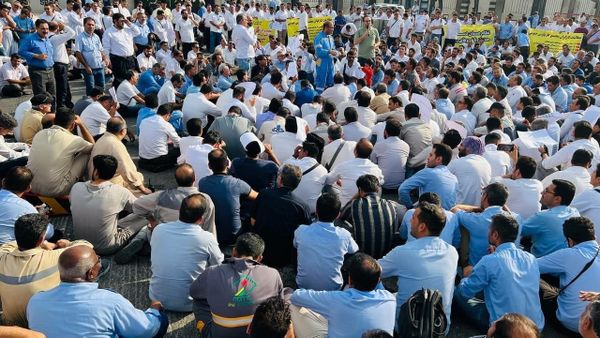
A similar pattern appears in more routine forms of collective action. Across Iran, workers, teachers, retirees and nurses have, for decades, engaged in sustained, often weekly sectoral protests, sometimes coordinated across multiple cities. These actions rarely escalate into direct confrontation with the regime’s core institutions, and they are typically met with lower levels of repression: arrests, harassment, occasional violence but not the systematic use of lethal force seen in nationwide uprisings. Precisely because they operate below the threshold of existential threat, they create space, however constrained, for organizing and establishing networks, routines and repertoires of action that can diffuse across localities, building capacity over time. Research shows that districts with higher levels of prior sectoral protest were more likely to participate in subsequent anti-regime mobilizations in 2018, 2019 and 2022.[11] The finding is not that sectoral movements convert into anti-regime protest but that prior protest activity in a district is associated with higher subsequent mobilization when broader uprisings occur.
Sectoral protesters—workers, teachers, retirees—have largely continued to pursue their specific economic and professional demands rather than joining anti-regime uprisings as organized blocs...
These findings illustrate that different forms of protest can reinforce one another despite tensions and differences in their goals and strategies. Sectoral protesters—workers, teachers, retirees—have largely continued to pursue their specific economic and professional demands rather than joining anti-regime uprisings as organized blocs; the 2022 oil contract workers' strikes in solidarity with Mahsa Amini protests were a notable exception rather than the rule, which has held even for the 2026 uprisings. These protesters operate through what political theorist Steven Klein and sociologist Cheol-Sung Lee call a “politics of influence:” pressing for concrete, winnable demands—wages, pensions, freedom of association, an end to executions—and deliberately avoiding provoking security forces or escalating into direct confrontation with the state.[12] Even their more radical demands stop short of calling for the regime's immediate downfall.
The regime-change opposition, by contrast, understands its own practice through what Klein and Lee call a “politics of occupation,” that is, a mode of action oriented toward escalation, mass street presence and direct confrontation, premised on the belief that change requires seizing and transforming the political space rather than pressuring it from within civil society.[13] These are different tactics that reflect fundamentally different theories of how social change happens. Sectoral protesters may seek to avoid exposing themselves and their movements to harsher repression by openly calling for regime overthrow. Yet they have remained consistent in criticizing regime brutality, demanding expanded liberties and opposing both repression at home and foreign intervention and war.
In Poland in the 1980s, which provides an interesting historical precedent, the Solidarity movement did not initially demand the collapse of the communist regime, not because it accepted the system but because it recognized the limits imposed by the balance of power. Its central demand in 1980 was the legalization of independent trade unions: an unprecedented concession that opened space for millions to organize and practice collective self-governance. Although these gains were later reversed, the capacities developed during that period endured. When strikes returned in 1989, negotiated reforms led to elections that produced a decisive victory, clearing the way for broader transformation. Judged in the short term, Solidarity might have appeared a failure. Over time, it became a central force in democratic transition.
When strategies based on immediate escalation—foreign wars chief among them—are likely to provoke repression, de-escalation as a way of preserving and extending the resources of collective action becomes an essential component of any viable approach.
The lesson is that achievements short of regime collapse can be both radical and consequential. In the case of Iran, political change might be more achievable through the gradual expansion of social capacity. When strategies based on immediate escalation—foreign wars chief among them—are likely to provoke repression, de-escalation as a way of preserving and extending the resources of collective action becomes an essential component of any viable approach. Here, de-escalation is not demobilization but advancing measured demands, maintaining nonviolent discipline and relying on persuasion instead of coercion. Sectoral activists have adopted this approach: pressing for consequential demands—freedom of speech, free internet, freedom of assembly in universities and public spaces—without escalating into direct confrontation with the state. Instead of demanding the regime's immediate collapse, these movements chip away at the conditions that make authoritarianism sustainable.
Moreover, the Polish example illustrates why movements should not be assessed solely by their immediate outcomes. As both the uprisings of 2022 and sectoral protests suggest, the claim that nothing has worked is unfounded. Defining success exclusively as immediate regime collapse renders other forms of political change invisible, foreclosing important conversations about strategy. Any strategy for political change must begin from a clear-eyed assessment of the regime it confronts. The Islamic Republic is not a fragile system on the verge of collapse. It is a resilient one with the capacity to mobilize supporters and coordinate response in moments of crisis, marked by relatively high elite cohesion and a multilayered coercive apparatus.[14] These features shape how it responds to pressure. In such a context, rapid escalation, especially one that is highly exclusionary, is more likely to produce consolidation rather than fragmentation, and the current war on Iran is unlikely to be an exception. If anything, the scale of destruction produced by the ongoing US-Israeli war, and the forms of militarization war tends to generate, make it unlikely that postwar Iranian politics will resemble its prewar trajectory. Institutional balances, social alignments and the scope for collective action may all be reshaped, likely in more constrained ways.
And yet the past trajectories of protest, social movements and everyday resistance examined here remain analytically and politically relevant. The mechanisms through which sustained collective action reshapes incentives, shifts boundaries and accumulates capacity will not disappear with changed conditions. However constrained the postwar terrain, the question of how Iranian society organizes and builds toward democratic change will remain central. The answer will not come from outside.
[Mohammad Ali Kadivar is an associate professor of sociology and international studies at Boston College.]
Support MERIP in providing critical, grounded reporting and analysis. Make a one-time or monthly donation today!
[1] Shola Lawal, “Has Trump confirmed Iran’s claim that protesters were US-armed?,” Al Jazeera, April 6, 2026.
[2] Claire Keenan, “Trump warning over Iran protests 'reckless' says foreign minister,” BBC, January 3, 2026.
[3] Hossein Razzaq, "Az 'Hame Rahha ra Raftim' ta 'Faghat Jang Mande': Royafurushi-ye Opozisyon-e Bi-Rahbord," Radio Zamaneh, April 25, 2026. [In Persian]
[4] Human Rights Activists News Agency, Iran Protests 2022—Detailed Report of 82 Days of Nationwide Protests in Iran (2022).
[5] Mahbubeh Moqadam, “Fractal Scaling of Feminist Politics and the Emergence of Woman Life Freedom Movement in Iran,” Social Forces 104/2 (December 2005).
[6] Mohammad Ali Kadivar et al., “Contingency of Structures: Triggers and the Social Geography of Revolutionary Episodes in Iran 2017-2022,” SSRN Electronic Journal.
[7] Asef Bayat. Life as Politics: How Ordinary People Change the Middle East (Stanford: Stanford University Press, 2013).
[8] Avenia Ghazarian, “Veils of Change: The Anatomy of Social Transformation in Post-Protest Iran,” Working paper.
[9] Farnaz Fassihi, “Reformist Candidate Wins Iran’s Presidential Election,” The New York Times, July 5, 2024.
[10] Ibid.
[11] Mohammad Ali Kadivar et al., “Contingency of Structures: Triggers and the Social Geography of Revolutionary Episodes in Iran 2017-2022,” SSRN Electronic Journal (December 2025).
[12] Steven Klein and Cheol-Sung Lee, “Towards a Dynamic Theory of Civil Society: The Politics of Forward and Backward Infiltration,” Sociological Theory 37/1 (March 2019).
[13] Ibid.
[14] Steven Levitsky and Lucan Way, Revolution and Dictatorship: The Violent Origins of Durable Authoritarianism (Princeton: Princeton University Press, 2022).