Yemen After the Saudi-Emirati Split
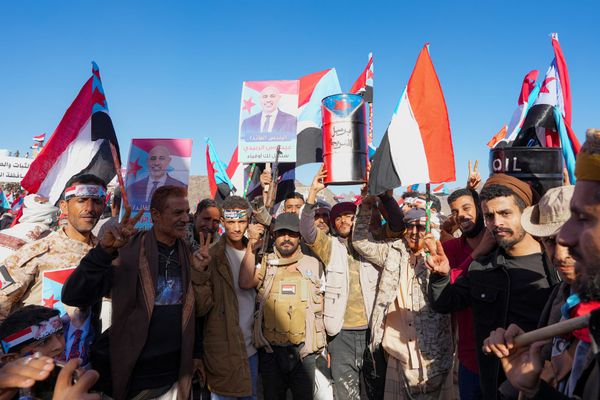

In early December 2025, Yemen’s Southern Transitional Council (STC) took many by surprise when it seized control of the country’s oil-rich Hadhramaut governorate, a region that had been under the control of Saudi-backed forces. After its eastern neighbor al-Mahra declared allegiance to the STC, the Emirati-supported group effectively established control over the territory of the former South Yemen.
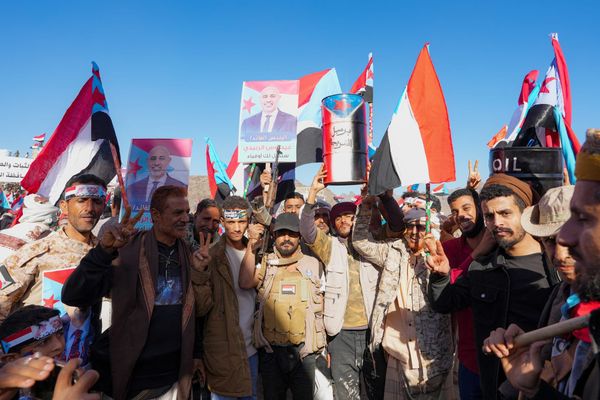
Large crowds of celebrating southerners called on STC leader Aidrus al-Zubaydi to declare independence as Saudi Arabia and the military forces it sponsors retreated, even vacating the presidential palace in Aden.
Within days, Saudi Arabia reversed its withdrawal, launched airstrikes on STC militias and redeployed its own troops, previously stationed along the border with Houthi-controlled areas, to expel STC-allied forces. After consultations in Riyadh, Rashad al-Alimi—the leader of the internationally recognized government’s Presidential Leadership Council (PLC)—announced on December 30, 2025, that the UAE must withdraw from all of Yemen within 24 hours. The UAE complied and removed its military forces, although it maintains commercial and political interests in Yemen.
With the Saudi border area unsecured and Yemen’s Red Sea islands vacated by Emirati troops, one might have expected the Houthis to take advantage of the situation and expand their territorial control. Yet no such advance occurred, suggesting that Riyadh may have reached an understanding with them to rearrange its military control of the rest of Yemen. This turn of events reinforced fears among some observers that Saudi Arabia has been coordinating with the Houthis behind the back of its Yemeni coalition partners who are fighting the Houthis, including the PLC, the STC and Tariq Saleh, the nephew of the late president Ali Abdullah Saleh and commander of one of the militias successful in deterring the Houthi advance alongside the STC troops. Notably, before the December takeover of Hadhramaut, Saleh and STC leader al-Zubaydi had announced plans to launch a new military front to push the Houthis from the governorates of al-Baydha and Ta’izz in central Yemen. The operation was cancelled.
These developments point to a larger transformation in Yemen’s war as well as in the regional coalitions that have shaped it since 2014. Saudi Arabia seems to have succeeded in tightening its grip on areas outside Houthi control with the silent approval of the latter, even as it sidelines the Emiratis. Together, these changes are redrawing Yemen's political landscape along with the alliances that have sustained the war.
Saudi Arabia’s original intervention in Yemen followed the ouster of President Abd Rabbu Mansour Hadi’s government from the capital Sana’a in 2014 by the Houthi movement, also known as Ansar Allah. The subsequent Houthi advance into the south drew southern regions into a conflict many local actors viewed as a northern struggle. Southern militias evicted the Houthis in a rapid fight, but chaos prevailed with the internationally recognized government (IRG) attempting to rule in areas outside those controlled by Ansar Allah.[1]
In southern territories, the IRG became known for its inability to provide basic services, despite billions of Saudi riyals spent to sustain the government. These failures included limited electricity, irregular public-sector salaries and economic instability. Inflation soared. Living largely in Riyadh, government officials appeared detached from realities on the ground, while the STC and local administrations outside Aden effectively governed. Although occasionally clashing with IRG-controlled troops, the STC joined the IRG after a deal was made in 2019 under Saudi patronage in Riyadh. The STC was then seen as responsible for the mismanagement and poor services that were emblematic of IRG rule in Aden.
As the war entered a new decade, Saudi Arabia appeared increasingly stuck in an unproductive partnership with the IRG in Aden. Emirati-backed actors—southerners united around the loose agenda of the Southern Cause (that included independence from northern Yemen) as well as forces affiliated with Tariq Saleh—were gaining popular support. Meanwhile, the Saudi-backed government struggled both to confront the Houthis and to build a domestic base in Yemen.
The Saudi-Emirati rivalry, which extends far beyond Yemen, has intensified in recent years as the two states compete for regional influence, investment and control over strategic trade routes.
The Saudi-Emirati rivalry, which extends far beyond Yemen, has intensified in recent years as the two states compete for regional influence, investment and control over strategic trade routes. The current US-Israeli war on Iran has accelerated these rifts, especially after the UAE declared its withdrawal from OPEC in April 2026. In Yemen, the UAE advanced its maritime strategy of gaining dominance of logistics along global sea routes, including controlling key coastal ports and building airstrips in the strategic islands of Socotra’s Abd al-Kūrī and the Perim island, near the Bab al-Mandab Strait. (Emirati engagement in Socotra had initially centered on ambitious tourism development projects, including proposals to distribute property to Emirati nationals and expatriate elites, but these plans were halted following popular protests.) Saudi Arabia’s development ambitions in Yemen, meanwhile, were linked to the government’s Vision 2030 plan but made limited progress. Riyadh’s involvement instead attracted Houthi missile attacks that exposed Saudi vulnerabilities, including strikes during the Formula One Grand Prix in 2022.
Abu Dhabi has also pursued a campaign to curb Jihadist and Islamist tendencies in the south. These efforts were welcomed by local people, but they have also drawn criticism due to the existence of secret detention centers operating outside the purview of the Yemeni judiciary and maintained by, among others, the STC. Some detainees had no links to Jihadist groups but were merely opponents of the militia in charge of the area.
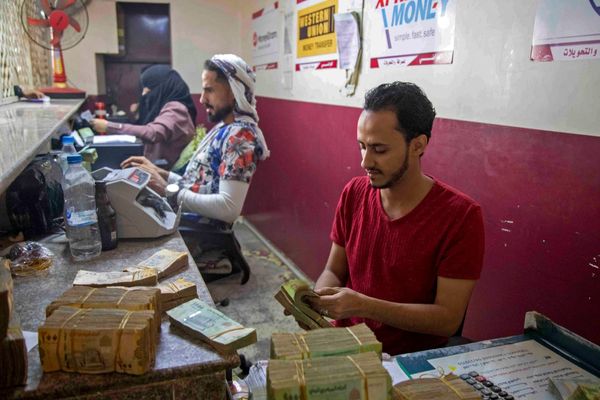
Although its contract to operate Aden port was cancelled in 2012 following public criticism, Abu Dhabi expanded its influence through other means with several lucrative deals that brought it into the center of the Yemeni economy. In 2022, it signed a deal to build a 120 MW solar park in Aden, and in 2023 it attempted to take control of Yemen’s telecommunication services. The latter initiative was eventually halted after public backlash over the prospect of foreign dominance in a sensitive sector. At the same time, the UAE had long shown interest in Yemen’s underexplored mineral resources. Historically known for its gold deposits, Yemen also possesses rare minerals valuable to the global electric vehicle industry. The UAE’s aspiration to become the global center of the gold trade made it a party to the Sudan civil war, among other conflicts, while the Dubai-based Thani Mining company has explored Houthi-controlled Hajja and Hadhramaut since the 2010s.
In late 2025, Yemen’s geological authority announced the discovery of platinum-group metals in Hadhramaut. This announcement came only weeks before the Saudi-allied Hadhramaut Tribal Alliance and its recently formed Hadhramaut Protection Forces took over areas where the state-owned Petro-Masila company was extracting oil. The STC responded by expelling these forces, triggering the December 2025 conflict and the eventual takeover of the Hadhramaut valley by STC-affiliated militias.
With the Saudi-led expulsion of the Emirati presence from Yemen, concerns have emerged that these valuable resources of minerals and oil may now fall into Riyadh’s hands, likely mediated through loyal local elites.
With the Saudi-led expulsion of the Emirati presence from Yemen, concerns have emerged that these valuable resources of minerals and oil may now fall into Riyadh’s hands, likely mediated through loyal local elites. In a move that supports these fears, Riyadh announced immediately after its takeover that it would begin direct flights from Jeddah to Hadibu, the capital of Socotra island. In March 2026, news leaked about “technical and legal committees” set to build a Saudi oil pipeline through Yemeni territory, a decades-old dream of Riyadh that had earlier been rejected by Yemeni governments but that is now gaining ground under the PLC.
In parallel, Saudi Arabia has made a series of moves in recent years toward its enemy Ansar Allah to advance its own interests in the Yemen war. Saudi-Houthi negotiations in 2022, hosted by Oman, notably excluded Saudi coalition partners in Yemen, indicating that Saudi goals in a peace deal differ from those of its Yemeni partners and the UN-led peace mediating process. Following these discussions, Houthi attacks on Saudi territory ceased, with the last major incident occurring in April of that year.
As Saudi Crown Prince Mohammed bin Salman continues to consolidate power domestically, strengthening his authoritarianism and positioning himself as a leading regional actor, a decisive move against Emirati influence in Yemen became increasingly likely. By late 2025, developments such as prisoner exchanges with Ansar Allah suggested that Saudi Arabia was preparing to exit the conflict while leaving the Houthis in control of Sana’a. The largest prisoner exchange deal yet, which occurred in May 2026, makes this fear more credible. If realized, it would effectively divide Yemen, with the north under Houthi authority and the south under Saudi dominance, a fact Riyadh is not ready to admit in public considering the UN-led peace process that aims to oust the Houthis from the capital Sana’a.
Since expelling Emirati forces, Saudi Arabia has moved quickly to consolidate control over non-Houthi controlled Yemen, both militarily and politically. While the IRG ministers have returned to Aden, consultations on Yemen’s internal affairs take place in Riyadh, not in the IRG capital Aden.
Demands for independence cannot be dismissed as merely an STC initiative; they reflect broader popular sentiment as evidenced in rallies organized in many parts of the south on a regular basis, which attract tens of thousands of people.
But large-scale mobilization by those who support the Southern Cause and independence is presenting a challenge. Demands for independence cannot be dismissed as merely an STC initiative; they reflect broader popular sentiment as evidenced in rallies organized in many parts of the south on a regular basis, which attract tens of thousands of people. Riyadh responded in early 2026 by proposing a “South-South Dialogue” aimed at addressing southern grievances. Delegations of southern politicians and activists have since been invited to Riyadh for consultations.
The process raised immediate concerns that Saudi Arabia was attempting to coopt the initiative in order to sideline the STC and other advocates of the Southern Cause. In early January, an STC delegation that had been flown into Riyadh reportedly lost contact with the outside world for several days. Meanwhile, it became apparent that the main target of the Saudi invitation, STC leader al-Zubaydi, had not traveled with the group. It seems that Abu Dhabi alerted him about what to expect: a potential kidnapping as happened to Lebanese Prime Minister Saad Hariri in 2017 or something worse. Reports later suggested that Saudi authorities had divided the delegation and secured cooperation from certain members, who subsequently issued a statement announcing the “full dissolution of the STC,” a claim that the leadership of the STC dismissed. Only days earlier, the STC had announced the beginning of a two-year transitional period leading to independence for the south. The PLC accused Al-Zubaydi of treason and stripped STC affiliates of their role within the leadership body. While rival political actors in Aden welcomed the development, crowds gathered in Aden’s Aroudh square and elsewhere to press their demands for independence and al-Zubaydi’s leadership. In Socotra large gatherings reaffirmed their support for Emirati economic assistance.
A date has yet to be set for the proposed dialogue conference. For many observers, this approach reflects a long-standing strategy. For decades, Saudi Arabia has maintained influence in Yemen by financially supporting tribal leaders and political figures. This system has ensured a network of loyal actors capable of shaping domestic political outcomes. Today, a new generation of southern figures appears to be entering this system. Many southern politicians and activists have declared their enthusiasm, genuine or not, for the Saudi dialogue while others remain hesitant. A meeting to form a unified agenda for the Riyadh conference was supposed to take place in Aden in early February with about 30 activists from a variety of southern initiatives only to be prevented by “security authorities.” No explanation was given by the government, while activists raised concerns about limitations on free speech and gathering. As the Saudi promise to resolve the southern question remains vague, southerners eager to move forward and reclaim a state of their own continue to gather in southern squares. The largest milliyuniyya ("million-person") rally yet was held in Aden on January 16, 2026. It was called for by the STC two weeks after its alleged dissolution.
As I have suggested elsewhere, the Southern Cause is also a class issue. The masses who gather in the nationwide rallies represent the urban and rural poor, people who never were incorporated into elitist schemes, typical of former president Ali Abdullah Saleh, where state property was distributed among loyalists of the regime. Over the past decades, much political activity has been channeled through non-governmental organizations dependent on foreign funding, thus creating a new political elite.[2] Under the auspices of the UN-led peace process, the elite gathers abroad in 5-star hotels for consultations that yield little actual progress toward easing the stalled political and military situation in the country. For the poor masses in the square, these efforts represent nothing more than corruption. The STC’s attempt in early 2026 to break from this system and establish a new political order was a significant departure, but its approach—particularly the centralized nature of its transitional plan under al-Zubaydi—raised concerns among its rivals.
Officially, Saudi Arabia continues to affirm its commitment to Yemeni unity. At the same time, its actions suggest a more pragmatic approach focused on controlling non-Houthi areas. Choosing the dialogue platform for its alleged support to the Southern Cause, Riyadh plays on familiar slippery ground. Since the 1990s, several committees, meetings and dialogue processes have been used to address southern grievances. While some of these committees have issued recommendations on financial compensation, little has materialized. The main problem is that for southerners it is not a question of monetary compensation for what they have lost under the unity arrangement. It is a question of national identity and exercising their political will to reclaim their rights.
Right after the Saudi takeover, a new government was formed under PLC leadership with ministers now working in Aden. At the same time, improvements in basic services—such as increased electricity provision in Aden following Saudi intervention—have been presented as evidence of effective governance. But these improvements also raise questions. For years, Saudi financial support failed to translate into tangible benefits for ordinary Yemenis. Whether current efforts to improve living conditions reflect a genuine shift or are a strategy to win public support remains unclear. Demonstrations demanding steady power supply have continued throughout the south.
With an apparent understanding in place with Ansar Allah and firm control over non-Houthi territories, Saudi Arabia may be positioning itself for a managed exit from the war.
With an apparent understanding in place with Ansar Allah and firm control over non-Houthi territories, Saudi Arabia may be positioning itself for a managed exit from the war. Strategically, this would allow Riyadh to pursue long-term objectives, including access to the Indian Ocean through Yemeni territory: an ambition shaped by concerns over vulnerability at key maritime chokepoints such as the Strait of Hormuz and Bab al-Mandab.
At the same time, Saudi Arabia appears to be relying on long-standing local allies, particularly in Hadhramaut, to counterbalance southern unity efforts. These dynamics risk fragmenting the southern political landscape and complicating prospects for independence.
Still, Yemen’s history suggests that external control is rarely uncontested. For many southerners, the war remains a northern conflict into which they were drawn. Increasingly, they see independence as the only viable path out of prolonged instability, corruption and ineffective governance. As tribal leader and activist from the southern Shabwah governorate, Sa’id Nasir al-Awlaqi wrote following the Saudi intervention in December 2025:
"The South is neither an arena for settling scores nor a card to protect the interests of individuals or (outside) powerful forces… Southerners are tired of shouting… and will no longer accept somebody to speak on their behalf or use their governorates where safety prevails as pretexts to protect (their) wealth and influence that have nothing to do with the interests of the people."[3]
All of MERIP's analysis is provided without paywalls! Make a donation now to help us keep it that way.
[1] Michael Knights, 25 Days to Aden. The Unknown Story of the Arab Elite Forces at War (London: Profile Editions, 2023).
[2] Sheila Carapico, Political Aid and Arab Activism: Democracy Promotion, Justice, and Representation (Cambridge: Cambridge University Press, 2013).
[3] Saeed Nasser Mujalla bin Farid al-Awlaqi. “When Our Voices Grew Hoarse, Who Listens Today,” Shabwaah Press, December 31, 2025.