The MERIP Podcast The MERIP Podcast Episode 14: The MERIP Roundtable, On Iran's Protests In this installment of the MERIP Roundtable podcast, we discuss the latest wave of protests in Iran. The protests began on December 28, 2025, as merchants and bazaar workers reacted negatively to new budgetary measures announced by President Masoud Pezeshkian. The protests snowballed in the first week of January, reaching James Ryan, Asma Abdi, Kaveh Ehsani, Maziyar Ghiabi • 1 min read
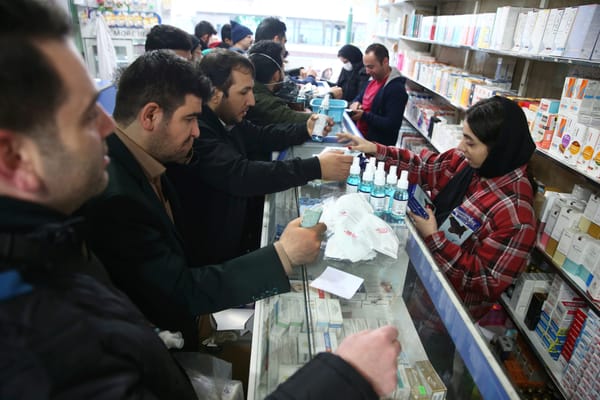
Iranians buy protective masks in a drug store to prevent contracting the coronavirus disease COVID-19, in Tehran, Iran February 20, 2020. WANA (West Asia News Agency)/Nazanin Tabatabaee/Reuters Covid-19 Coverage Voices from the Middle East: US Sanctions on Iran Devastate the Health Sector US sanctions against Iran, along with Iranian government policies, have created insurmountable obstacles for domestic drug manufacturers who are struggling to provide people with the health care they need, especially now as COVID-19 ravages Iran. An Iranian pharmaceutical company employee explains w Kaveh Ehsani • 4 min read
MER Article Abadan In fall 1978, Abadan’s oil refinery workers played a decisive role in the Iranian Revolution by joining the national mass strikes. Just two years later, Abadan and the adjoining port city of Khorramshahr were shelled by the invading Iraqi army and effectively destroyed during the Iran–Iraq war (1980 Rasmus Christian Elling, Kaveh Ehsani • 10 min read
MER Article Iran Dispatch Trumpism has discombobulated Iran. Revulsion against President Donald J. Trump’s rhetoric and policies has achieved the rare feat of unifying the disgruntled Iranian public and the fractious ruling elite. This nationalist backlash barely conceals the internal crises facing Iran at every level—social, political, environmental and economic. In January Kaveh Ehsani • 6 min read
Current Analysis Tehran, June 2009 The morning after Iran’s June 12 presidential election, Iranians booted up their computers to find Fars News, the online mouthpiece of the Islamic Republic’s security apparatus, heralding the dawn of a “third revolution.” Many an ordinary Iranian, and many a Western pundit, had already adopted such Kaveh Ehsani, Norma Claire Moruzzi, Arang Keshavarzian • 19 min read
MER Article Survival Through Dispossession Since the 2005 election of President Mahmoud Ahmadinejad, the burning economic issue in Iran has been the privatization of public assets and, more recently, the elimination of subsidies for a vast array of goods and services. Leading figures, including the Supreme Leader, Ayatollah Ali Khamenei, hav Kaveh Ehsani • 21 min read
MER Article Iran: The Populist Threat to Democracy The August 31 UN Security Council deadline for Iran to suspend its uranium enrichment program passed with the Islamic Republic, not unexpectedly, refusing to acquiesce. In the summer of 2005, the newly inaugurated President Mahmoud Ahmadinejad reversed his predecessor Mohammad Khatami’s voluntary su Kaveh Ehsani • 15 min read
Current Analysis We Need Negotiations, Not Saber-Rattling, With Iran “All options are on the table,” says President George W. Bush when asked about press reports that the Pentagon is drawing up plans to bomb Iran to derail the nuclear research program there. Iran’s Supreme Leader Ayatollah Ali Khamenei shoots back: "The Iranian nation will respond to any blow with do Kaveh Ehsani • 2 min read
Current Analysis Iran's Human Rights Record Should Be As 'Intolerable' As Its Nukes The Islamic Republic of Iran is in hot water with Washington and European capitals because of its apparent pursuit of a nuclear bomb. Dangling carrots of increased trade, the Europeans are trying to persuade Iran to renounce atomic ambitions. Skeptical of these methods but bogged down in Iraq, the B Kaveh Ehsani • 2 min read
MER Article Neo-Conservatives, Hardline Clerics and the Bomb Even as the US military launched a long-rumored offensive in the Iraqi city of Falluja in early November 2004, the subject of anxious speculation in Washington was not Iraq, but Iran. President George W. Bush’s victory at the polls on November 2 returned to office the executive who located Iran upon Chris Toensing, Kaveh Ehsani • 14 min read
Current Analysis Round 12 for Iran's Reformists When, in mid-January 2004, the Council of Guardians rejected the applications of 3,600 out of nearly 8,200 people seeking candidacy in Iran's upcoming parliamentary elections, there was scant surprise in the country. President Mohammad Khatami, members of his government and sitting parliamentary deputies professed to be Kaveh Ehsani • 8 min read
Current Analysis “Our Letter to Khatami Was a Farewell” Saeed Razavi-Faqih is a student at Tarbiat-Modarres University in Tehran and a member of the steering committee of the main national student organization, the Office for the Consolidation of Unity (OCU). Razavi-Faqih has played a key role in the leadership of Iranian student protests in December 2002 and previously. Kaveh Kaveh Ehsani • 12 min read