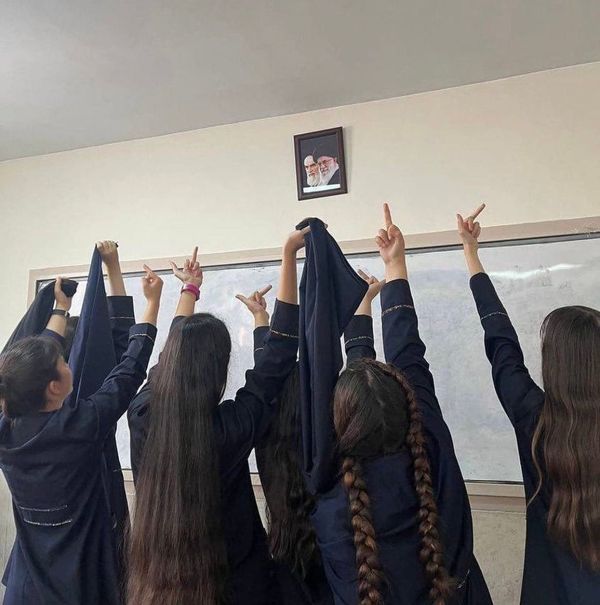
An image circulating on social media claiming to show Iranian schoolgirls protesting a picture of the supreme leader. Photograph: Twitter. Current Analysis Iranians are Done Debating Recent protests mark a tectonic shift in the method and rhetoric of expressing dissent in Iran. For over four decades, the Islamic leadership has fostered a culture of debate without delivery, using student debate tournaments and TV programs as an outlet for narrow critique. Previous protest movemen Alireza Eshraghi • 10 min read
Current Analysis Iranian Women Take On the Constitution Activists for women’s rights are prominent among the many Iranians who fear a reinvigorated crackdown on personal and social freedoms in the wake of the surprise election of the ultra-conservative Mahmoud Ahmadinejad to the presidency of the Islamic Republic. Though Ahmadinejad sought to soften his Mahsa Shekarloo • 10 min read
Current Analysis Paradox and Possibility in Iran's Presidential Election Just a short time ago, the Iranian presidential election being held on June 17, 2005 was regarded as a non-event. The prospect that the election would advance debates over political reform and democratization appeared weak, in the shadow of the self-described defeat of Iran’s parliamentary reformist movement Mohammad Maljoo, Arang Keshavarzian • 8 min read
Current Analysis Reform Retreats Amid Jordan's Political Storms For weeks in the spring of 2005, banners advertising an international gathering at the Dead Sea resort of Shouna adorned every main street in Jordan’s capital city of Amman. The government was touting what it regarded as a significant national success: for the third year in a row, the Curtis Ryan • 10 min read
Current Analysis Elections Pose Lebanon's Old Questions Anew Watching a wave of peaceful protests compel the Lebanese government to resign on February 28, 2005, State Department spokesman Adam Ereli hailed the victory of a “Cedar Revolution” in line with, among others, the Orange Revolution in Ukraine and “the Purple Revolution in Baghdad.” Ereli went on to claim that Sateh Nourredine, Laurie King-Irani • 11 min read
Current Analysis Popular Social Movements and the Future of Egyptian Politics President Husni Mubarak’s unexpected announcement that Article 76 of the Egyptian constitution will be amended to permit a direct and competitive vote in the September presidential election has captured the attention of the international and local media and political classes. The substance of the proposed constitutional amendment, announced on Joel Beinin • 10 min read
Current Analysis Women's Rights and the Meaning of Citizenship in Kuwait Prosperous and possessed of a spirited parliament, Kuwait has prided itself on being a standard setter among the Arab monarchies on the Persian Gulf. With respect to women's rights, however, today Kuwait ranks just above Saudi Arabia. Kuwaiti women are allowed to drive and they occupy positions in p Mary Ann Tétreault • 13 min read
Current Analysis Egypt Looks Ahead to Portentous Year Not so long ago in Egypt, elections for the parliament, bar association and press syndicate, as well as presidential referenda, were dismissed as mere beautifying accessories for an incorrigibly authoritarian regime. In 2005, several developments promise to accentuate the significance of these once Mona El-Ghobashy • 12 min read
Current Analysis Protests Hint at New Chapter in Egyptian Politics The week marking the first anniversary of the US-led invasion of Iraq saw a flurry of demonstrations across Egypt. A protest in central Cairo marking the beginning of the war was followed by a series of demonstrations at al-Azhar and other major universities, as well as the lawyers& Tamir Moustafa • 9 min read
Current Analysis Round 12 for Iran's Reformists When, in mid-January 2004, the Council of Guardians rejected the applications of 3,600 out of nearly 8,200 people seeking candidacy in Iran's upcoming parliamentary elections, there was scant surprise in the country. President Mohammad Khatami, members of his government and sitting parliamentary deputies professed to Kaveh Ehsani • 8 min read
MER Article Last Efforts of Iran's Reformers Student demonstrations in December 2002 revealed yet again the depth of public sentiment favoring political and economic reform in Iran. But the loose coalition of reformists under the leadership of President Mohammad Khatami has been unable to harness this “reserve power of revolution” to push its Ali Rezaei • 17 min read
Current Analysis A Saudi Dissident's Agenda for Democratic Reform From Washington to the Arab summit, there has been much discussion lately of reformism in Saudi Arabia, but few have heard from grassroots voices within the pro-democracy movement itself. The United States has acted as though it were introducing reform notions where they previously did not exist. B Mohammed AlMohaissen • 2 min read