Issue 301
Articles from Winter 2021
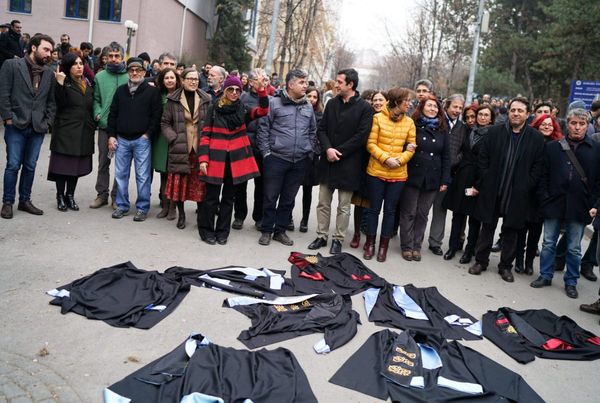
Generational Dislocation and Academic Solidarity—Aslı Bâli on MESA’s Global Academy
The last ten years have seen a precipitous decline in conditions for academics across the Middle East. With campuses under literal fire in some places and extraordinary repression and authoritarian crackdowns in others, research, writing and teaching have become nearly impossible in many places.Reflections on Exile
One legacy of revolution and counterrevolution is the growing number of participants—some of whom identify as revolutionaries or activists—living outside of the Middle East and North Africa. Whether by choice or by compulsion, their plight is part of the bitter fruit of revolutionary struggle and co
Revolution, War and Transformations in Yemeni Studies
Almost twenty years ago, Sheila Carapico made the case for the development of Arabian Peninsula studies as an alternative to the growing field of Gulf studies. A wider regional approach, she argued, would better highlight the numerous connections and flows between Yemen and the six monarchies of the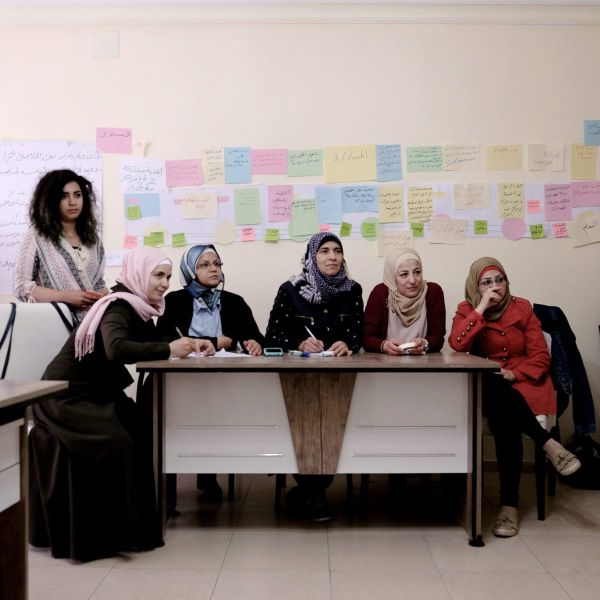
“We Don’t Have the Luxury to Stop”—An Interview with Syrian Civil Society Activist Oula Ramadan
Observers often summarize the past ten years in Syria in numbers: more than 500,000 killed, 100,000 disappeared, half the population of 22 million displaced, hundreds of billions of dollars of property destroyed and 90 percent of the population currently living in poverty. These shocking figures lay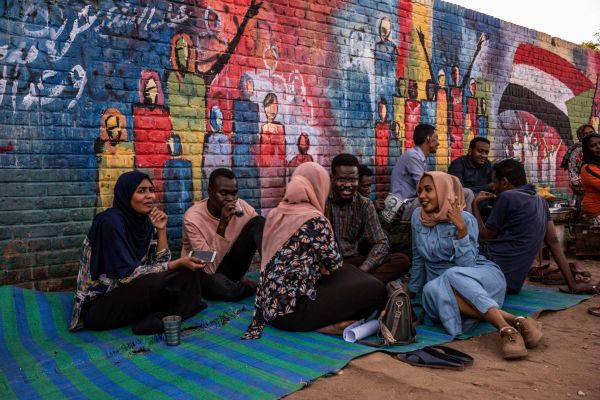
The Evolution of Sudan's Popular Political Forces
On January 30, 2011, a protest took place in Sudan’s capital Khartoum. Inspired by uprisings in other parts of the Arabic-speaking world, such as Tunisia and Egypt, activists announced and promoted the planned demonstration using social media platforms. The protesters demanded significant change: They called for the ouster
Whatever Happened to Dignity? The Politics of Citizenship in Post-Revolution Tunisia
At this time, near the end of 2021, the prospects for social justice and democracy in Tunisia are quite bleak. In the aftermath of President Kais Saied’s coup of July 25, 2021, the state of power relations among political parties and civil society organizations is uncertain. Most of the
Egypt From Icon to Tragedy
When masses of people assembled in Egypt’s public squares and succeeded in toppling President Husni Mubarak in 2011, the world went a little bit mad. That an urban uprising unseated one of the contemporary world’s most favored autocrats became freighted with symbolism. The two-week occupation of Tah
Dialectics of Hope and Despair in the Arab Uprisings
Alaa Abd El-Fattah and Ahmed Douma, leading Egyptian revolutionaries, wrote these words in 2014 for the Mada Masr piece “Graffiti for Two…Alaa and Douma.” Abd El-Fattah and Douma have spent most of the last decade in jail, much of it in solitary confinement. The uncomfortable coexistence of hope and
The Enduring Taste of Hope—A Poem and Interview with Khaled Mattawa
Soon after Libyans rose up in protest against the brutal authoritarian regime of Muammar al-Qaddafi in February 2011, the Libyan American poet Khaled Mattawa wrote “Now That We Have Tasted Hope.” His poem powerfully captured the mix of relief and anguish, despair and hope felt by many who participat