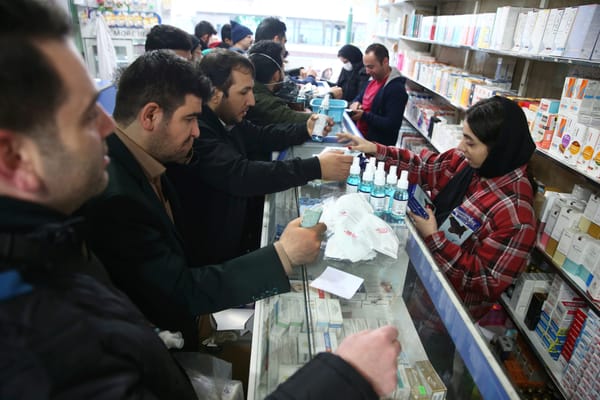

MER Article The Psycho-Politics of Wellbeing Iranians have repurposed, reconfigured and transliterated the psychiatric concepts of depression and trauma as depreshen and toroma. In this wide-ranging interview, Orkideh Behrouzan speaks with Sheila Carapico about the politics of Iranian mental health care policy, public discussion of the effects Orkideh Behrouzan • 16 min read
MER Article Iran Dispatch Trumpism has discombobulated Iran. Revulsion against President Donald J. Trump’s rhetoric and policies has achieved the rare feat of unifying the disgruntled Iranian public and the fractious ruling elite. This nationalist backlash barely conceals the internal crises facing Iran at every level—social Kaveh Ehsani • 6 min read
Current Analysis How the Houthis Became “Shi‘a” It is wrong to code what is happening in Yemen as a Sunni-Shi‘i conflict. The Houthis are not an Iranian proxy but a predominantly local political movement founded in long-standing, Yemen-centric grievances and power struggles. The cynical use of sectarian language casts the conflict in Yemen as par Anna Gordon, Sarah Parkinson • 10 min read
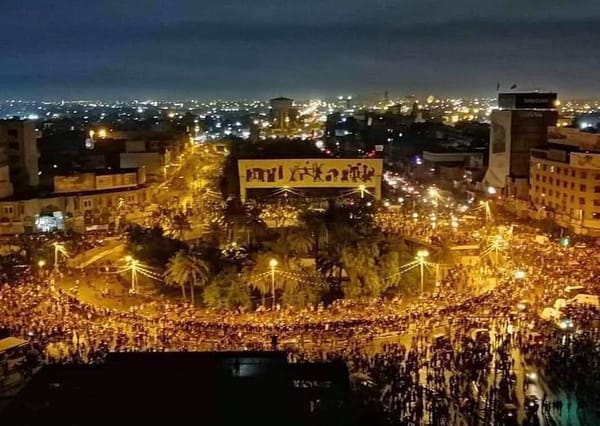
Current Analysis A “Blue” Generation and Protests in Iran The protests reveal a widespread disaffection with all existing political factions. New slogans calling for the “death” of “the dictator” and for a “referendum” alternated with those in favor of the Pahlavi monarchist regime that ruled Iran before the 1979 revolution. This public enunciation of an a Aghil Daghagheleh • 9 min read
Current Analysis Another Brick in the Wall At ten o’clock in the morning, Thursday October 5, 2017, about 500 teachers gathered in front of the Budget and Planning Office in Tehran. [1] They were joined by thousands of colleagues protesting in front of education offices in a reported 21 cities across the country. Turning Global Teachers’ Zep Kalb • 10 min read
Current Analysis Labor and Class in Iran Mohammad Maljoo is a Tehran-based economist researching labor issues and the transformation of capital-labor relations in post-revolutionary Iran. Widely published in several languages, Maljoo is also the Persian translator of numerous books on political economy by thinkers such as Karl Polanyi, E. P. Thompson and Albert Hirschman. The bulk of Paola Rivetti • 14 min read
Current Analysis Lessons Learned (and Ignored) On May 23, 1997, Mohammad Khatami, who had spent most of the 1990s as head of the National Library, defeated Ali Akbar Nateq Nouri, the speaker of Parliament, to become president of the Islamic Republic of Iran. The election was a turning point in post-revolutionary history—the underdog beat the Naghmeh Sohrabi, Arang Keshavarzian • 19 min read
MER Article What is Activism? In early 2011, the world watched as millions of people took to the streets across the Arab world to demand the fall of regimes, or at least substantial political reforms. As the weeks and then months unfolded, the broadcast media adopted split screens to show simultaneous live footage of crowds in m Kevan Harris, Jillian Schwedler • 11 min read
editors_061016 Current Analysis Release Homa Hoodfar We are deeply concerned by the arrest and ongoing detention of Homa Hoodfar, an eminent anthropologist and contributor to Middle East Report, by the Revolutionary Guard Corps of the Islamic Republic of Iran. Hoodfar traveled to Iran in early 2016 to visit family and conduct scholarly research. She was scheduled The Editors • 1 min read
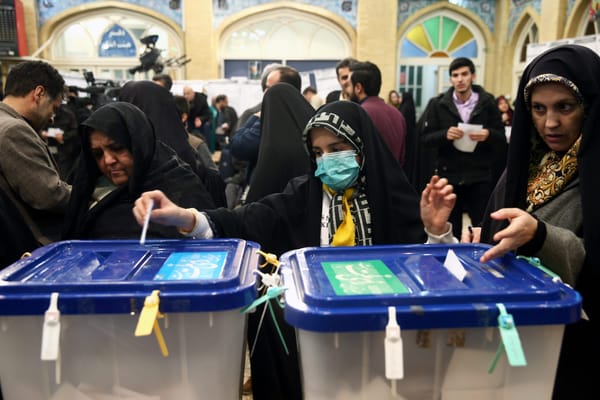
Current Analysis The Day Tehran Shook Speaking to a journalist days after the February 26 elections in Iran, leading reformist Mohammad Reza Aref stated, “When I saw the results for Tehran coming in, I was shocked.” Aref had expected the top of the list he headed to do well in the contest for Tehran’s 30 seats in the Tenth Majles, or Pa Farideh Farhi • 11 min read
MER Article Karimi, Domesticity and Consumer Culture in Iran Pamela Karimi, Domesticity and Consumer Culture in Iran: Interior Revolutions of the Modern Era (New York: Routledge, 2013). Norma Claire Moruzzi • 4 min read
MER Article Class Reshuffling Among Afghan Refugees in Iran When I was interviewing Afghan refugee writers and intellectuals in Iran in the mid-2000s, I soon realized that there was a gulf between their occupations and their aspirations. [1] The young poets who were the subjects of my research in the northeastern city of Mashhad often earned a living as manu Zuzanna Olszewska • 6 min read