The US and Israeli War on the Middle East
Our recent work understanding the dynamics


Dear Friends and Comrades,
On Saturday February 28, the United States and Israel carried out coordinated airstrikes on Iran. The strikes, which followed an inconclusive round of peace talks, were aimed at senior Iranian leaders and commanders, with the stated goal of hitting the regime’s political and military hierarchy. Ayatollah Ali Khamanei, the Supreme Leader of the Islamic Republic, was killed in the attacks, along with several members of the Revolutionary Guard Corps, and this morning the building that houses the Assembly of Experts, responsible for choosing a new supreme leader, was struck by Israeli missiles. Iran’s retaliation has comprised missile and drone strikes across the Gulf, targeting US military assets, oil infrastructure and civilian centers in Bahrain, Qatar, the United Arab Emirates (including in and around Dubai and Abu Dhabi), Kuwait and Saudi Arabia. Iranian missiles and drones also caused damage to nearby civilian infrastructure in major cities and transportation hubs, drawing condemnation from Gulf states and raising fears of broader regional escalation. After more than a year of ceasefire violations by Israel, Hizballah fired missiles into Israel in retaliation for the killing of Iran’s supreme leader. Israel has responded with heavy bombardments across Lebanon. As I write this, US and Israeli strikes are continuing, while casualties, including hundreds of civilians across the region, are rising. Despite President Donald Trump and Secretary of Defense Pete Hegseth’s apparent desire for a “short war,” such a conflict will likely immiserate Iran’s population and undermine the popular will and sovereignty of Iranians for a long time to come.
As our editors and contributors follow events closely, we want to share some key articles and podcast conversations from the past year that might serve as a reference for understanding how we arrived at such a perilous moment for the region.
In Solidarity,
James Ryan
Executive Director
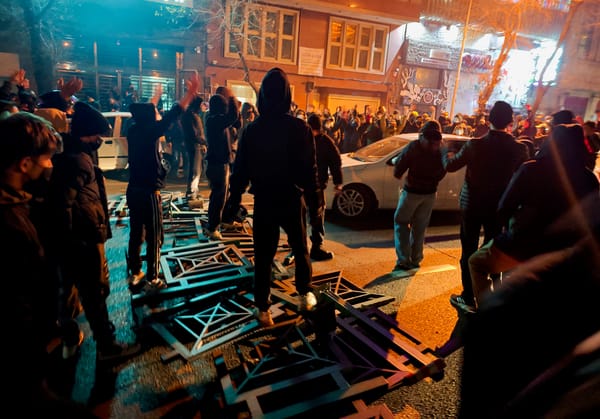
Ida Nikou’s recent analysis of the protest waves explains the economic conditions faced by Iranians caught between sanctions and authoritarianism.
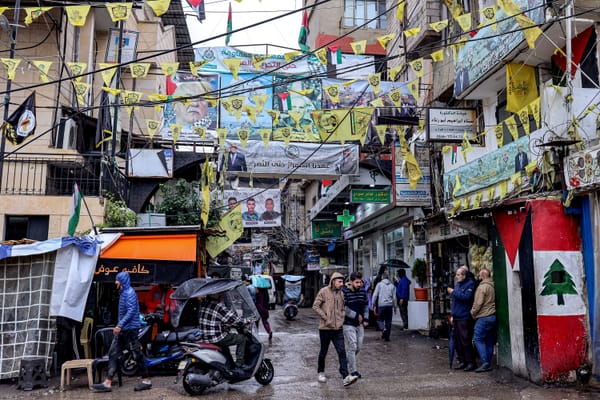
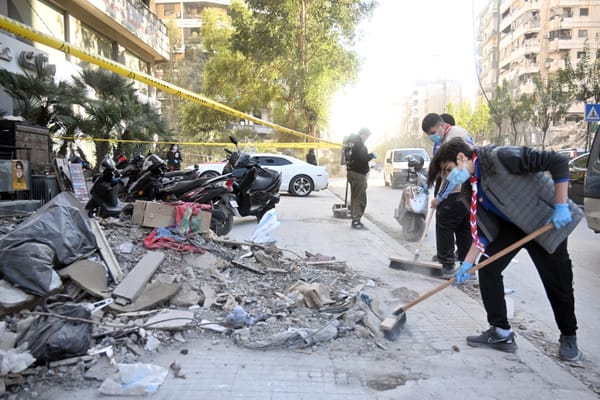
Iman Ali’s recent article and podcast appearance detail the efforts of Lebanese Shi’a to rebuild their communities in the midst of Israeli attacks.
Asma Abdi, Kaveh Ehsani and Maziyar Ghiabi joined James Ryan on the MERIP Roundtable Podcast last month to discuss the protest wave that preceded this weekend’s attacks.
Following Israel’s assassination of key Hamas leaders in a bold rocket attack on Qatar in September 2025, Maziyar Ghiabi, Shana Marshall and Kevin Schwartz joined James Ryan on the MERIP Roundtable Podcast to discuss the widening of Israel’s war in the region.
For our Summer/Fall 2025 double issue on Material Politics of Normalization, Arang Keshavarzian provided an in-depth review essay of Elham Fakhro’s new book on the Abraham Accords.
For our Spring 2025 issue, Mona Tajali penned an essay on the impact of the Woman, Life, Freedom movement on Iranian politics, and joined James Ryan for the first episode of the MERIP Podcast, recorded in the wake of the July 2025 war on Iran.
Our Winter 2024 issue Resistance–The Axis and Beyond opened with this short reflection from Kevin Schwartz on the state of resistance to Israeli aggression and Iran’s role.
For Resistance–The Axis and Beyond, Maryam Alemzadeh unpacked the complex politics of Iranian solidarity with Palestinians and its impacts on Iranian domestic politics.
In the wake of the September 2024 pager attack in Lebanon, Lara Deeb, Maya Mikdashi, Tsolin Nalbantian and Nadya Sbaiti assembled this thorough primer on the history of Lebanon and its role in establishing solidarity with Palestine and resisting Israeli violence.
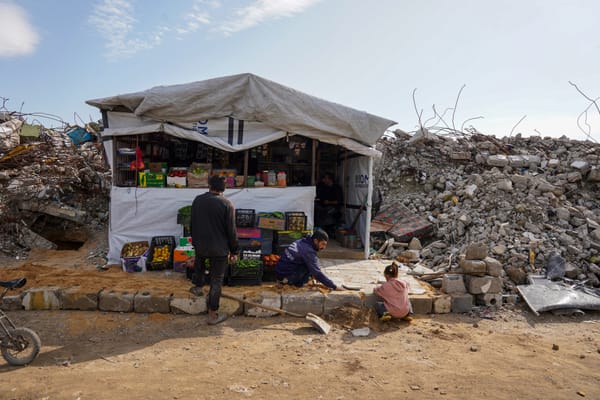
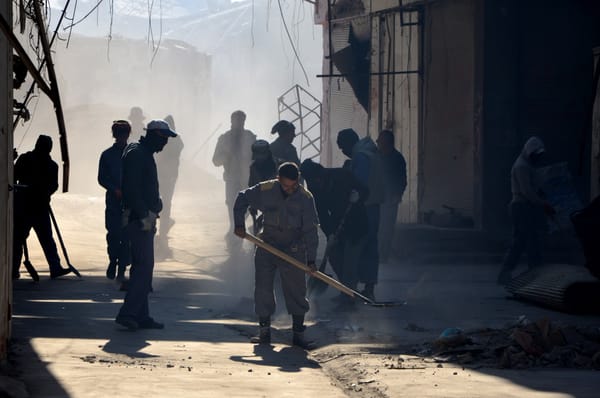
Writing from southern Lebanon in the immediate wake of the 2024 war with Israel, Munira Khayyat surveyed the devastation and how Lebanese are working to continue living and resisting in spite of repeated attacks.
For Resistance–The Axis and Beyond, Ölmö Gölz and Ruth Vollmer helped explain the ideological underpinnings of the Axis of Resistance from the Iranian perspective.
All of MERIP's work is paywall free. Help us keep it that way by making a donation today!