The MERIP Podcast Episode 20: The MERIP Roundtable, On the Iran War Part III


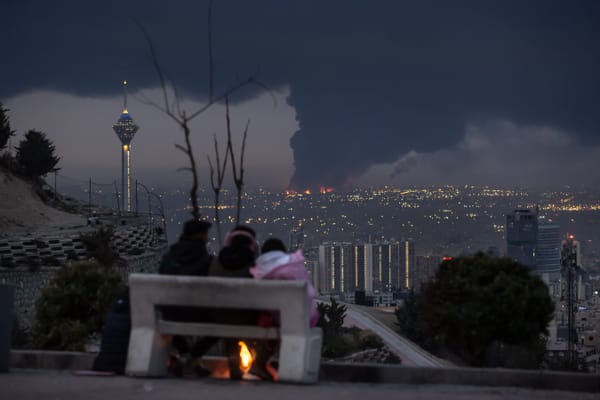
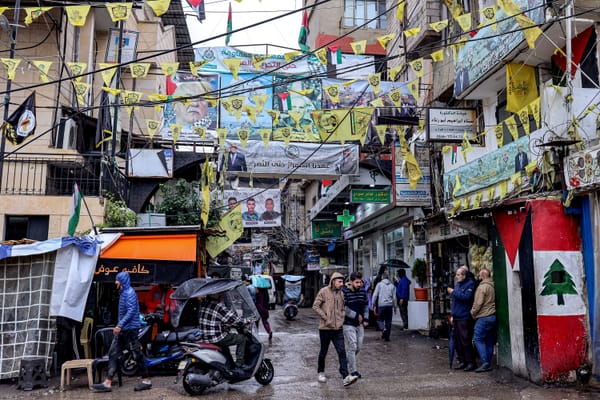
Today’s episode is the third installment of our MERIP Roundtable discussing the war on Iran, instigated by the United States and Israel on February 28, 2026, and its regional reverberations. This episode focuses on Israel’s expanded war on Lebanon. Following the assassination of Ali Khamanei, supreme leader of the Islamic Republic of Iran, Hizballah fired six missiles into Israel, its first offensive move since a ceasefire was signed in the fall of 2024. Israel, meanwhile, has violated the ceasefire on a near daily basis over the past year and a half through missile and drone strikes. In the past weeks, Israel has issued mass evacuation warnings across the entire area south of the Litani river, in Dahiyeh (the southern neighborhoods of Beirut) and in the Bekaa valley. Invasions by Israel, including a commando raid through Syria into the Bekaa, followed as have frequent barrages of missile and drone attacks. IOver 1 million people have been displaced—representing a quarter of Lebanon’s population.
The renewed assault has raised the stakes of long running issues in Lebanon around national sovereignty and self-defense, and wider questions about how both Lebanese and Palestinian resistance to Israeli aggression in the region can be constituted in the face of its overwhelming military and technological advantages. To discuss these issues, MERIP’s executive director James Ryan was joined by Rima Majed, an associate professor of sociology at the American University of Beirut, whose work has focused on sectarianism, social movements and conflict in Lebanon. She wrote a short essay on the war on Lebanon that appeared as part of our collection “War Across Boundaries–Perspectives on Iran and a Region Under Siege,” published on March 19, 2026. Also joining the podcast is Ali Musleh, an assistant professor of anthropology at the University of California, Davis, whose research focuses on the effects of automated warscapes on everyday life and resistance in Palestine. Both Rima and Ali are also members of MERIP’s editorial committee.
This conversation was recorded on March 23rd, 2026.
Further Reading:
Laleh Khalili (interview), Democracy Now, “The End of the Petrodollar? How Iran War Is Reshaping the Global Economy: Author Laleh Khalili,” March 19, 2026.
Joseph Daher, Hezbollah: The Political Economy of the Party of God (Pluto Press, 2016).
Abdaljawad Omar, “Gaza Faces the World,” Turbulence Podcast, Episode 10, January 20, 2026.
Rashid Khalidi, The Hundred Years War On Palestine: A History of Settler Colonialism and Resistance, 1917-2017 (Macmillan, 2020).
“The Material Politics of Normalization” Middle East Report, Summer/Fall 2025, Issue 315-316.
Munira Khayyat, “Dispatch from South Lebanon–Life as Resistance at the End of the World,” Middle East Report, Winter 2024, Issue 313.
Lara Deeb, Maya Mikdashi, Tsolin Nalbantian and Nadya Sbaiti, “A Primer on Lebanon–History, Politics and Resistance to Israeli Violence,” Middle East Report, Winter 2024, Issue 313.
The MERIP Podcast comes to you without any ads or paywalls. Please consider making a donation today so we can keep it that way!