
Current Analysis The Southern Transitional Council and the War in Yemen In late January this year, an armed conflict erupted in Aden between troops under command of President ‘Abd Rabbu Mansour Hadi and those loyal to the Southern Transitional Council (STC), both in principle on the same side of the Yemeni war. The fighting left more than 40 people dead and several woun Susanne Dahlgren • 9 min read
Current Analysis Radix Malorum est Cupiditas The last three years have been a time of outright misery for most Yemenis as War, Pestilence, Famine and Death have stalked what used to be known as Arabia Felix. Thousands are recorded as having been killed; tens of thousands more are known to have died. Millions are starved by a siege, and—weakene James Spencer • 5 min read
Current Analysis Yemen Dispatch The eruption of fighting by rival factions in Yemen’s southern city of Aden on January 28 provides distressing additional evidence that Yemen’s war is best understood as a series of mini-wars reflecting the intersection of diverse domestic drivers of conflict and Gulf regional fragmentation. Stacey Philbrick Yadav • 7 min read
Current Analysis How the Houthis Became “Shi‘a” It is wrong to code what is happening in Yemen as a Sunni-Shi‘i conflict. The Houthis are not an Iranian proxy but a predominantly local political movement founded in long-standing, Yemen-centric grievances and power struggles. The cynical use of sectarian language casts the conflict in Yemen as par Anna Gordon, Sarah Parkinson • 10 min read
MER Article The Ties That Bind Yemeni-American activist Rabyaah al-Thaibani was born in Ta‘izz, Yemen’s largest city, in 1977. She moved to the United States as a child to join her father, who was working nights cleaning office buildings in Manhattan. She grew up in Brooklyn, attended Columbia University and since has worked in c Stacey Philbrick Yadav • 9 min read
Current Analysis Letter to UN Secretary-General Regarding Saudi Arabia's Removal from List of Armies Charged with War Crimes "The ruling Saudi regime obviously knows how to use its wealth to manipulate dysfunctional international bodies such as the UN. However, in the eyes of the global community it stands charged with overwhelming evidence of war crimes and of fundamental human indecency." (Author not identified) • 4 min read
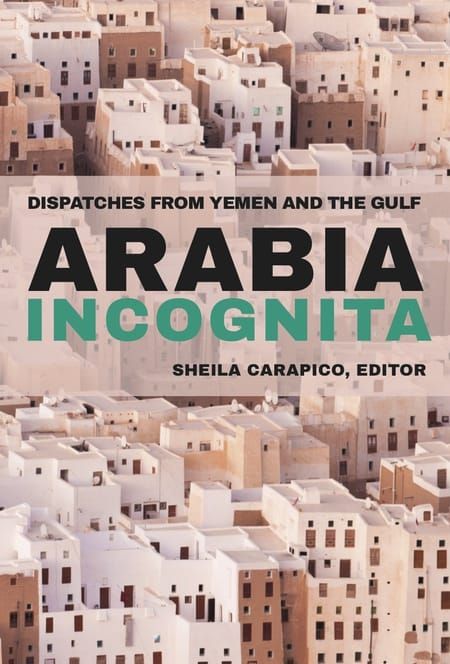
Current Analysis Arabia Incognita A new anthology from MERIP and Just World Books explores the Arabian Peninsula as "a distinct political unit" whose upheavals reverberate regionally and globally. The Editors • 2 min read
Current Analysis Open Letter from Scholars of Yemen Scholars write for the third time to condemn the actions of the US-Saudi-French alliance violating international humanitarian law in the southern Arabian Peninsula. (Author not identified) • 2 min read
Current Analysis Nobel Nota Bene From Little League banquets to honorary doctorates, it may well be in the nature of award committees to tilt toward hyperbole. Elevating the legacy of the recipient is, among other things, an affirmation of the importance of those who can recognize importance when they see it. The committee that sel Stacey Philbrick Yadav • 3 min read
Current Analysis The GCC Needs a Successful Strategy for Yemen, Not Failed Tactics For the last 45 years, the Gulf Cooperation Council (GCC) has tried to mitigate its Yemen problem through short-term tactics, rather than construct and give resources to a strategy for solving it. That policy has failed repeatedly. A bold and lasting transformation is needed, not the same ineffectua James Spencer • 4 min read
Current Analysis Yemen's Imposed Federal Boundaries With the war in Yemen well past its hundredth day, confusion persists as to the underlying causes of the conflict. Far from a sectarian proxy war [http://www.merip.org/mer/mer273/breakdown-gcc-initiative] between Shafi‘is under the patronage of Saudi Arabia and Zaydis backed by Iran, as the mainstre Tobias Thiel • 4 min read
Current Analysis Yemen Is Starving, and We're Partly to Blame Twenty million people in Yemen, the poorest country in the Arab world, are at risk of dying from hunger or thirst. That’s 80 percent of the country’s population, which according to UN agencies badly needs emergency supplies of food and water, along with fuel and medicine. This almost unimaginable c Chris Toensing • 2 min read