MER Article What is Activism? In early 2011, the world watched as millions of people took to the streets across the Arab world to demand the fall of regimes, or at least substantial political reforms. As the weeks and then months unfolded, the broadcast media adopted split screens to show simultaneous live footage of crowds in m Kevan Harris, Jillian Schwedler • 11 min read
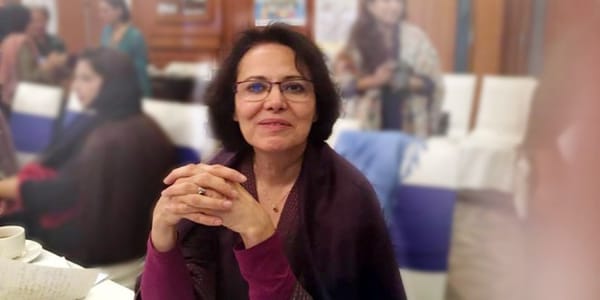
editors_061016 Current Analysis Release Homa Hoodfar We are deeply concerned by the arrest and ongoing detention of Homa Hoodfar, an eminent anthropologist and contributor to Middle East Report, by the Revolutionary Guard Corps of the Islamic Republic of Iran. Hoodfar traveled to Iran in early 2016 to visit family and conduct scholarly research. She was scheduled The Editors • 1 min read
Current Analysis The Day Tehran Shook Speaking to a journalist days after the February 26 elections in Iran, leading reformist Mohammad Reza Aref stated, “When I saw the results for Tehran coming in, I was shocked.” Aref had expected the top of the list he headed to do well in the contest for Tehran’s 30 seats in the Tenth Majles, or Pa Farideh Farhi • 11 min read
MER Article Karimi, Domesticity and Consumer Culture in Iran Pamela Karimi, Domesticity and Consumer Culture in Iran: Interior Revolutions of the Modern Era (New York: Routledge, 2013). Norma Claire Moruzzi • 4 min read
MER Article Class Reshuffling Among Afghan Refugees in Iran When I was interviewing Afghan refugee writers and intellectuals in Iran in the mid-2000s, I soon realized that there was a gulf between their occupations and their aspirations. [1] The young poets who were the subjects of my research in the northeastern city of Mashhad often earned a living as manu Zuzanna Olszewska • 6 min read
MER Article Whither Iranian Petrochemical Labor? On November 4, 2012, there were two snapshots of a deeply unequal struggle between labor and capital in Iran—a struggle that had begun two years earlier with a strike of temporary workers at the Mahshahr Petrochemical Complex. In Mahshahr, at the head of the Persian Gulf, Faraveresh, one of the five Mohammad Maljoo • 13 min read
MER Article The Politics of Recognition The victory of Mahmoud Ahmadinejad in the presidential election of 2005 came as a shock to many segments of Iranian society, particularly the reformists within the Islamic Republic who believed they had pushed aside such arch-conservatives for good. Ahmadinejad prevailed thanks to the massive partic Fatemeh Sadeghi • 11 min read
MER Article The Iran Deal as Social Contract For years discussion of Iran’s nuclear program and how best to address the surrounding impasse focused on international relations—chiefly, the extent to which the United States and the Islamic Republic could and should trust each other to reach a negotiated settlement. Amidst all the conjecture, the Arang Keshavarzian • 12 min read
MER Article Talking Class in Tehroon Persian, like any other language, is laced with references to class, both blatant and subtle. With idioms and metaphors, Iranians can identify and situate others, and thus themselves, within hierarchies of social status and privilege, both real and imagined. Some class-related terms can be traced ba Rasmus Christian Elling, Khodadad Rezakhani • 9 min read
MER Article Class and Politics in Post-Revolutionary Iran The dominant narrative of the 1979 Iranian revolution granted a pivotal role to a new political actor—the downtrodden masses. Over the past two decades in Iran, a different protagonist gradually replaced them, equally captivating and elusive—the middle class. While neither category fully represented Kevan Harris • 6 min read
MER Article From the Editors (Winter 2015) January 16 was implementation day for the summer 2015 agreement between the Islamic Republic of Iran and six world powers known as the P5+1 regarding Iran’s nuclear research program. By the terms of this accord, Iran is to curtail its nuclear activities, soothing Western fears that it aims to acquir The Editors • 4 min read
Current Analysis Saudi Arabia's Dangerous Sectarian Game When Saudi Arabia executed the Shiite cleric and political dissident Sheikh Nimr al-Nimr on Saturday, the country’s leaders were aware that doing so would upset their long-time rivals in Iran. In fact, the royal court in Riyadh was probably counting on it. It got what it wanted. The deterioration of Toby Jones • 3 min read