
Regional Uprisings Confront Gulf-Backed Counterrevolution Wealthy, ambitious and emboldened by US acquiescence, Saudi Arabia and the UAE have emerged as key protagonists in thwarting popular movements. Jonathan Fenton-Harvey • 11 min read
MER Article Paper Trails Pedagogy In order to uncover the paper trails of the powerful, one has to first learn how to track down, read and decipher obscure planning documents that are often available in the public sphere. Laleh Khalili • 4 min read
MER Article The Secret Lives of UAE Shell Companies The UAE’s growing number of free zones are providing secretive havens for offshore companies to avoid taxes, regulation and accountability at home. Shell companies and money laundering abound. But it is still possible for determined researchers to discover who controls and ultimately benefits from t Florence Wolstenholme • 15 min read
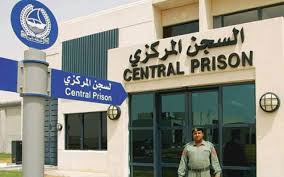
UAE Dubai Courts Current Analysis Scholars, Spies and the Gulf Military Industrial Complex A military-industrial complex is growing in the Gulf states. In May 2018, a British researcher Matt Hedges was arrested in the UAE and charged with espionage for researching this industry as a spy, not a scholar. His colleague Shana Marshall explains why. Shana Marshall • 11 min read
MER Article The UAE and the Infrastructure of Intervention Rafeef Ziadah investigates the rise of humanitarian logistics hubs such as Dubai International Humanitarian City, which, although ostensibly humanitarian, have become a key mechanism of intervention and increasingly a central element in the projection of power for the Gulf regimes such as the United Rafeef Ziadah • 9 min read
MER Article Ambitions of a Global Gulf From the wars in Syria and Libya to the catastrophic bombing campaign in Yemen, the Gulf states led by Saudi Arabia and the United Arab Emirates have been the main Arab forces involved in the region’s current conflicts. The Gulf also increasingly shapes the political and economic policies of other A Adam Hanieh • 13 min read
MER Article "The Dubai of..." Over the last several decades, and particularly after upheavals in Egypt, Iraq, Lebanon and Syria, much of the urban center of gravity of the Middle East has shifted to the Gulf. To understand this trend and its consequences, MERIP editorial committee member Jillian Schwedler interviewed Yasser Elsh Yasser Elsheshtawy • 16 min read
Current Analysis From Gaza to Jerusalem to Iran By forging a regional alliance aimed at confronting Iran and its allies, the new coalition of the US, Israel and allied Sunni Arab regimes intend to relegate the Palestinian issue to collateral damage in order to succeed. Joel Beinin • 9 min read
MER Article The Arab World’s Non-Linear Electricity Transitions For many, especially in the United States, the Arab world is closely associated with fossil fuels. But over the past several years, a raft of news articles, opinion pieces and analyses have hailed the advent of renewable energy—especially solar power—in Arab countries. Many such pieces open with ima Zachary Cuyler • 19 min read
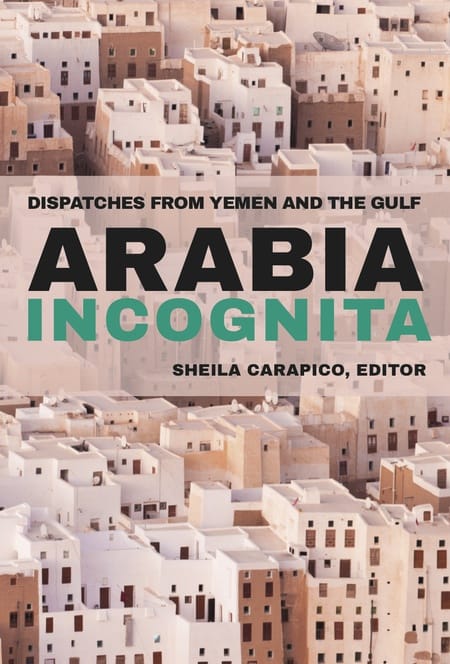
Current Analysis Arabia Incognita A new anthology from MERIP and Just World Books explores the Arabian Peninsula as "a distinct political unit" whose upheavals reverberate regionally and globally. The Editors • 2 min read
Current Analysis The GCC Needs a Successful Strategy for Yemen, Not Failed Tactics For the last 45 years, the Gulf Cooperation Council (GCC) has tried to mitigate its Yemen problem through short-term tactics, rather than construct and give resources to a strategy for solving it. That policy has failed repeatedly. A bold and lasting transformation is needed, not the same ineffectua James Spencer • 4 min read
Current Analysis Breaking Even, Breaking Down or Going for Broke? As of mid-May 2015, crude oil prices had fallen to the lowest level in recent years, under $60 a barrel for US domestic benchmark West Texas Intermediate (WTI) and about $66 a barrel for the international Brent benchmark [http://www.oil-price.net/]. These market prices are compared to several types Karen Pfeifer • 6 min read