NEW: Palestine 36 and the Hard Facts of History
By Lori Allen

Dear Friends and Comrades,
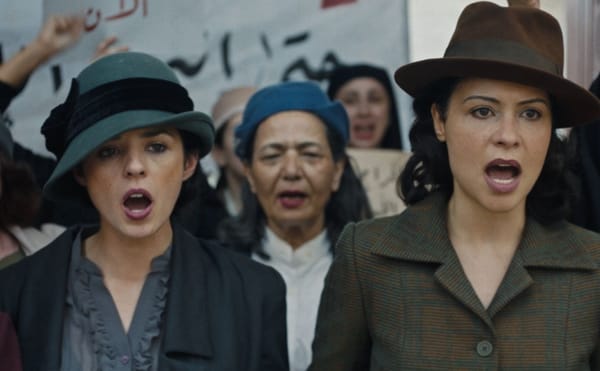
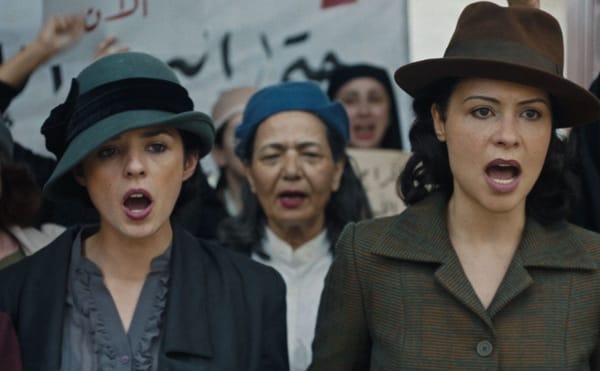
Palestine 36, the much anticipated new film from Annemarie Jacir brings to life the story of the Arab Revolt of 1936–39. Yesterday, it was shortlisted for an Academy Award, as Palestine’s official submission. Today, we are pleased to share a new review essay discussing the film by contributor Lori Allen. Allen dives into the historical richness of the story Jacir sets out to tell, noting that Palestine 36 succeeds by bringing the hard facts of history to life. The film, Allen writes, reflects Ghassan Kanafani’s materialist analysis of the period, placing Palestinian peasants and their relationship with the land at the center and depicting the resistance as it emerged among their ranks.
As awards season ramps up, it is heartening to see such rich depictions of the Palestinian struggle gain more attention (All That’s Left of You, directed by Palestinian filmmaker Cherien Dabis and Tunisia’s The Voice of Hind Rajab also made the Academy’s shortlist). We hope a wider US release for this epic is not far in the future – and that you’ll join us in keeping an eye out for it.
In Solidarity
James Ryan
Executive Director
Representing the brutality of life lived under Israeli domination in Palestine—Palestinians trying to get to work marched through metal cages like cattle in a chute, public praise for Israeli soldiers raping Palestinian prisoners, legal frameworks regularizing dictatorship and apartheid, terrorizing arrests of young children by soldiers, a genocide, Israelis’ denial of a genocide—poses a challenge for any artist or scholar trying to explain those conditions. The perversity of these conditions can seem to surpass what reality could contain, requiring unique representational forms to capture their extremity. Academic writers tend to double down on the facts, as if the weight of footnotes and granular detail could grab readers by the wrist tightly enough to force them into understanding. Artists, in contrast, often play with form and aesthetics, deploying parody and pastiche in an attempt to outpace and transform the unbelievable experiences of Palestinian life—to make them comprehensible in a different way. The floaty tones of Adania Shibli’s storytelling of horror are one example. The burlesque and satire in Elia Suleiman’s films is another. Such artistic translations of reality can provide a distance from the bloody ground, offering a different perspective and clarity, like the turn of a kaleidoscope. By disturbing established frameworks, their phantasmagoria unsettles audiences, shaking them free from some of the obfuscations of propaganda and ideology that shroud public understanding of Palestine, especially in the west.
Annemarie Jacir’s 2025 film Palestine 36 doesn’t do this. Instead, it digs its heels into the hard facts of history. Drawing on the conventions of epic cinema and narrative, the film tells the interwoven stories of a diverse cast of characters engaged in a mass political revolt. With great battle scenes, explosions and panoramic shots of Palestinian crowds demonstrating, the film is awash in nationalist symbols. The land becomes a character itself, as Jacir has described it. Fields of cotton are tended to by peasants reciting poetry, the mountains hide rebels and other secrets, orchards embrace conversations between daughter and mother. Colorized archival footage and stills—of fields, Jerusalem’s Old City, the sea—look like vintage postcards brought to life. These elements carry the viewer along within their genre-informed expectations to plant them in the heart of the realities of the Great Arab Revolt of 1936–1939, when Palestinians tried to free themselves of the British occupation that had been in place since 1917 and end the Zionist settler-colonial takeover of their homeland.
The British government’s commitment to supporting the development of a Jewish national home in Palestine—manifest in their awarding 90 percent of government concessions to the Zionists, among many other advantages—built what historian Rashid Khalidi has called an “iron cage” around Palestinians’ efforts to achieve independence in their ancestral homeland. In his analysis, Palestinians barely had a chance, as the Zionists took over the land and the economy with the full-throttle military, economic and political support of the British Mandate government that controlled Palestine after World War I and the end of the Ottoman Empire. The film shows how hard they tried, nonetheless. With strikes and boycotts, protests, revolutionary courts and the sabotaging of trains and government infrastructure, Palestinians and supporters from throughout the Arab region fought what Palestinian Marxist political thinker and novelist Ghassan Kanafani called the “‘enemy’ triumvirate:” “reactionary Palestinian leaders, Arab regimes surrounding Palestine, and the alliance between Zionism and imperialism.”
Like Kanafani’s analysis of this period, the film starts with the concrete conditions of people and stays with them throughout. Among these concrete conditions, the abuse of peasant farmers (more than two-thirds of the indigenous Arab population who were the drivers of the rebellion) and workers exploited by Arab landlords and other capitalists feature centrally. This “policy of rank discrimination against the Palestinian Arab majority” that Khalidi has so thoroughly analyzed was initially enshrined in the 1917 Balfour Declaration. In that 67-word statement released by British Foreign Secretary Arthur Balfour, the British government declared its commitment to the Zionist project of building “a national home for the Jewish people” and signalled its disregard for the political, collective rights of 94 percent of the population that was Palestine’s Arabs.
Under the aegis of the League of Nations (precursor to the UN), British Mandate control led to a cycle of poverty so intense that, according to one 1930 estimate from Haifa, 64 percent of peasant families contained one member who had been served a warrant of arrest or confiscation on account of their debts.[5] This history is now well documented, but not so generally well known, particularly among audiences in London where the film has been released in theaters. (Its US theatrical release is anticipated for early 2026). In interviews with British actors and viewers of Palestine 36, they remark on their own ignorance of this history and the need for better education about the shameful role of the British in these events. The problem is one that the film confronts directly.
Support MERIP during our year-end campaign by making a one-time or monthly donation today!