'Our Compass is Broken'—Israel's Ongoing War in South Lebanon
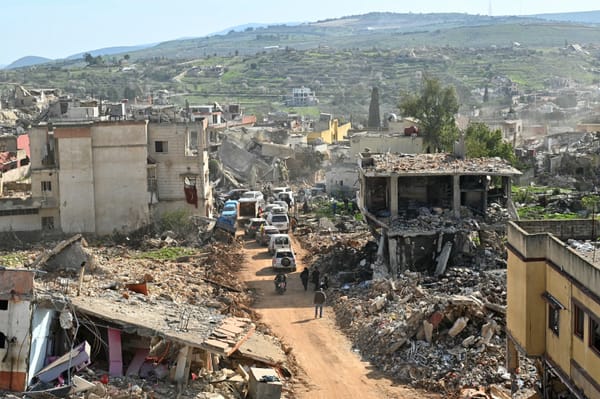

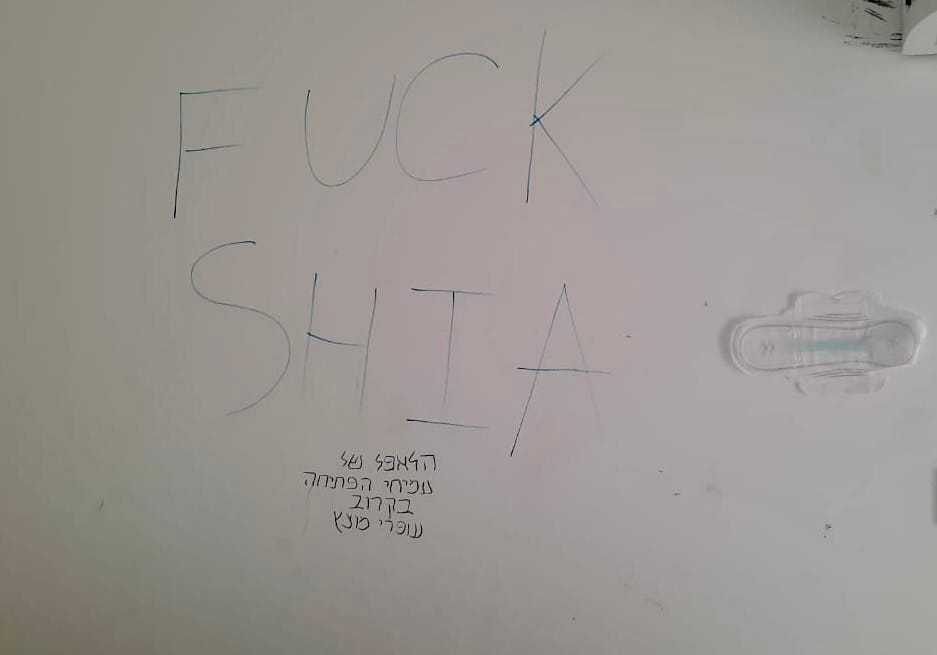
Every day since the beginning of Israel’s war on Gaza in 2023, my father, like many other villagers from Lebanon’s south, has listened to the news in the hope of hearing that he can return to our village along the border of South Lebanon and rebuild our house. In their 2024 invasion Israeli soldiers occupied the home, heavily damaging and vandalizing it. Only part of the house remained standing. The kitchen was completely blown out. In the rest of the house, soldiers had written racist, sectarian and sexist insults as well as threatening messages on the walls in both Hebrew and English. They tore out doors and wardrobes, emptied the closets, fractured the walls, destroyed electronics and looted personal items. Rooms were strewn with waste: water bottles, leftover food, urine and feces.
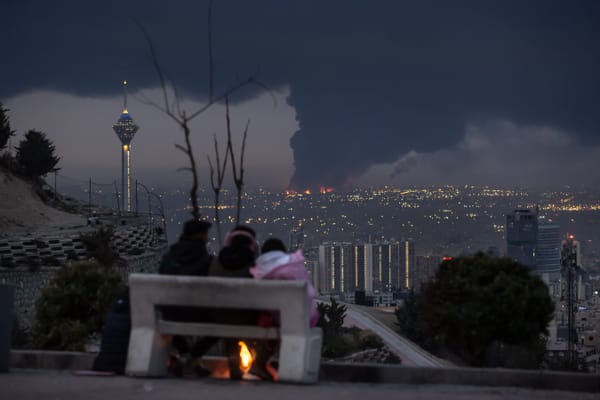
South Lebanon was drawn into the war from the outset, on October 8, 2023, when Hizballah entered the battle in support of Gaza. The Israeli cabinet deliberated offensives against Lebanon at the earliest stages of planning its response to the October 7 Hamas operation. For many outside of Hizballah’s constituency, however, the latest Israeli wars seemed to unfold in waves. Outside of the period of escalation from mid-September to late-November 2024, the government in Beirut often studiously ignored the south. After the November 27 ceasefire, many experienced some measure of peace—interrupted only by Israel’s renewed escalation following the start of the US-Israeli war on Iran on February 27, 2026, and Hizballah’s long-threatened retaliation for the Israeli ceasefire violations and the assassination of Iran’s Supreme Leader, Ayatollah Khamenei, on March 2, 2026. As a result, many in Lebanon blame Hizballah, and some, by extension, the Shi’a as a whole, for dragging Lebanon into another war. But for those with ties to the south, the war had never ended. Before, and in the 15 months after the 2024 ceasefire, southern Lebanese lived under regular Israeli threats and attacks during what was effectively a one-sided cessation of hostilities, as Israel became—for the first time since 2000—the de facto military power south of the Litani River.
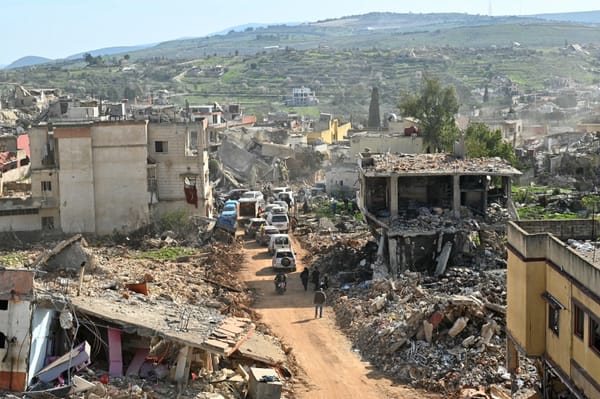
Our village is one of about 37 villages and towns that Israel heavily destroyed during and after the 2024 invasion, detonating and bulldozing houses and key infrastructure. Israeli airstrikes and demolitions wiped out its old village center, including its historic mosque of the Prophet Shuaib (Jethro), a structure that some trace back over 1,000 years, making it one of the oldest in Lebanon’s Jabal Amil region, and other markers of the village’s social, historical and cultural life. Vast swathes of its land were burned and trees uprooted. Of its 1,050 buildings, 750 were either completely or partially destroyed. Life-sustaining village infrastructure was dismantled: electricity (both state-supplied and private diesel generators and solar panels), water storage tanks and pipes, telecommunication lines, three schools, cemeteries, civil defense units, streets, two husayniyyas (Shi’i congregation halls), other places of worship, private shops and gas stations as well as small factories and farms.
After the ceasefire, life elsewhere seemed to resume, but ours remained frozen. Lebanon’s new prime minister, Nawaf Salam, repeatedly vowed the safe return of displaced people to their homes, but the state has been unable to fulfill this promise. Israel’s continued violation of the ceasefire, specifically attacks on reconstruction efforts and equipment, has made it impossible. The recent escalation has triggered a new wave of mass displacement, with more than one million people forced from their homes (almost a fifth of Lebanon’s population), while the widespread destruction, including bridges across the Litani River, has further severed the south from the rest of the country. But this renewed Israeli offensive builds on a status quo that took shape in the interregnum between the two escalations—marked by ongoing attacks, restricted return and Israel’s attempt to consolidate control in the south.
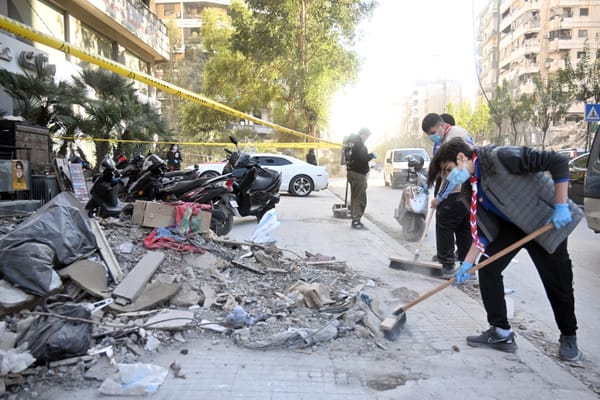
The first time I visited Beirut after the 2024 invasion and ceasefire was in May of 2025. My maternal uncles and aunts who live in the city were in the process of moving back to their apartments in several areas of Dahiyeh—the southern suburbs that have been heavily targeted by Israel. They each had put time, money and effort into fixing their homes that had been damaged from Israeli bombardment. For many, it was not clear whether their buildings were structurally safe enough to be inhabited. A few days into the ceasefire, a building across the street from one of my uncles collapsed, killing a family inside. Hesitant to return to the neighborhood, my uncle and his family spent over a year outside of Dahiyeh, first in a hotel north of the capital, then in a rented apartment on the fringes of the southern suburbs. Despite being better off than any other members of my extended family, they couldn’t afford to pay rent indefinitely, so he fixed his two linked apartments and moved back in.
During my visit, my family and I—unable to stay in our village home in the south—first stayed at a hotel, then in rented accommodation in Beirut. On the second day, looking outside the courtyard of the hotel during breakfast, my child, who was four at the time, said, “I don’t want to come to this Lebanon, I want to go to beit jiddo (grandpa’s house).” I had to explain to him that it was not yet safe to return to the south because there was still war in the village. I wanted to tell him that beit jiddo was partially destroyed by an army, not even wanting to name the occupier specifically, but I stopped myself. From then on, he grasped that South Lebanon was living a different reality than the rest of Lebanon. Months later, he asked me, “did the armies also destroy my Legos in the house?” “No,” I reassured him. “Your Legos are ok.” I lied to protect him, when in reality the IDF had occupied and trashed the house, including the room that we used to play and read in.
Usually, the entire family would gather at my maternal grandparents’ house in the village. But that was no longer an option. It was thus a strange experience when my grandparents visited our rented accommodation in Beirut one evening. Until that day, I had never seen my grandfather outside our village. He had even declined to attend my wedding in Sour in 2014. “Our compass is broken,” he said, identifying our disorientation. Nothing was the same, and none of us knew if it would ever be the same again. His village was his identity. In 2010, he had told me, “I don’t like to stay anywhere else than here. Tell me to live anywhere in the world I wouldn’t go anywhere but here.”
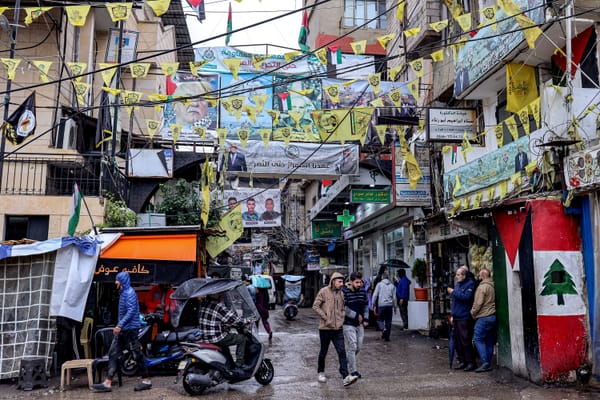
Since October 2023, Israeli actions have disproportionately affected the Shi’a population in Lebanon, contributing to persistent insecurity in which individual fears are closely tied to broader political dynamics. Once during our May visit, my aunt invited us to her house in Dahiyeh for lunch. In the morning a warplane broke the sound barrier over her home before it attacked Toul, a village near the southern city of Nabatiyeh, just days before the municipal elections were to take place in Lebanon. Acknowledging the dangerous situation, the government moved the polling stations for the border villages to Nabatiyeh and other towns north of the border. Israel had used such intimidation tactics during key political moments in the past, for example, right before the elections in 2009. My aunt was worried something would happen in Dahiyeh while we were there, but luckily it didn't. A week later, on June 5, 2025, Israel launched several attacks on Dahiyeh, targeting up to eight buildings and forcing many out into the streets at night.
In a later trip, in November of 2025, I was about to visit my uncles and aunts in Dahiyeh, when my aunt called me in panic. “Do not come now, everyone in Dahiyeh is packing their bags and worried they will have to leave their homes again tonight.” Hizballah had just stated that they reserved the right to resist Israeli attacks on Lebanon, and many expected Israel to strike Dahiyeh in response. I decided to go anyway. My cousin was checking Facebook constantly to see if Avichay Adraee, the Arabic-language spokesperson for the IDF, had posted any updates or so-called evacuation orders. These orders—like those used in Gaza—function as forced displacement directives under the guise of concern for civilian life. That afternoon, the IDF had issued similar orders for several areas in South Lebanon. Israel did not end up striking Dahiyeh that day, but the terror had been inflicted.
While my cousin was glued to social media, my uncle was watching the news. “I have not left the house all day,” he said. “This is our life now.” His wife added that he no longer saw anyone, even his friends. “We are constantly on our nerves, not knowing when we have to leave again,” my cousin told me, explaining that they had not unpacked their emergency bags containing their valuables and documents. I told them that my father still hopes he can return to rebuild his house soon, “tomorrow,” as he so often says. My uncle was less hopeful. “It is all gone,” he said. He had invested much of his savings into building a large home in the village to accommodate his four children and granddaughter. He had even installed an elevator for their disabled child. The Israelis detonated the three-story home during their invasion. Even the well beneath it was cracked. “Rebuild what?” he asked. “Our comfortable retirement—that’s it….It’s over for our generation.”
Another of my maternal uncles did move back to the village with his family—the only one on both sides of my family to do so. His family had been displaced multiple times in two years—a period when they were constantly at the mercy of their landlords, who often wanted to raise the rent that they already couldn’t afford.
Their house in the village was one of the few left standing, so they cleaned it, fixed it up and moved back in. All village schools were destroyed, so my uncle arranged for his youngest daughter to attend school in the neighboring village. The village was no longer the safe place where they had started their family during the years following liberation from Israeli occupation in 2000. They now lived under constant Israeli overflights and intrusions, and the nights frequently brought new acts of terror. Their movements in the village became limited.
On October 30, 2025, Israeli soldiers crossed into the village and killed municipality employee Ibrahim Salameh as he lay sleeping in the makeshift municipal building. Salameh had been staying in the building because his own house was destroyed, separated from his family who had taken refuge elsewhere. During the incursion, three soldiers from the Lebanese army who were approaching the scene reportedly fled when they were threatened by the IDF. More recently, on February 11, 2026 another family was forced out of their home in the middle of the night when it was struck with grenades. Israeli forces later infiltrated and detonated the house. On these and other occasions, Israeli soldiers intruded deep inside residential areas unopposed, as the Lebanese army has been unwilling or unable to counter these aggressions while Hizballah withdrew behind the Litani River. De facto Israeli occupation had once again become a reality along the border.
On these and other occasions, Israeli soldiers intruded deep inside residential areas unopposed, as the Lebanese army has been unwilling or unable to counter these aggressions while Hizballah withdrew behind the Litani River.
These violations occurred on top of frequent shelling, drone surveillance, targeted assassinations, destruction of key infrastructure, as well as daily patrols in and around nearby Jal al-Deir, one of the five newly established Israeli military posts in Lebanon. Despite the risks to their safety, some families had no choice but to return. About 300 of the 2,000 people that usually live in the village year-round returned.
Yet again, Israeli occupation has strained the social cohesion of the village. Just days before Israel and the United States launched the unprovoked war of aggression on Iran, my paternal uncle passed away. My father traveled from abroad to attend the funeral in the village. A typical village funeral is an affair attended by the entire village going on for several days. But only 12 people were there besides his immediate family members, and the event was short-lived. Before October 2023, villagers living in Beirut and even from the diaspora would return to pay their condolences. By contrast, my uncle was buried in the intimate presence of his siblings and the few people that had risked returning to live in the village.
For border villagers, the October 2025 olive harvest season was the first time in two years they were able to return to their farmlands. At the time of writing Israel has blocked access to the farmlands, which are located directly at the border, through intimidation and frequent attacks on farmers.
The village municipality issued a statement in early October 2025 asking residents to register their intent to harvest ahead of time to coordinate with what it vaguely referred to as “relevant security authorities.” Residents were asked to list the works they intended to undertake, their full names, location of land, the number of workers involved, their phone numbers and a photo of the vehicle that will be used. The fields were only supposed to be accessed on limited days determined by the municipality. The municipal statement caused uproar among the villagers. It prohibited them from accessing their lands without prior authorization, for which they had to submit detailed personal information to unspecified “security authorities,” which they understood to be Israeli officials. They saw it as confirmation that their lands were occupied.
Yet the villagers eventually did what was asked and registered. The municipality coordinated visits with the Lebanese Army and UNIFIL to ensure villagers’ safety in fields near the border. Despite securing permission, farmers were still subjected to Israeli harassment and attacks during the harvest. My uncle visited the groves with members of the municipality at the end of October. It was then that my family learned that Israeli forces had uprooted my grandmother’s entire olive groves and those of many others. When my great aunt, my grandmother’s unmarried sister, found out, she cried as if she had lost a child. Israeli strikes had already destroyed her modest traditional home in the village center. The olives were one of her scarce sources of income and sustenance.
Such scenes reveal the scale of Israeli violence but also the depth of Lebanese state’s studied neglect.
Such scenes reveal the scale of Israeli violence but also the depth of Lebanese state’s studied neglect. Since the November 2024 ceasefire, the Lebanese government’s response to Israeli breaches of the ceasefire was primarily in the form of diplomatic engagements attempting to prevent the escalation from spreading to Beirut. Even though the more than 15,400 recorded violations of the ceasefire were exclusively Israeli violations, there were ministers within the Lebanese government who put the blame solely on Hizballah and continue to do so. In January 2026, Lebanon’s foreign minister, Youssef Raggi, said that Israel has the “right to continue its attacks” on South Lebanon. This position—that Hizballah and southern civilians must bear the sole consequences for all that happened after 2023—dismisses the danger of living next to a genocidal, ever-expanding settler colonial state. It ignores both the past and ongoing Israeli violence in the region. The state’s attempts to surrender to Israel indicate a willingness to relinquish territorial sovereignty over the south.
As a result of the positions taken by the government, in which Hizballah justifies its minority membership as a means to preserve social and institutional cohesion, many people in southern Lebanon place little trust in government action. Historically, the state has been absent in crucial situations that directly impact their lives. The Lebanese government has not provided sufficient and sustainable support to the internally displaced as a result of the war. Neither has it addressed the subject of reconstruction of South Lebanon. The government has not defended Lebanese civilians from near-daily Israeli attacks and violations. It has not begun to sufficiently address Israel’s unlawful repeated attacks and destruction of reconstruction equipment. Its main focus, amid pressure from the United States, Israel, the Gulf Cooperation Council and Western Europe, has rather been on Hizballah’s disarmament.
Yet beyond the record of the Lebanese state’s inaction, it is important to underline what it has done, especially since the present government was appointed in February 2025: It actively dismantled Hizballah’s weapons and infrastructure south of the Litani, making sensitive information about military capabilities available to the public, including Israel. Since the recent intensified war, on March 2, 2026, Lebanese prime minister Nawaf Salam officially banned Hizballah’s military activities, declaring the only active resistance to ongoing Israeli occupation and aggression illegal. On March 24, just after Israel destroyed all bridges to South Lebanon and several Israeli ministers declared intent to annex Lebanese territory up to the Litani River, Lebanon’s foreign ministry declared Iran’s ambassador persona non grata.
The Lebanese government’s unwillingness and inability to defend life and resources from Israeli destruction or theft was one of the main reasons many southerners—and many from across Lebanon—turned to resistance organizations in the past. Then as now, rather than deterring or repelling Israeli aggression, Lebanese state institutions have blamed and opposed the Lebanese and Palestinian organizations that emerged to resist it. Instead of securing state territory and the rights of the citizens along the frontier, the government and its sponsors have continuously assigned the Lebanese army to police internal discontent. As long as the south continues to be exposed to Israeli occupation uncontested by the Lebanese state, the reasons why so many have taken up the path of resistance become more and more evident.
[Susann Kassem is an anthropologist and Marie Skłodowska Curie Global Postdoctoral Fellow between Ca’ Foscari University of Venice and the Geneva Graduate Institute.]
From April 1 to May 7, 2026, MERIP is participating in Delco Gives. During this time, every donation of $10 or more helps unlock additional funding. Donate today to support rigorous, grounded analysis that remains freely accessible to all.