War Across Boundaries–Perspectives on Iran and a Region Under Siege

On February 28, 2026, the United States and Israel launched airstrikes on Iran, initiating a war with wide-ranging consequences for Iran and the broader region and devastating effects for their populations. Already, millions have been displaced and thousands killed. But this war is not a sudden rupture. It is the culmination of longer-term forces and its effects extend beyond the headlines. MERIP asked our contributors and editors to reflect on how we got here, where things may be headed and which dynamics, from Christian Zionism to the crisis of Gulf security to the impact on Afghanistan, they think, demand closer attention. These 11 perspectives are not exhaustive, but they offer a critical lens on the present moment.
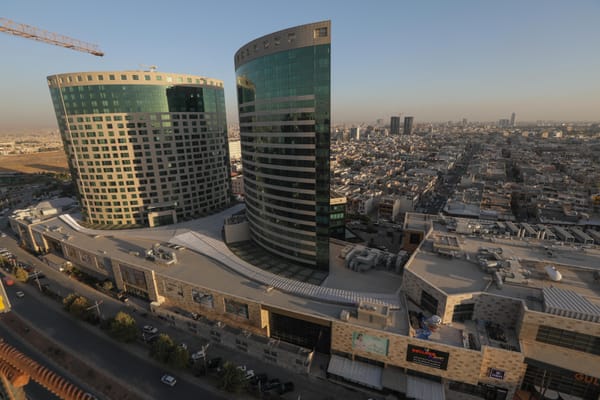
The United States has never solved the central tension within its Persian Gulf policy: Is the region a transmission belt or something to be contained? As Secretary of Defense Casper Weinberger told Congress in 1981, the shallow waterway is “the umbilical cord of the industrial free world.” Since the start of the US-Israeli war on Iran, similar metaphors have been evoked to express the importance of the Gulf for the fossil fuel exports for what we now call “the global economy.” Astute observers have added that this is not just a story of a key share of globally traded crude oil and liquefied natural gas passing through the Strait of Hormuz. The region’s infrastructure is critical for petrochemical products, such as fertilizer, and its gauntlet of ports and logistics hubs are vital for supply chains and the global factory. It is also not just about flows. The cities and states nestled inside the strait are home to large and internationally pivotal stocks: at least $5 trillion on sovereign wealth funds that fuel AI ventures and attendant data centers, real estate and tourism markets, humanitarian aid operations and other sectors to diversify their economies away from hydrocarbons. Even if decision-makers in Washington were not attuned to the many threads connecting the Persian Gulf to the outside world, let alone the role of insurance markets in opening and closing the strait, Iran’s highly telegraphed strategy of targeting these assets has become a teaching moment.
But it is not just poor planning that has paved the path to geopolitical flat footedness. Less than two years before the Weinberger comment, US President Jimmy Carter warned of nefarious motivations and declared, “Let our position be absolutely clear: An attempt by any outside force to gain control of the Persian Gulf region will be regarded as an assault on the vital interests of the United States of America, and such an assault will be repelled by any means necessary, including military force.”
While it emphasized “outside” powers, since the Carter Doctrine was minted, both Democratic and Republican administrations have adopted a policy of containment to primarily target Iran and Iraq, while rendering the US Fifth Fleet and Central Command as the internal guardian of a bounded object. Toby Jones has described the cycles of combat fought in and around the Persian Gulf waters—the Iran-Iraq war, Tanker war, the 1991 Gulf war and the 2003 invasion and occupation of Iraq—as one single Gulf War to maintain US primacy. These military operations have birthed ports, bases and logistics hubs, others date back to the era when British imperialists liked to imagine the Gulf as their lake. It is some of these sites and arrangements of enclosure that are being targeted by Iran’s drones and missiles.
Here lies the central tension of geopolitical thinking in the past half century or more. If the United States is going to maintain its militarism and align itself with specific states while excluding others from “its security umbrella,” it will necessarily become a target and a destabilizing force in a geography and infrastructural archipelago that is both vital for global capitalism and requires meaningful political multilateralism. The immediate victims of this incoherence are the peoples living in its wake.
Almost 50 years ago and before the United States’ hegemonic decline, MERIP’s Joe Stork captured the contradiction well: “The US possesses the physical tools for military intervention, but the correlation of political forces in the region and the world does not endow such intervention with much promise of success. The great danger is that technological proficiency might be substituted for a comprehensive appreciation of the situation, especially as the political and economic crisis widens and deepens in this country.”
Arang Keshavarzian is a professor of Middle Eastern and Islamic studies at New York University and author, most recently, of Making Space for the Gulf: Histories of Regionalism and the Middle East.
The current US-Israeli war on Iran was more than 20 years in the making. The groundwork for attacking Iran was laid partially by two underlying structural forces that have guided US and Israeli regional outlooks and actions at least since the 2003 US invasion of Iraq. One is the belief in Washington policy circles and the US government that Iran is the primary, destabilizing threat in the region and the other is the intense focus of Israel and Prime Minister Benjamin Netanyahu on eliminating Iran’s nuclear program.
Since 2003 there has been a powerful bi-partisan consensus in Washington that much of the instability and conflict in the Middle East stems from Iran, whether described as Iran’s desire to form a so-called Shia Crescent, to build a land bridge to Israel’s border or to manipulate regional networks to destabilize the region. While mutual enmity has existed between the United States and Iran since the revolution of 1979 and the establishment of the Islamic Republic, consensus was reanimated by President George W. Bush’s Axis of Evil speech after September 11, 2001, that named Iran as a major threat. US failures in Iraq only increased this animosity.
This consensus on the danger of Iran, promoted byWashington’s Iran policy industry and amplified by regional actors often advocating to “cut off the head of the snake” as the best solution to regional problems, has been an axiom of US Middle East policy, effectively suppressing alternative visions. The 2015 Joint Comprehensive Plan of Action (JCPOA), which limited Iran’s nuclear program in exchange for sanctions relief, was both a short-lived aberration to this trend and a victim to its entrenchment when President Trump withdrew in 2018.
A second structural force paving the way for the current Iran war is Israel’s laser focus on curtailing Iran’s nuclear program. As the only state in the Middle East with nuclear weapons, Israel has long been unwilling to tolerate nuclear parity in the region, not only in Iraq and Iran, but also Syria, as seen in the little remembered episode from 2007 when Israel struck a nuclear reactor it claimed was built by North Korea and could be used to manufacture nuclear weapons.
The Iran war should be seen within this longer arc of attempts by Israel and the United States to limit other states’ nuclear capacities (for energy or weapons) in the region, even if their goals have morphed over time. Netanyahu was already shifting the focus toward Iran during his 2002 testimony to the US Congress about weapons of mass destruction in Iraq, although in fact his fixation with Iran’s nuclear program goes back even further. With the threat from Iraq removed, Netanyahu’s decades-long claim to Congress, the United Nations and the world that Iran was on the verge of producing a nuclear weapon garnered a greater audience and attention. Despite his lack of concrete evidence, and in the face of assessments by the US intelligence community and the International Atomic Energy Agency (IAEA) that Iran either was not developing a nuclear weapons program or that there was no proof, the persistent Israeli assertion helped keep the issue alive in public discourse as an ongoing threat to global security that would eventually need to be confronted through military means.
There are many factors that led the United States and Israel to attack Iran now. But attributing primacy or causation to any of them would be a difficult task. More certain, however, is that there were structural forces that laid the groundwork for the attack over the preceding two decades. Above all else, the US policy establishment, which along with Israel, has primed and pre-conditioned multiple US administrations to view military confrontation with Iran as an inevitable necessity for solving regional ills. Washington has tragically been impervious to attempts to revise its overly simplistic understanding of Iran and the region.
Kevin L. Schwartz is Deputy Director of the Oriental Institute of the Czech Academy of Sciences in Prague, where he also serves as a research fellow. He is a member of MERIP’s editorial committee.
Across his many addresses to the Iranian people, Israeli Prime Minister Benjamin Netanyahu has repeatedly staged a binary between the people and the state. This framing draws on a long genealogy in US and Israeli policy toward Iran, where the separation of population from state has functioned as a central device to render harsh, punitive and profoundly collective measures— from decades of sanctions to the current aerial bombing—legitimate, invisible and surgically necessary. Central to sustaining this neat separation is the language of “targetedness:” the insistence that US and Israeli so-called precision warfare strikes only the regime and its assets and that sweeping sanctions harm only “the Ayatollahs.”
This portrayal of imperial warfare as targeted and precise is not unique to the current juncture but reflects deep contradictions within global imperial capitalism. Capital accumulation has historically depended on war and coercion—for profit-making, for expansion and for the conquest and disciplining of new markets—yet its need for stability relies on maintaining the illusion of peace within a deeply hierarchical neo-colonial and neoliberal world order. This central contradiction has given rise to multifaceted efforts to increasingly render war invisible as a condition of global capitalist accumulation.
The myth of “precision” warfare predates contemporary high-tech military targeting and has long been integrated into the legal and discursive landscape of sanctions and economic warfare. Since the post-Cold War era, the reconstruction of sanctions as targeted, precise and smart was achieved alongside their growing normalization and integration into the global security complex. The myth of smart sanctions, in particular, emerged in the 1990s in response to shifts in global capitalism. The globalization of a finance-led accumulation system alongside a neoliberal reorganization of US hegemony demanded a new veneer of peace and a new paradigm of sanitized, high-tech warfare. The rhetoric of precision was arguably pivotal for the United States, securing international support for one of the harshest multi-lateral sanctions regimes on Iran during the 2000s, just a decade after the Iraqi experience had revealed their deadly consequences. In his 2017 book, Richard Nephew, a central architect of Iran sanctions under the Obama administration, explicitly advocated for a “more targeted” sanctions regime as it would be more “sellable to an international audience as well as translatable to an Iranian audience.”
Decades of framing Iran as a site of so-called precise and surgical intervention are now laid bare as bombs fall on cities—targeting life-sustaining and vital infrastructure, including hospitals, electricity grids, water systems, oil refineries, food and medicine production sites, residential neighborhoods schools and sites of cultural heritage. What becomes apparent from the scale and pattern of bombing is that it is the very conditions of life and futurity that are being targeted. In this sense, the war marks a direct continuation of sanctions and economic warfare, which for decades has reshaped Iran’s political economy, deepened classed and gendered inequalities, and collapsed the means of social reproduction—constraining the very possibilities for life and shrinking the horizons of hope and futures. These patterns of targeting also mirror broader Western-backed Israeli operations in West Asia: to maim, to injure, to wage war on social reproduction—or what is famously called “mowing the grass” within Israeli political discourse.
Like decades of sanctions, the current moment of military confrontation has rapidly and violently foreclosed political possibilities and imaginaries cultivated through long histories of grassroots organizing by feminist, student and labor movements against the Iranian state’s repressive apparatus. From the moment bombs began to fall, this history of bottom-up mobilization was rendered politically irrelevant. Iranian society—long engaged in sustained struggle against authoritarianism—is stripped of agency and is reframed in US and Israeli discourse as a population in need of help and protection by arial bombing. At the same time, the harsh material realities of war can further reinscribe the Iranian state as the primary guardian of this population, even as large segments have explicitly rejected its legitimacy, as demonstrated in the January 2026 uprisings and the brutal massacres that followed.
What will come next remains deeply uncertain. What is certain, however, is that the very possibility of life and politics in Iran is being violently and rapidly foreclosed by the US and Israeli attacks, echoing the effects of decades of sanctions and Israeli aggression across the region, all with Western backing.
Asma Abdi is a postdoctoral fellow at the University of Exeter’s Institute of Arab and Islamic Studies.
The US and Israeli attack on Iran that began on February 28, 2026 did not come as a surprise to the Gulf states. They had watched the conditions for it assemble for months. Planning in Israel appeared to begin almost immediately after the ceasefire that followed the first round of strikes on Iran in June 2025. Most Gulf governments directly urged Washington not to proceed. Oman went furthest and served as the lead mediator between Washington and Tehran in the weeks before the war.
Nor was Iranian retaliation against the Gulf unexpected. Tehran is widely believed to have done so before, directly or through proxies, including in response to US pressure in 2019 . What is different this time is the scale. The conflict has already cost the Gulf billions of dollars in direct economic damage. The United States launched its assault with little regard for the security of its main regional partners. Its interceptor stockpiles were already depleted at the start: Washington burned through roughly a quarter of its THAAD missiles during the 12-day war with Iran in June 2025 yet returned to conflict only eight months later without replenishing these stocks. Even US diplomatic missions were poorly prepared for the fallout.
Throughout the conflict, President Trump’s messaging has been erratic. First, he described the war as “very complete, pretty much.” A few hours later, he insisted that “we haven’t won enough.” In another instance, he called it “a short-term excursion.” According to the Wall Street Journal, one option under discussion in Washington is to resume military strikes against Iran periodically—up to once a year—in order to keep it weak, a strategy reminiscent of Israel’s “mowing the lawn” doctrine in Gaza. The idea is striking coming from a president who campaigned on ending “forever wars” and whose own national security strategy, published several weeks before the strikes began, declared that the era in which the Middle East dominated US foreign policy was “thankfully over.” Israel, for its part, has spent much of the conflict misrepresenting Gulf states’ actions to its domestic media, attributing strikes to Qatar and the UAE that never occurred in an apparent attempt to cast them as co-belligerents in a war they opposed.
The war is the latest reminder that heavy reliance on the United States and any expectation that, with normalization, Israel would account for Gulf interests was misplaced. The question now confronting the region is what could replace a security model that has shaped the region for decades. The path that offers the Gulf states the most durable protection will likely require greater cooperation between regional states, with less delegation to external powers whose interests have proven to diverge from their own. Whether the political will exists to build such arrangements before the next crisis arrives remains an open question.
Elham Fakhro is a research fellow with the Belfer Center for Science and International Affairs at the Harvard Kennedy School and author of The Abraham Accords: The Gulf States, Israel, and the Limits of Normalization.
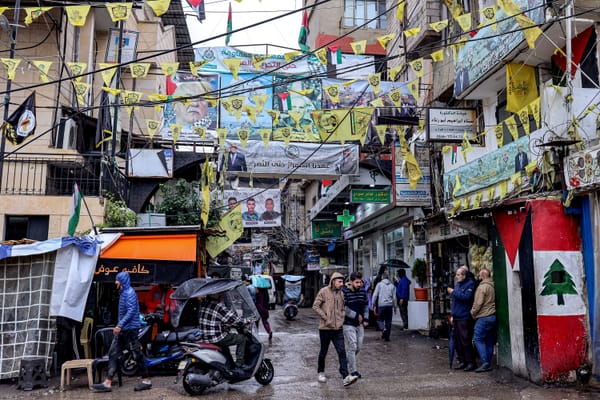
The war currently unfolding in Lebanon is being portrayed by many as another “war of others on our soil.” But this framing obscures a deeper reality: This war is also Lebanon’s own. It must be understood in the context of the fragile and deeply flawed ceasefire that followed the devastating 66-day war of 2024. Although the November 2024 agreement was presented as ending hostilities, it never truly ended the war on the ground. Hizballah halted its military operations under the ceasefire, yet Israel repeatedly violated it. Over the 15 months that followed, Israeli forces reportedly breached the agreement more than 15,000 times, killing and injuring hundreds of Lebanese civilians and gradually expanding their occupation of Lebanese territory. The current escalation emerges from this prolonged period of unresolved violence and continuous Israeli military aggression—despite the ceasefire agreement.
At the same time, this new phase of the war is unfolding within a wider regional imperial war led by the United States and Israel against Iran. This confrontation involves Gulf states hosting major US military bases serving as logistical hubs in the conflict. Within this context, and after remaining largely silent for 15 months, Hizballah decided to retaliate by firing six rockets into Israel in response to the assassination of Iran’s Supreme Leader, Ali Khamenei.
In the absence of a state and army capable of controling its borders and protecting its citizens, the question of national defense—of who can defend Lebanon from Israel’s expansionist agenda—remains largely unresolved. After the 2024 war, the presidency of Joseph Aoun and the government of Nawaf Salam were widely presented as marking a “return of the state.” The ceasefire agreement of November 2024 put the country under a sort of US tutelage and sought to end Hizballah’s military power, while at the same time, making sure that the Lebanese army (like the Syrian one) cannot act as a deterence force in front of Israel. The state was tasked by the United States with disarming Hizballah and deploying the Lebanese army south of the Litani River—directives that remain largely unfulfilled. The Lebanese army is severely underresourced and underarmed, its soldiers’ salaries sustained through foreign, primarily US, donations and it lacks the capacity to combat Israeli incursions or control Lebanon’s borders, let alone confront even a weakened Hizballah.
The danger now, beyond that of Israeli invasion and largescale devastation, is that this war may not only devastate Lebanon further but also accelerate the collapse of its already obsolete post-civil war political order. The Taif Agreement, which structured Lebanon’s power-sharing system since 1989, has been gradually eroding since 2005. The present conflict may represent its final blow, opening the door for internal strife that will eventually lead to a renegotiation of political power-sharing, possibly shifting from the current parity between Christians and Muslims toward a tripartite division between Christians, Sunnis and Shiʿa. Such demands have long been advanced by Hizballah and were partially reflected in the 2008 Doha Agreement.
The current war has revealed that Hizballah remains far from the weakened actor many of its opponents had anticipated. Despite the scale of Israeli military pressure, the organization has demonstrated continued access to missiles, drones and manpower, reportedly with the direct involvement of the Iranian Revolutionary Guard on the ground. In this sense, regardless of the military outcome of the confrontation with Israel, Hizballah is unlikely to emerge internally as diminished as many had expected. These realities may ultimately strengthen Hizballah’s leverage in any future renegotiation of Lebanon’s political order. Whether such a transformation can occur peacefully remains uncertain. Much will depend on the outcome of the war itself and on the broader regional balance of power that will emerge from it.
Rima Majed is an associate professor of sociology at the American University of Beirut and a member of MERIP’s editorial committee.
When the Islamic Revolutionary Guards Corps (IRGC) was established in spring of 1979, there was little expectation for it to be a professional military force. Postrevolutionary chaos necessitates a good level of flexibility, independence and direct action, and the nascent IRGC delivered. The zealous young men that joined the new militia in the thousands did not have patience or respect for due procedure. The Revolutionary Guards’ participation in the violent repression of ethnic uprisings around Iran was the first stamp of approval that their chaotic revolutionary method could indeed be beneficial for the government.
The Iran-Iraq war, a conventional battle, was a different story—or at least was supposed to be. When the IRGC entered the war alongside Iran’s regular military, the expectation was that it would have no choice but to professionalize. And to some extend it did. Between 1980 and 1988, the duration of the war, it grew exponentially, adopted conventional military battle order and developed three separate forces: ground force, navy and air force.
Iran was already in possession of a regular army, however. To stay relevant, to remain justified, the IRGC maintained both the organizational structure and the conditions that would give it a raison d'être. Despite the conventional façade, the IRGC ground force continued to operate in a decentralized and semi-formal manner throughout the war. The new air force and the navy never came close to classic, advanced military forces either. But more importantly, the IRGC prolonged the war for eight years when it could arguably have ended in two and a half, when Iran had taken back its lost territory. The chaos of war was a necessary condition for them to present spontaneous, somewhat disorganized action as the only viable option. It was through such argumentation and action that the IRGC rose to unparalleled prominence by the end of the war.
Between then and now, the IRGC’s grip on power was institutionalized in various ways: its connection to the office of supreme leadership was systematized, its meddling in politics became prevalent, its security and repression apparatus expanded. It established an economic empire, and it became the government’s main agent in evading crippling sanctions, while expanding its military presence in the region. As central as the IRGC was, with the chaos of war imposed on Iran once again—this time jointly by the United States and Israel—the IRGC has become more relevant to the government’s future than ever before. It has certainly suffered major blows—refraining from conventional professionalization comes at a price. But it is unquestionably at the helm of the country these days and forms the backbone of the government’s continued resilience.
The urgency of the war has once again justified the IRGC hardliner’s radical, aggressive and hectic approach to war and politics. It has empowered them to have Mojtaba Khamenei, their own man in the eyes of many, appointed as the next supreme leader. His appointment has enabled a continuation of the policy of pushing adversaries far enough in the hopes of ensuring a lasting ceasefire, possibly including sanctions relief. As things stand, with the conclusion of the war, the IRGC will have emerged politically empowered to determine the course of the country’s future in whatever path it may decide to pursue.
Maryam Alemzadeh is an associate professor in history and politics of Iran at the Oxford School of Global and Area Studies and a Middle East Centre fellow.
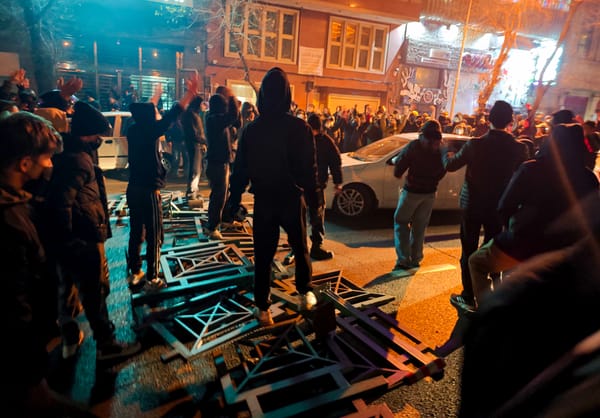
Iranians are caught between two fires. In early January, the Iranian state brutally cracked down on large protests, reportedly killing over seven thousand people. And now, Israeli and US bombs have devastated Iran: about 1,500 civilians have been killed, more than three million have been displaced, over fifty thousand homes and economic infrastructures are destroyed and hundreds of schools, hospitals and historical sites are damaged.
Yet there is hope. For more than a century, Iranians have struggled for democracy, social rights and independence. But hope is not enough, because two major obstacles have repeatedly interrupted this long struggle: domestic dictators and imperial powers. Imperial interventions have time and again entrenched autocracy and undermined democratization.
The Constitutional Revolution of 1906 was partly defeated by British and Russian interventions. When Prime Minister Mohammad Mosaddeq nationalized Iran’s oil in 1951 and empowered parliament, the Americans and the British carried out a coup in 1953 that installed the authoritarian rule of Mohammad Reza Pahlavi. The “blowback”—a US policy term denoting the unintended consequences of such coups—returned to Iran 25 years later. In 1979, millions of Iranians rose up for freedom, social justice and independence, but their dreams were crushed when Ayatollah Khomeini and his supporters concentrated all power in their own hands. Their repression of dissidents was enabled in part by the war that Saddam Hussein launched against Iran in August 1980 and continued with US support in the following decade.
After the end of the war in 1988, the calls for change from a reviving society grew louder as women, students, workers and other groups organized and campaigned. In response to these pressures from below, Mohammad Khatami campaigned for reforms and won the 1997 presidential election. This reform project was undermined by conservatives and the Revolutionary Guards, who perceived the US invasions of Afghanistan in 2001 and Iraq in 2003 as a steppingstone toward an invasion of Iran. To counter this threat, they increased repression and concentrated more power in unelected institutions at home and built the “Axis of Resistance” abroad.
While the Iranian society remained resilient in the following decade, with major protests in 2009 (the Green Movement), the conflict around Iran’s nuclear program increasingly overshadowed the struggles from below. The Nuclear Deal reached in 2015 could have revived Iranian society, but its termination by President Donald Trump in 2018 and the return of crippling economic sanctions turned the tide, as the struggles of Iranians against austerity and authoritarian politics became increasingly overshadowed by Israeli and US attempts at regime change, culminating in the current war on Iran.
In his book Catastrophic Success, political scientist Alexander Downes shows that even when military interventions succeed in removing dictators, they increase the likelihood of civil war and violent instability. But there is still hope if domestic activists are not forced to focus on survival but instead are given the chance to organize, develop strategies to divide the ruling elite, unite the population and build coalitions. That path will be difficult and take time, but it is the only path. Bombs certainly do not bring democracy.
Peyman Jafari is an assistant professor of history and international relations at William & Mary.
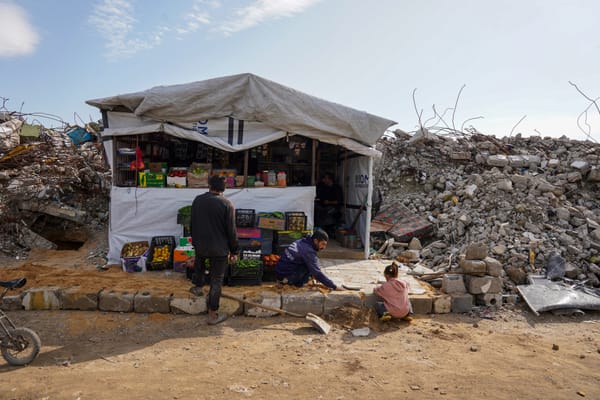
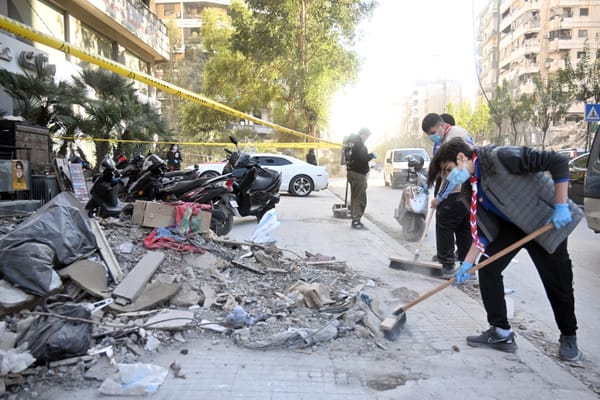
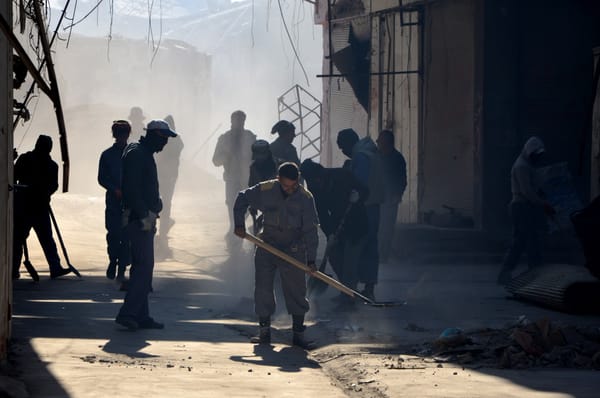
The United States and Israel are destroying the infrastructure that sustains everyday life in Iran and Lebanon. In addition to a rising number of deaths, the war is creating the conditions for long lasting environmental harm. For all the current talk of the worldwide economic shocks that result from energy disruptions and rising prices, the reality is that ordinary Iranians, Lebanese and others in the region are bearing the most pain. They also face the bleakest future.
Israeli and US war making in the Middle East has repeatedly and deliberately sought to destroy the systems that provide basic necessities, such as oil facilities, hospitals, water services and the environment more broadly. This approach was apparent in how the United States waged war on Iraq, from the bombing campaign in 1991 to the invasion and occupation after 2003 that dismantled the state. Sanctions regimes supported by the United States, such as those imposed through the United Nations Security Council against Iraq from 1990 to 2003, and against Iran in various forms since 1979 have caused extensive misery for average citizens. Israel’s devastating siege of Gaza over decades and the genocide after October 7, 2023, also targeted people’s basic needs. The current war in the Gulf and Eastern Mediterranean is a terrible escalation of these forms of war.
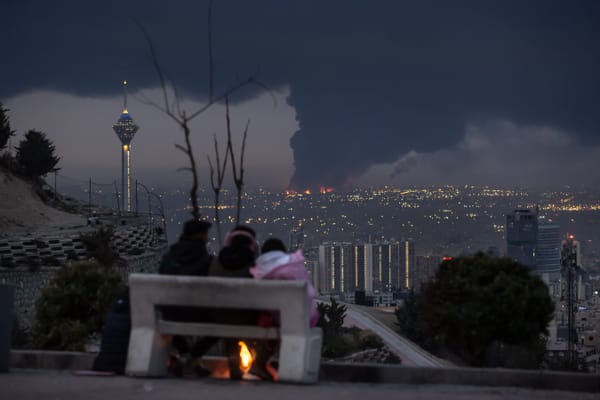
The most dramatically visible recent attacks on vital systems have been carried out against Iran’s oil infrastructure. On March 8, 2026, Israel destroyed four large oil storage facilities on the outskirts of Tehran that helped provide 10 million people with basic services like electricity, heating and transportation of goods such as food and water. The attacks also have environmental consequences, the extent of which is impossible to fully grasp. As one resident put it, “soot is falling from the sky. It is terrifying.” Black rain, infused with carcinogenic hydrocarbons, has spread toxic fallout from the strikes well beyond the city.
The day before the attack on Tehran’s oil, US forces struck an Iranian water desalination plant on Qeshm Island, terminating the water supply for dozens of villages and potentially thousands of people. Iran followed suit a day later by attacking a desalination facility in Bahrain. That attack suggested Iran was threatening to escalate attacks on similar kinds of precarious environmental systems. So far, though, while Iran has struck commercial targets in the Gulf, it has not pursued the same strategy of destruction as the United States and Israel.
In echoes of the genocide, where Israel destroyed the majority of Gaza’s health care facilities, US and Israeli attacks have hit at least 18 hospitals and health care centers. Israeli forces have also directly targeted 25 health care centers in Lebanon. In fear of similar attacks, 49 primary health care centers and 5 hospitals have been shuttered in the country following evacuation orders. In addition to direct attacks on care, UNICEF reported Israeli bomb damage to water distribution lines, reservoirs and a pumping station in Southern Lebanon affecting more than 23,000 people.
In addition to the destruction of public services, attacks like these cause hardship through displacement. The United Nations estimates that up to 3.2 million people have been displaced inside Iran, while Israel has displaced over 800,000 in Lebanon, with many forced into overcrowded shelters with scarce access to water, food and care. The new refugee crisis not only creates immediate suffering but also adds to already overburdened systems of care, which are often underfunded and under stress. While this phase of the US and Israeli long war in the region may be limited in duration, these effects will persist long past the formal cessation of hostilities.
US and Israeli militarism has been destroying infrastructure and the material conditions of life for millions in the Middle East for decades. The current war adds spectacularly to the ledger and assures more harm is to come for ordinary people. Tragically much of this everyday suffering will remain invisible to most observers.
Toby C. Jones teaches Middle East history at Rutgers University, New Brunswick and a member of MERIP’s editorial committee. Andrew Bruno is a PhD student in Middle East history at Rutgers University, New Brunswick.
When the US-Israeli war on Iran began, the war in Afghanistan reappeared in US political discourse almost immediately as a specter. President Trump devoted a long meander to it in a speech in Kentucky on March 11, contrasting the current war that “we’re going to leave very fast,” with the chaotic 2021 withdrawal. Washington insiders have been quick to dust off the word "quagmire.” Afghanistan in this framing is the cautionary tale of military overreach and US-backed regime change, the forever war that recedes into the past tense as yesterday’s war precisely so that the next intervention can be accomplished differently.
This framing is not only historically shallow. It is geographically myopic. Afghanistan shares a nearly 1,000-kilometer border with Iran. The two countries are bound by long circuits of migration, commerce and shared social life. Iran currently claims to host more than 6 million Afghan refugees and migrants. Many of them live and work precariously, are denied basic services and scapegoated for economic grievances. During the June 2025 war, an already active deportation campaign accelerated sharply when the Iranian government accused undocumented Afghans of links to Israeli intelligence operations inside the country. Since the US-Israeli attacks began, thousands of Afghans have crossed the border each day from Iran. Afghanistan also depends on Iranian territory for trade access to the sea—both through Bandar Abbas, Iran's largest port, and Chabahar, which became a primary Afghan maritime route in late 2025 when trade was redirected away from Karachi amid escalating conflict with Pakistan. Already weakened by US sanctions, Iran’s port city of Chabahar has been struck at least once in the war. In these ways and more, the conflict is being materially felt in Afghanistan.
Meanwhile, US coverage of the Iran war has entirely ignored the fact that on the same weekend the strikes began, Afghanistan and Pakistan entered day three of what Islamabad's own defense minister called "open war." This conflict is one of the many unresolved afterlives of the US war on Afghanistan, rooted in the legacy of the so-called War on Terror, US drone warfare and a militarized border that fueled insurgencies neither state has resolved. In the past two weeks, Pakistani airstrikes have struck military installations, including Bagram airbase, but also civilian sites across multiple provinces—on March 18 an attack on a drug rehabilitation center in Kabul killed 400 people, according to the Taliban. The Taliban government in Afghanistan has launched drone strikes deep into Pakistani territory. The ongoing fighting is the most serious escalation between the two countries in years, and it follows months of cross-border shelling, mass deportations from Pakistan of Afghan migrants and the disruption of bilateral trade—worth billions annually.
For states and peoples in South and Central Asia, these wars are not playing out as separate events. Both conflicts jeopardize the economic and political connectivity of the regions, imperiling transregional projects, capital flows and diplomatic efforts. The Pakistan-Afghanistan corridor, the main artery of exchange between Central Asia and the Indian Ocean, is effectively closed, while the proposed Uzbekistan-Afghanistan-Pakistan railway—a $6 billion project intended to cut transit times and open landlocked Central Asia to global markets—is jeopardized. Meanwhile, the simultaneous war on Iran threatens a range of infrastructure projects connecting Central Asian states to the Persian Gulf through Iranian ports. Gulf states, which have cultivated significant diplomatic influence in Afghanistan, are now consumed by the war on their own doorstep. Qatar, which brokered an October 2025 ceasefire between Kabul and Islamabad, now has an uncertain capacity for mediation.
Afghan commentators have not missed the timing of these overlapping wars. The observation that Pakistan is striking Taliban military infrastructure precisely as the United States wages war on its western neighbor is read in some corners as serving US interests—a suspicion that Trump's own quixotic public musings about reclaiming Bagram airbase do little to dispel. Conspiratorial though it may be, such popular awareness that these conflicts are connected is almost entirely absent from US coverage of the “war in the Middle East.” Afghanistan is assigned to the past tense. The cascading crises of 2026 suggest it belongs firmly in the present.
Marya Hannun is a postdoctoral fellow at the University of Exeter’s Institute of Arab and Islamic Studies and MERIP’s managing editor.
At the start of the US-Israeli war against Iran, members of the US military lodged scores of complaints that their commanders were talking to them about the war as “part of God’s divine plan.” At the same time, Harvest Christian Fellowship pastor, Greg Laurie, warned his online audience about the dangers of Iran as an Islamic state and suggested that current events reflected biblical prophecy. Such interpretations have long been a hallmark of US evangelical engagement with Israel. Especially since 1967, a significant subset of US evangelicals have analyzed almost every event that involves Israel as a harbinger of the “end times.” But despite these prominent recent examples, this familiar rush of prophecy-talk is actually on the decline.
Evangelicals today are both less interested in prophecy and less uniformly enamored of Israel—particularly younger believers, whose support for Israel had already begun to wane before the brutal destruction of Gaza. Other evangelicals, of all ages, are moving closer to Tucker Carlson’s view that a MAGA agenda means less investment in any other country’s politics. Even among those who continue to back Israel (51 percent of evangelicals over 35 say they side with Israelis rather than Palestinians), apocalyptic interpretations appear less central. These shifts reflect broader demographic and theological changes within evangelicalism and are reshaping how evangelicals understand and engage international affairs, including the current war.
One important factor is the rapid rise of charismatic and Pentecostal Christianity, the fastest growing sector of evangelicalism, both in the United States and globally. While many of its leaders remain deeply pro-Israel, they are less likely to narrate that support through prophecy talk. Instead, they often rely on more general scriptural claims, such as the promise God makes to Abraham in Genesis: “I will bless those who bless you, and curse those who curse you.” This approach maintains strong support for Israel while shifting its theological ground.
A related development is the rise in recent decades of the New Apostolic Reformation (NAR). This loosely organized but rapidly expanding network of charismatic-Pentecostal churches, organizations and individuals emphasizes pursuing power in worldly arenas such as government, education, business and media. It is one of the most important centers of Christian nationalism in the United States today. Politicians with ties to the group include House speaker Mike Johnson, Texas Republican senator Ted Cruz and Republican House representative Lauren Boebert. Its leaders routinely argue that President Trump was “divinely appointed” in order to increase the power of conservative Christians, and they have strongly supported the war against Iran. The network is pro-Israel, built around the “God blesses those who bless Israel” argument and buttressed by frequent trips to “the Holy Land.” While the NAR is controversial even within conservative circles for its “worldly” investments, there is no question about its influence. This network is reshaping evangelical investments in Middle East politics while retaining a strongly pro-Israel orientation.
At the same time, the category of “evangelical” overall is changing. Since the first Trump presidency, there has been a rise in the number of not-so-religious, predominantly white adults who define themselves as evangelical, as the term becomes more and more synonymous with simply being right-wing and Republican. These new adherents almost uniformly had expressed a warm view of Trump in 2016, before they came to call themselves evangelicals. In the same period, the number of self-identified evangelicals who did not attend church rose, particularly among those who identify as conservative. As a result, support for Israel among these newer evangelicals is less likely to be grounded in biblical interpretation than in broader ideological and partisan alignment.
Taken together, these developments suggest that while traditional prophecy-driven Christian Zionism may be weakening, evangelical support for Israel is not disappearing. But it is shifting. And this support continues to influence US policy. Despite their differences, for now, these movements are united in their support for President Trump, and they have created a remarkably effective bloc of right-wing power.
Melani McAlister is Professor of American Studies and International Affairs at the George Washington University.
The seventh Israeli invasion of Lebanon is being waged in both the shadow of genocide in Gaza and within the world that Israel’s permission to commit genocide has created. This is a world where international law has become a punchline, where there are no innocents and where there is no form of degradation—starvation, siege, ethnic cleansing—that is off limits. It is a world where Israel can boast of their “success in Gaza,” where people in Lebanon are asked to choose between the slow asphyxiation of a so-called ceasefire and the catastrophe of a war without limits. In short, it is a world of permanent war, with shifting battlefields but one center: Palestine.
In Lebanon, this war of impunity is being waged against three fronts: the battlefield, the country’s social fabric and its political society. Militarily, Israel is doing what it has done in Gaza and previously in Lebanon: assassinations, the destruction of entire landscapes and indiscriminate bombardment against a people that have no air defenses, no bomb shelters and no air force—in conjunction Israel has launched a ground invasion. It is also trying to break the Lebanese army by calling on it to collaborate in fighting Hizballah. This pressure comes after months of unanswered Israeli ceasefire violations that preceded the current escalation. But although Hizballah’s decision to launch rockets on March 2 is unpopular and deeply polarizing, the Lebanese army will not confront Hizballah, in part out of concern for its internal cohesion and because it recognizes the threat of cantonization.cantonization.
Israel is intentionally creating a humanitarian disaster that they know the country, including its government and civil society network, cannot absorb. As of March 18, at least 930 people in Lebanon have been killed by the Israeli army, including 111 children and 38 health workers. More than 1,000,000 people have been displaced. Israel has stated that it wants to create a demilitarized and depopulated zone south of the Litani River (about 19 miles into Lebanon) similar to the “yellow line” they drew in Gaza. As Israel is expanding its territory and control into Gaza, the West Bank and Syria, there is good reason to believe that it desires to occupy and perhaps annex this resource and maritime rich territory, a goal often repeated by early Zionist and Israeli leaders and openly spoken of by Israeli politicians today.
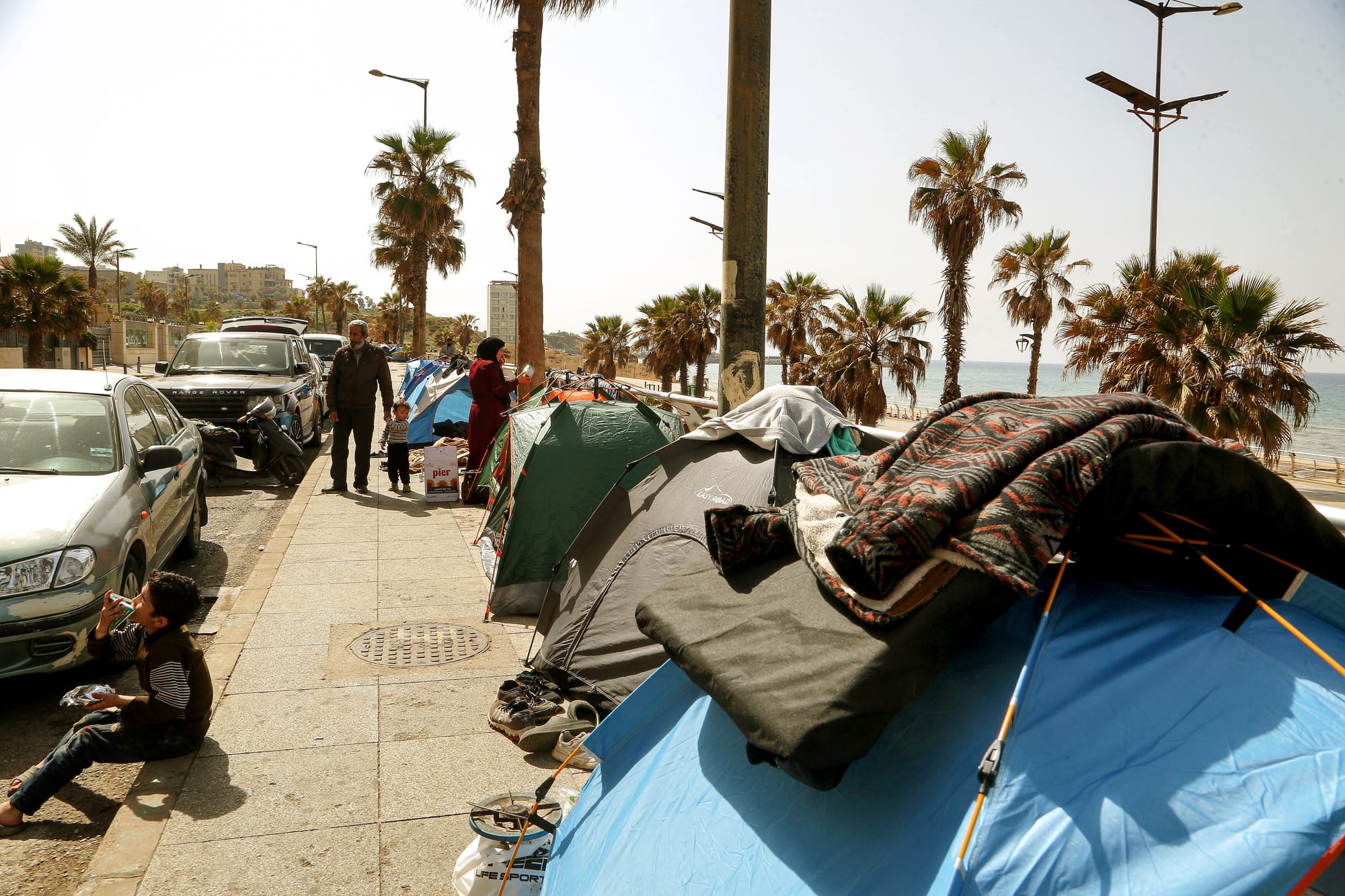
Israel is targeting Lebanon’s social fabric, inflicting mass punishment to weaken public support for Hizballah—a strategy it also pursued unsuccessfully during the 2006 war. Through the displacement of primarily Shia Lebanese, Israel is also attempting to foment sectarian violence by continuing to target displaced people in their spaces of refuge. These attacks both kill and are intended to make people from different sects and areas too afraid to help their displaced compatriots. On March 11, they inflicted a double tap strike and massacre on the corniche of Ramlet al Bayda, Beirut’s only public beach, where displaced people were living in cars and tents. The spectacle of Israel’s impunity to commit atrocities is the point.
Before this return to open war, the Lebanese political equation had turned into a precarious balancing act between the government, the army, the Central Bank and Hizballah and its allies. Each element is reliant on different countries (now at war), institutions and actors for support. After the war, no matter its outcome, this political equation will change. But this war will not end soon, even if this episode does. The colonization of historic Palestine has always required the pacification of, or domination over, their kin across different borders. Israel, the only state in the Middle East armed with nuclear weapons, will never allow the formation of a Palestinian state, nor will it willingly change its ethno-sectarian character. This refusal is a declaration of permanent war against Palestinians and their supporters. In pursuit of this permanent war, and while they still have the unconditional support of the US government and its politicians, Israel has decided to be a country buffered by depopulated wastelands, with no people, party or government capable of mounting any modicum of resistance to either their occupation or that of Palestine. Even if Israel occupies South Lebanon, however, and Hizballah is somehow neutralized, resistance will grow like weeds under every boot print in the ground. Eventually, they will be ensnared.
Maya Mikdashi is an associate professor of Women's, Gender and Sexuality Studies and the director of the Center for Middle Eastern Studies at Rutgers University.
55 years of critical coverage of the Middle East--without paywalls! Help us keep it that way by making a donation today!