The Struggle for the City—Urban Recovery and Dispossession in Mosul and Damascus
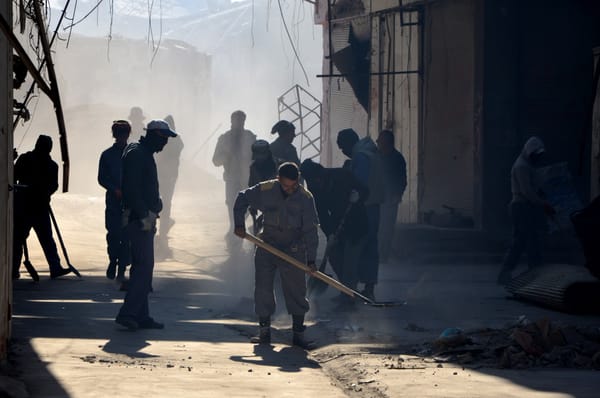

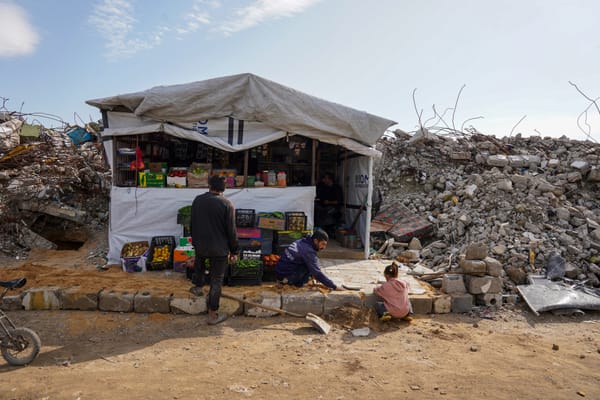
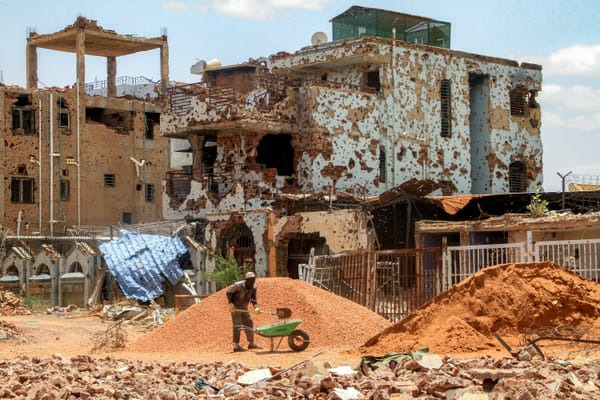
A walk through the old city of Mosul, Iraq, reveals an urban landscape still scarred by the violence of war and transfigured by ongoing reconstruction. Rubble-lined narrow streets give way to half-rebuilt homes and scaffolded storefronts, as merchants return and daily life resumes amid the heavy hum of generators and construction.The destructive reign of the Islamic State in Iraq and Syria (ISIS) from 2014 to 2017 and the city’s bloody liberation by Iraqi and allied forces left around 1 million inhabitants displaced and 130,000 homes damaged and destroyed. Mosul’s rebuilding process has been slow and imbalanced, imperiled by corruption scandals, militia control, property ownership forgery and a recovery focused on elite-driven commercial projects and internationally funded cultural heritage projects.[1] Many displaced Moslawis still remain uncertain about returning to rebuild homes, reclaim land or resurrect former lives.
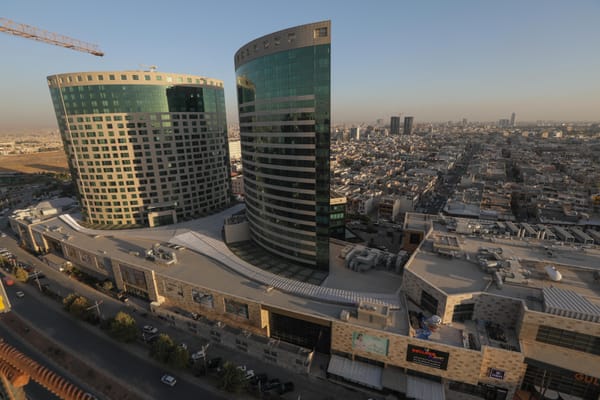
The problems confronted by Moslawis since 2017 are similarly beginning to unfold in Damascus. The fall of Syrian President Bashar al-Asad in November 2024 and the rapid ascendancy of Ahmed al-Sharaa as the transitional president has resulted in a volatile peace in Syria and new possibilities to rebuild. Yet state-led reconstruction projects remain delayed and disputed. These delays have coincided with public protests over evictions and homelessness. The new government has yet to find a way to settle competing property claims between those who fled during the war and those who sought shelter in their homes and now have nowhere else to go. Al-Sharaa’s transitional government is in part struggling to reverse Asad’s criminal depopulation policies and return rightful property ownership. But they are also continuing the controversial megaprojects of Marota City, Baramkeh Mall and Damascus Towers.
Zain, a young teacher from eastern Syria, describes how the loss of property—whether through violent destruction or coercive rebuilding plans—strips Syrians of their sense of dignity, ownership and belonging. “Is the violation of land and property rights any less serious than the traditional notion of honor tied to women?” he asked me in a conversation in Syria in September 2025.[2] Zain fled ISIS rule in 2016, surviving life in a makeshift camp along the Turkish border. He then sought shelter among destroyed buildings on the outskirts of Damascus. Now he lives in Deir ez-Zor where multiple factions still vie for power. He remains frustrated at the slow pace of reconstruction. “Syrian people feel their dignity is under constant assault, yet they lack the ability to change the situation.”
Zain’s words echo a sentiment I heard often in Mosul. “They say they are going to build back better, but ultimately who will benefit from Mosul’s reconstruction? The ordinary people?” Hassan, a young student from Mosul University, asked me. His frustrations are reasonable. The disastrous effects of governments or militias intentionally dismantling and reordering urban life to exert control—such as Asad’s bombardment of Damascus’s rebellious eastern suburbs or ISIS’s deliberate targeting of Mosul’s religious sites and minority neighborhoods—are often compounded by postwar strategies of reconstruction.
Between 2022 and 2025, I spoke to over 50 inhabitants of Damascus and Mosul in homes, cafes, streets and offices, as well as in online interviews and telephone calls. Through guided walking tours, locals revealed stories of pain and survival, memories etched in broken walls, looted shops, militia checkpoints, damaged religious sites and restored heritage homes. For Syrians like Zain and Iraqis like Hassan, the destruction of a city is more than a physical loss. It is also the disintegration of urban lifeways and the fragmentation of human existence. As one interviewee from Mosul succinctly explained, “We not only lost our homes, we lost ourselves.”
Given their recent traumatic histories of war, militia violence and destructive international interventions, Mosul and Damascus offer an important comparison. Both cities have suffered deep internal fracturing of communities along social, religious, territorial and political lines. Iraq is one decade ahead of Syria in terms of its urban recovery, and Mosul’s experience offers a cautionary tale that effective physical repair must be accompanied by social repair. Reconstruction has not necessarily reversed demographic shifts or encouraged social cohesion. Instead, it continues to be plagued by the same issues of economic corruption, dispossession and social fragmentation. Through the voices of local inhabitants, the challenges and complexity of postwar recovery can be clearly observed.
The scale and extent of Syria’s reconstruction needs are difficult to comprehend. Cost estimates by the World Bank in 2025 are in the region of $216 billion. According to the United Nations, in 2023, half the Syrian population remained displaced, 90 percent of Syrians were living below the poverty line and over 328,000 homes had been destroyed. The economic strategy of al-Sharaa’s transitional government has been to continue the Asad regime’s neoliberal approach to reconstruction by enticing regional and global investment. In first the 10 months following Asad’s ouster, the transitional government signed $28 billion in investment deals to rebuild Syrian ports, railways, airports, power plants and fund real estate projects. This investment has been coupled with tighter domestic austerity measures, reducing bread and electricity subsidies, while dismissing up to a third of the public sector workforce. Such policies have sparked street protests and exacerbated everyday fears that, in the words of activist and academic Joseph Daher, an “exclusive and elite-led reconstruction process will only reproduce social inequalities, impoverishment, a concentration of wealth in the hands of a minority, and the absence of productive development”—the same conditions that led to the popular uprisings in 2011.[3]
Samira, a middle-aged shopkeeper from Darayya, lost her home and two brothers during the war. Some relatives fled to Lebanon and Jordan, while others were forcibly displaced “to the north in green buses,” she says, referring to government relocations of besieged residents to exile in Idlib. During years of intense violence from 2013 to 2017, her family property was confiscated by pro-Asad militias and her shop reduced to rubble in aerial bombardment by state forces. One of her brothers was executed in a field, another disappeared within the bowels of Syria’s notorious prison networks.
Added to these multiple losses—of home, family and justice—is a growing discontent at Syria’s flawed reconstruction plans: “Our neighbors are displaced, everyone is displaced, yet they are building towers instead of helping us to rebuild homes.”
On December 8, 2024, Samira was one of thousands of Syrians who journeyed to Sednaya prison in search of disappeared loved ones. Syria’s most notorious prison, dubbed “the human slaughterhouse,” was liberated by opposition fighters the day that Asad fell. Samira’s painful and ultimately futile journey in search of her missing brother and nephew left her disorientated and dejected. Amid the burnt and discarded prison files she felt “a part of justice had also disappeared.” Added to these multiple losses—of home, family and justice—is a growing discontent at Syria’s flawed reconstruction plans: “Our neighbors are displaced, everyone is displaced, yet they are building towers instead of helping us to rebuild homes.”
Samira’s sentiments are echoed by many Syrians. Interviewees across religious, neighborhood and class divides highlighted concerns over the timing and sequencing of rebuilding, the corrupt actors involved, the lack of compensation for property owners and the lack of transparency around land deals and restitution rights. Those I spoke with from the Damascus suburbs of Qaboun and Douma, for example, remain critical of the government’s continuation of the Marota City development. This mega project—initiated in 2012 with a combination of government and private Syrian capital—displaced thousands of people. In exchange, the government provided limited rent subsidies, undervalued shares and dangled the illusion of future alternative housing. “The authorities are exploiting our weakness and poverty rather than addressing it,” commented one local.
Though the war has ended, fighting over property continues. In the Alawi-majority neighborhood of al-Sumariyeh, a western suburb of Damascus, forced evictions have also provoked civil unrest. The neighborhood was deliberately developed in the 1970s under President Hafiz al-Asad as a district combining formal military housing for the elite Fourth Division and Air Force Intelligence with adjacent informal, working-class areas. When the Syrian regime fell in late 2024, many soldiers and their families fled their homes, fearing retaliation. Subsequently, an armed group led by Abu Hudhayfah al-Ansari—originating from Moadamiyet al-Sham and aligned with the transitional government—assumed de facto control of the neighborhood. Its new leaders have carried out evictions of those who enjoyed privileges under the Asad regime, looted property, detained residents, restricted movement and established new security infrastructure under their own control. This ongoing confrontation in al-Sumariyeh highlights how historic sectarian grievances are enflaming contemporary property disputes. Recent months have also seen violent clashes between residents over competing ownership claims in al-Qadam—a municipality in southern Damascus.
Other interviewees highlighted class-based injustices. As Nora, a 40-year-old journalist told me, “the poor are punished and powerful are rehabilitated.” Nora noted how the businessman Mohammad Hamsho was forgiven by the transitional government, despite having financed the Asad regime’s military operations and committed economic crimes. A loyal regime ally, Hamsho’s business empire spanned construction, media and electronics—providing financial fronts for Syria’s war effort. Also known as “the rubble king,” he directly benefitted from housing demolition orders by scavenging metal from destroyed Syrian homes that was then used to fuel his steel factories. For almost a decade, Asad’s Fourth Division plundered Damascus’s outskirts for scrap metal. A sophisticated war economy and smuggling network emerged, turning opposition suburbs into grey wastelands as scrap metal was funneled through illicit networks and intermediaries like Hamsho. Indeed, recent investigations into scrap metal recycling connect Asad’s Fourth Division to smuggling routes through Lebanon and onward to Turkish scrapyards and steel mills.
Despite US sanctions and public notoriety, Hamsho’s sons appeared in Damascus on September 4, 2025, donating $2.1 million at the launch of the Syrian Development Fund, a new national institution established by Presidential Decree No. 112 to finance Syria’s postwar reconstruction and economic recovery. Their presence, along with the return of other controversial US-sanctioned business figures, has heightened suspicions of the opaque economic arrangements surrounding the sell-off of property. As one interviewee, a former lawyer explained, “Currently there is chaos around former regime confiscated assets. For example, 23,000 seized properties were publicly auctioned to only about 20 buyers, but no one knows where the money went.”
Similar apprehensions over corrupt sales and unjust reconstruction plans have been evident in Mosul since the city was liberated. Iraq’s post-ISIS recovery, particularly in the Nineveh province, has been plagued by chronic corruption at all levels of state and society. Real estate in Mosul was not only physically confiscated by victorious militias, 9,000 property sales were illegally forged by brokers and state officials and agricultural land was exploited by cooperative housing associations (dubbed “land mafias”) and resold as residential plots. In 2021, Nawel Hammadi al-Sultan, Nineveh’s former governor, was jailed for embezzling $3.4 million of public funds intended for Mosul’s reconstruction. The UNDP’s Funding for Stabilization program is under internal investigation for accepting bribes. At Popular Mobilization Forces (al-hashd) checkpoints throughout the province, former fighters profit off so-called taxes they impose on people going about their daily lives and rebuilding their businesses, affecting the flow of goods and materials and ultimately slowing urban reconstruction.
Mosul has recently celebrated some notable restoration achievements, including UNESCO’s rehabilitation of al-Nouri Mosque and al-Tahera and al-Saa’a churches and the reopening of Mosul airport. But many continue to have serious misgivings over the potential commercial exploitation of its ancient heritage sites, neighborhoods and waterfronts. A number of interviewees highlighted Mosul’s Qila’yat district with its historic riverside forts and pluralist legacy now endangered by real estate disputes and unregulated planning.
Nadeem, a local civil society activist, explains that the reconstruction proposals ignore local sensibilities. “These bids are all catastrophic because some of them want to transform the neighborhood into a modern one with skyscrapers like Dubai, others have a vision of turning the neighborhood into a corniche, while other bidders want to open shisha lounges in the area.” He warned, “If Qila’yat disappears, Mosul as a city ends and becomes a soulless city.”
Other Moslawi interviewees raised concerns over fraudulent land sales and the strategic exploitation of displaced communities. Anas, a Mosul native and former office worker, told me, “Corrupt people are buying lands in Mosul and selling them in the hopes of changing the demographics of the city.” Minority communities (Yazidis, Shabak, Christian) who were violently displaced by ISIS are still reluctant to return to their former homes.
In Iraq, as in Syria, the legacy of dispossession and its imprint on the landscape of the city undermines future peace. Writing about Homs, Syrian scholar Ayham Dalal reflects, “A just and inclusive reconstruction must confront the sectarian and class-based ruptures that the old urban form helped conceal.”[4]
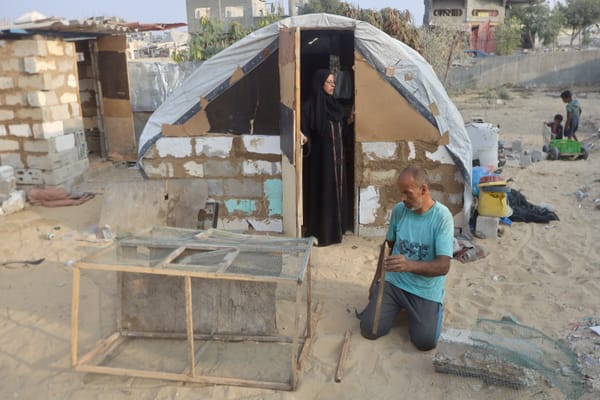
In the first nine months after the fall of Asad’s regime, an estimated 2.8 million Syrians (1 million from abroad and 1.8 million internally displaced persons) returned to their homes within Syria. Some are returning to derelict shells, others to collapsed roofs or no water, electricity or basic infrastructure. Others find squatters or occupiers in their homes who claim to have purchased the property. In the absence of effective state-led reconstruction, locals are attempting to reclaim their homes and city.
In Damascus’s devastated Jobar district, for example, residents have taken reconstruction into their own hands. In October 2025, they unveiled a community-drafted master plan, which includes a bold attempt to protect residents’ property rights in both licensed and informal housing in one of the city’s largest informal (ashwaiyyat) neighborhoods. The plan recognizes the need for a complex process of disarming landmines and debris removal before beginning the reconstruction and rezoning of 300 hectares of land. A youth association, created alongside the master plan designs, has led a series of demonstrations demanding an end to the district’s marginalization and greater respect for Jobar’s wartime sacrifices.
In other eastern and southern suburbs of Damascus, former inhabitants are also trying to rebuild amid the rubble and are seeking to re-establish ownership records through local Housing, Land and Property (HLP) committees. These committees—comprising lawyers, clerics and community leaders—are responsible for resolving unlawful property seizures and adjudicating disputes involving conflicting legal documents. Although established by local authorities, they are not part of a coherent national framework. While the government has assigned jurisdiction over HLP-related disputes, the coordination with civil courts and enforcement mechanisms remains weak, often leaving Syrians to navigate these challenges on their own.
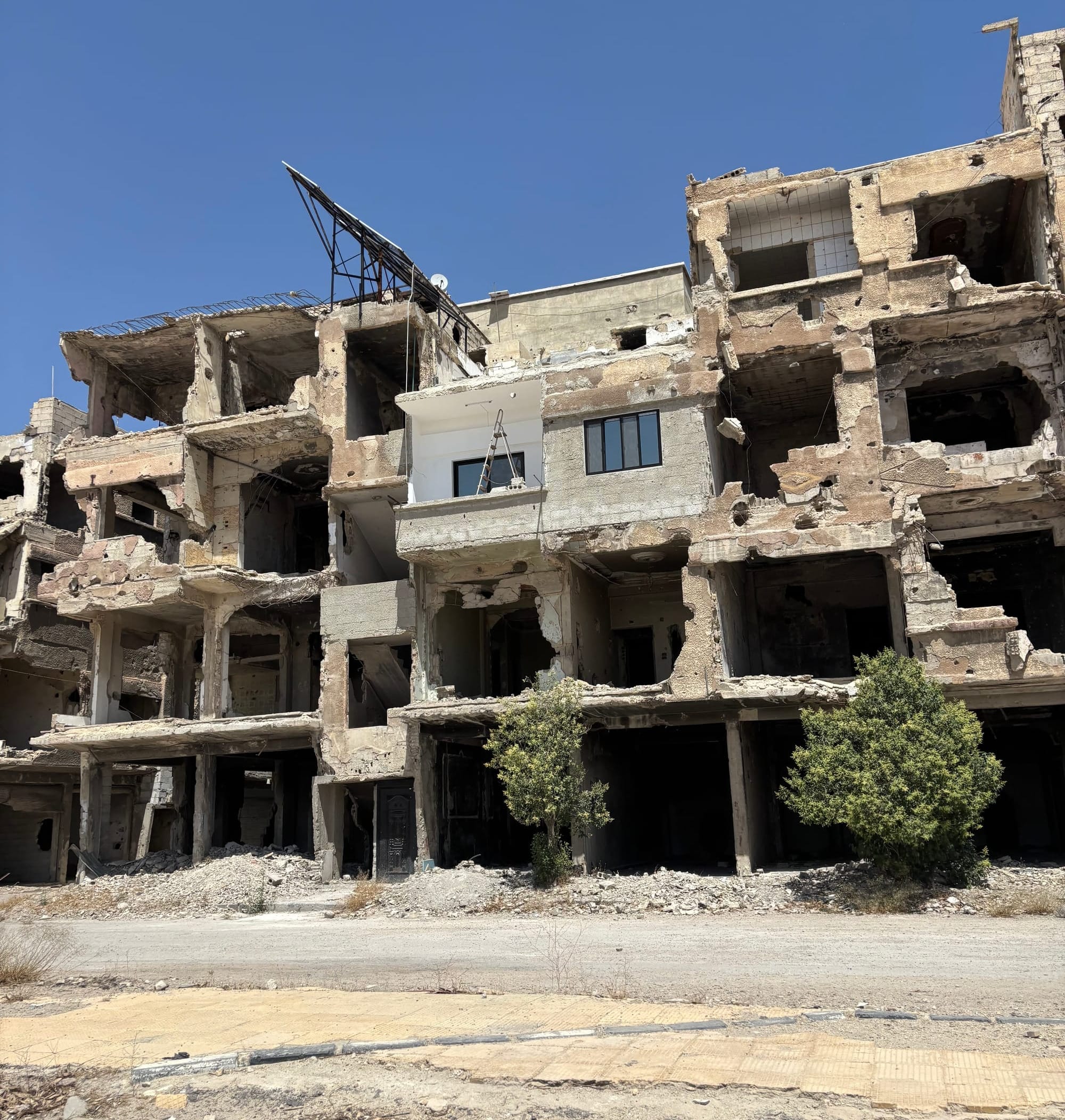
In Yarmouk, the former Palestinian camp shattered by years of bombardment and siege, returnees reconstruct rooms within crumbling apartment blocks, even as the foundations beneath them remain perilously unstable. At least 25,000 residents live amid the debris, rebuilding slowly without municipal permits or safety assessments. They mostly lack UNRWA or state support: Although UNRWA reopened Yarmouk Services Centre in March 2025, shelter repair is limited and temporary as there are no donor plans for any large-scale reconstruction of the camp.
Mosul’s urban recovery has likewise depended on local activism. Nearly a decade after the city’s liberation, state compensation schemes remain incomplete and severely delayed.
Mosul’s urban recovery has likewise depended on local activism. Nearly a decade after the city’s liberation, state compensation schemes remain incomplete and severely delayed. Basil, a local in his mid-30s, reflected, “I do not think the Iraqi government was fair or just in providing compensation to its people. Even more, it would take 2 to 3 years to complete an application to claim compensation, and it would take much longer to receive any money.”
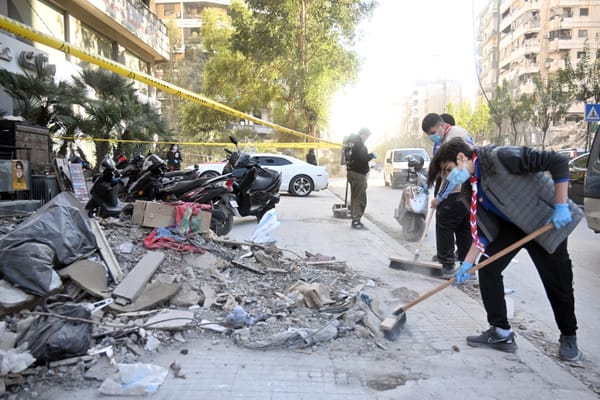
Within the old city, residents recounted having to clear their own properties of rubble, unexploded munitions and the remains of the dead. Ahmed, a local teacher, described how youth have mobilized a number of community initiatives, such as rehabilitating schools, planting trees and vertical gardens (Green Mosul) and even creating environmental hubs, such as Mosul Space, to tackle pressing climate and sustainability challenges. For Ahmed the ultimate goal remains, in his words, “reconstructing the city and the spirit also.”
“We cannot go back, but I’m not sure how to move forward,” Layla told me. A Christian originally from Mosul, she was initially displaced to Qaraqosh in the Nineveh plains but now remains with her extended family in Erbil, within Iraq’s Kurdish Region. Violence disrupted Layla’s education, her home-life and her plans for the future. Her words capture the liminal stuckness felt by so many Moslawis and Damascenes.
While opinions differ on how Syria and Iraq should rebuild, most people I spoke to agree that reconstruction cannot be separated from the demand for justice and accountability. As a doctor from Raqqa explained, “Justice must be part of reconstruction; it cannot be postponed. Realistically, people need security, jobs and basic services. Therefore, both paths to reconstruction must be integrated.” The road to recovery in both cities will be long and unpredictable. But residents acknowledge that without pairing physical repair with social repair, the same grievances and injustices will continue to erode any hope of lasting peace.
Indeed, those individuals who suffered an intense sense of betrayal by their neighbors or witnessed the death of family members in their homes found it difficult to imagine any form of urban rehabilitation. Their homes and security were desecrated, leaving them displaced and abandoned. Omar, a Mosul activist and scholar, described the feeling among some minority groups of wanting to live in separate neighborhoods. Reintegration and social cohesion remain long-term aspirations. In his words, “bringing back trust is going to be completely difficult, it's a very long and complicated mission. It's not going to happen in one day. They need to feel the trust again. They need to feel they are safe again.”
“I think this war and all this current situation improved our sense of belonging to this land. Because sometimes we don’t care about the value of things until we are about to lose them.”
Against this backdrop of displacement and mistrust, heritage restoration emerged as a rare arena where repair and belonging could be cautiously integrated. The destruction of Mosul’s historic old city homes has inspired local youthful entrepreneurs to establish restoration projects to safeguard Moslawi traditions and reclaim their own sense of postwar agency. Ali, a photographer and university lecturer I spoke to in the summer of 2023, told me, “I think this war and all this current situation improved our sense of belonging to this land. Because sometimes we don’t care about the value of things until we are about to lose them.”
In 2017 Ayoub Thanoon founded the Mosul Heritage project with the goal of restoring a war-damaged traditional home. Through the support of its legal owners and community fundraising, he turned the space into a heritage museum displaying locally donated artifacts and antiquities and housing workshops around artisan skills and heritage education. As Ayoub explains, “I believe that heritage is one of the things that unite people. These cultural and heritage sites belong to all Muslims, Christians, Yazidis and what unites us. Culture is how we can restore again our city and identity after ISIS deliberately tried to erase it.” Such grassroots initiatives have the potential to create networking synergies and cross-communal exchanges. The local focus on Moslawi pluralist traditions contrasts with international priorities of restoring symbolic religious sites that may reproduce sectarian logics or lead to commodified and tourist-oriented heritage models that spur urban gentrification and a deepening of postwar inequalities.[5]
Another revealing heritage project is the Bytna Institution for Culture, Heritage, and Arts founded by Moslawi journalist and cultural entrepreneur Saker al-Zakariya in 2019. Bytna is a restored heritage home that celebrates Mosul’s unique identity through life portraits, artifacts and memorabilia. Supported by residents and international partners (UNESCO, European Union), it has hosted cultural events, art exhibitions and musical performances. For al-Zakariya it provides a space for Moslawis to reconnect with their history and to restore a sense of local pride, “We are engaged in preserving and maintaining our heritage, our identity in Mosul. This foundation became an emblem to revive the city of Mosul.”
Yet Bytna also captures the precarity of postwar nostalgia. In one room—adorned with old maps, photos and vintage cameras, seemingly frozen in a tranquil past—a gaping hole in the ceiling purposefully remains, as if time has been ruptured by the violent intrusion of a stray rocket. The dissonance is jarring and sobering, reflecting the pragmatic reality that those involved in Mosul’s recovery, as in Damascus and other cities across Syria and Iraq, must grapple directly with the brutal legacy of war and prioritize local needs for recovery and repair.
[Craig Larkin is an associate professor (Reader) in Middle East politics and peace and conflict studies at King’s College London.]
Support MERIP in providing critical, grounded reporting and analysis without paywalls. Make a one-time or monthly donation today!
[1] Craig Larkin and Inna Rudolf, “Memory, Violence and Post-Conflict Reconstruction: Rebuilding and Reimagining Mosul,” Peacebuilding 12/3 (2024).
[2] All interviews were conducted between August 2022 and October 2025. Pseudonyms have been used to protect anonymity unless explicit permission was granted. Interviews were conducted by Craig Larkin, Inna Rudolf and Siba Madwar as part of the Cross-Border Conflict Evidence, Policy and Trends (XCEPT) research programme, funded by UK International Development from the UK government.
[3] Joseph Daher, “Three Requisites for Syria’s Reconstruction Process,” Carnegie Middle East Center (May 8, 2025).
[4] Ayham Dalal, "The City and the City and the City," Places Journal (October 2025).
[5] Lynn Meskell and Benjamin Isakhan, "Reconstruction, Repair, and Rehabilitation: A View from Mosul," Change Over Time (2025).