Building from Scrap, Building Through Crisis
On Umut Kuruüzüm’s materialist ethnography of war and reconstruction, 'Building from Scrap: War, Recycling, and Labor in Iraqi Kurdistan.'
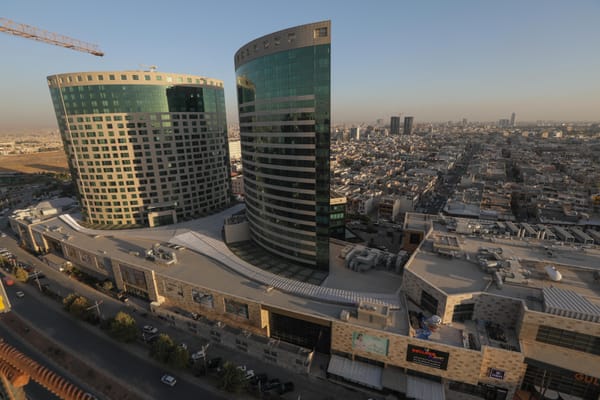
In March 2024, I sat in a café in Erbil, the capital of Iraqi Kurdistan, watching cranes move across the skyline. An LED screen on the wall cycled through motivational slogans in English: “Take risks.” “Failure is a stepping stone to success.” “The road to success is always under construction.” The last one felt oddly apt in a city furiously rebuilding itself. High-rises were climbing from every corner. The place where I was staying was surrounded by new construction sites. On my way to work I noted the billboards advertising new housing projects: "Living the high life at Erbil's best address" (Tulip Towers), "My life is my message" (Edition Towers), "Welcome to your forever home (London Towers)."
When I commented to a friend about how much the city had grown, he shook his head. “All this is corruption,” he said, gesturing toward the skyline. “Owned by the same people, sold to foreigners. They’re extracting our land in every way, not just what’s under it.” Erbil’s building boom, once a source of pride among locals, now provoked suspicion. On earlier visits, I often heard locals describe Erbil as having once been “a village,” marveling at the city’s quick transformation from a marginalized place into a regional attraction. This juxtaposition stood as a testament to what Kurds believed they had achieved by ruling themselves, and to the new forms of connectivity the city was beginning to enjoy. But by 2024 hope had soured. As I watched the cranes turning, I found myself wondering, what are these buildings made from?
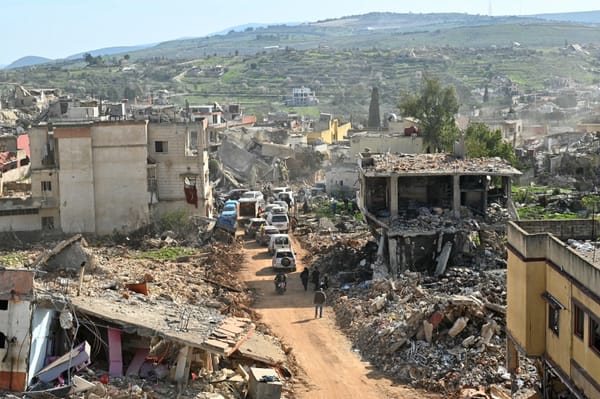
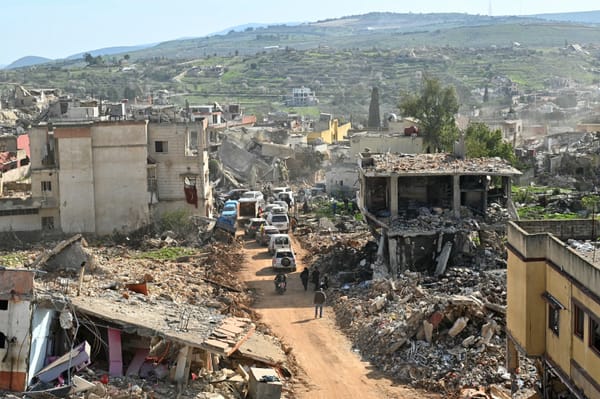
Umut Kuruüzüm’s Building from Scrap: War, Recycling, and Labor in Iraqi Kurdistan (Palgrave Macmillan, 2022) begins from this question. For 18 months between 2014 and 2016, as the Islamic State in Iraq and Syria (ISIS) held nearby territories, Kuruüzüm conducted fieldwork at Frontier Steel Mill in the Hiwa district southwest of Erbil. The mill sits roughly ten miles from the Gwer front line, where intense fighting took place between ISIS and Kurdish Peshmerga forces in the summer of 2014. Kuruüzüm followed war debris, such as rubble, destroyed vehicles and abandoned infrastructure, as it was collected, melted down and recast into the rebar that now holds up Erbil’s skyline. The city’s vertical growth, he shows, is materially tied to destruction elsewhere in Iraq. This transformation from scrap to steel provokes more profound questions: What kind of political order emerges when its infrastructure is built from the remnants of conflict? What forms of sovereignty, what dreams of modernity, can be forged from scrap?
The book’s central intervention is to show that the reconstruction boom in Iraqi Kurdistan, after it gained legal autonomy following Iraq’s 2005 constitution, is not separate from war but materially dependent on it. Decades of conflict in Iraq, from the Iran-Iraq War (1980–1988) through the Gulf War (1990–1991), the 2003 US invasion and subsequent insurgency and sectarian conflict (2003–2011) and the war against the ISIS (2013–2017), produced vast amounts of metal debris. Scrap becomes valuable only when it is processed under conditions of relative security. Kurdistan provides that space, transforming debris and displaced labor into steel for housing, highways and towers. Reconstruction, Kuruüzüm shows, is not the aftermath of destruction but its continuation by other means.
The Frontier Steel Mill is a privately owned electric arc mini mill that melts scrap into new steel using electric arc furnaces. It was founded in 2006 by a wealthy Kurdish businessman from Turkey, referred to in the book as “Mr. Salih,” with ties to the Kurdistan Democratic Party (KDP), one of the two dominant family-run parties in the Kurdish region of Iraq. The mill expanded following Kurdistan’s post-2005 construction boom and the wars that supplied it with scrap. Its location, close enough to conflict yet within the relative security of the Kurdistan Region, made it an ideal site for tracing how war debris becomes industrial input.
Kuruüzüm’s fieldwork, however, was not limited to the mill. Instead, he adopted a relational, materialist ethnography organized around scrap metal and the social worlds it generates (Chapter 1). Rather than assuming a bounded field, this approach follows scrap as a material moving from frontlines and scrap yards to mills, labor camps and high-end residential sites. During fieldwork, Kuruüzüm was also a lecturer at the University of Kurdistan, Hewlêr, commuting daily between luxury housing he was provided by the university and the steel mill. As he details in the book’s first chapter, this roughly 30-minute journey became part of his method, situating him between spaces of reconstruction and the war economy. At the mill, Kuruüzüm taught English, lived periodically in the labor camp and joined everyday routines, paying attention not only to production but also to the boredom, fear, rumors and uncertainty shaping workers’ lives.
In Chapter 3, Kuruüzüm situates Kurdistan’s scrap industry at the intersection of global transformations in steel production and war-shaped local conditions. Globally, steel production has moved from exclusive reliance on large integrated plants to process raw materials toward smaller electric arc mini mills, like Frontier Steel, that rely largely on scrap. Cheaper, less capital-intensive and more flexible, these mills can pause production during shortages without major losses. Because scrap is costly to transport, mills move toward destruction. In this sense, the industry follows war.
As European states, followed by Turkey and Iran, banned Iraqi and later Syrian scrap over safety concerns...debris was pushed into internal use. Iraqi Kurdistan, with its relative security, weak regulation and a construction boom, became a key processing site.
In Iraq, decades of conflict generated vast quantities of scrap, while post-2003 reconstruction created intense demand for steel. As European states, followed by Turkey and Iran, banned Iraqi and later Syrian scrap over safety concerns, such as the presence of explosive material, debris was pushed into internal use. Iraqi Kurdistan, with its relative security, weak regulation and a construction boom, became a key processing site. By 2016, steel production in the region had grown from virtually nothing in 2006 to roughly 3 million tons annually, with 13 mills in operation. The war against ISIS intensified this pattern, as Mosul, Raqqa and Deir Ezzor became major sources of scrap.
In Chapter 4, Kuruüzüm examines the business model that sustains the scrap industry in Kurdistan, showing how circulation depends on scrap collectors, often Syrian refugees, who occupy “the bottom of the scrap metal trade” (98). These collectors sell scrap to middlemen who move material across frontlines, checkpoints and militarized zones. One such figure is Kak Ali, a Peshmerga soldier and a trader, described by Kuruüzüm as “a patriotic businessman with entrepreneurial spirit” (99). Kak Ali’s wartime credentials, KDP affiliation and official role in security structures enabled him to secure scrap and guarantee delivery despite volatility. Trust here is not an abstract moral value but a practical condition of accumulation. Reputations forged through war substitute for formal regulation.
The business model rests on two conditions: a steady supply of scrap linking zones of destruction to sites of processing and the availability of cheap and disciplined labor produced by displacement, precarity and deregulation. Rather than framing these arrangements as criminal or chaotic, Kuruüzüm shows how the coexistence of “state” and “statelessness” normalizes profiteering as a mode of accumulation. Indeed, departing from what he calls the narratives of “state-based emancipation and ethnic independence” that dominates Kurdish studies, Kuruüzüm draws on anthropologist Anna Tsing’s notion of the frontier to describe Kurdistan as a space of incompleteness, between war and peace, between statehood and autonomy, between the desire for independence and federalism (37).[1] This halfway condition, he argues, is not a failure to be overcome. It is a condition that enables predatory accumulation through selective governance. The Kurdistan Regional Government (KRG) deregulates labor, dismantles unions and neglects infrastructure for the poor, while tightly regulating oil and investment. In this context, war does not disrupt accumulation, it reorganizes it.
Labor in the Steel Mill
Chapters 5–8 turn to life inside and beyond the mill’s labor camp, which was populated by three groups of workers: displaced Yazidis, Indian migrants and Kurdish migrants from Turkey. Their work transforms war debris into rebar, but their precarity is produced through different mechanisms.
Indian migrant workers made up about 70 percent of the workforce and were recruited through a subcontracting firm, India Co. Tours & Travels, under restrictive contracts. Passport confiscation upon arrival, long-term binding contracts and spatial confinement created what Kuruüzüm describes as “extreme forms of attachment between worker and employer,” where legality itself became a source of exploitation (124). Indian workers were often discouraged and at times effectively prevented from leaving the mill, with insecurity and the threats posed by ISIS routinely exaggerated in order to confine these workers to the camp. The Indian labor camp itself became a space of confinement, marked by heavy surveillance, 24/7 camera monitoring and regular patrols by security personnel.
Yezidi workers were employed as noncontract refugee labor. Due to the lack of oversight, they were often assigned the most dangerous tasks and worked long hours. Unlike Indian workers, however, they could leave the site without documents. Their vulnerability was enforced less through immobility than through disposability, discrimination and exposure to risk.
Kurdish workers from Turkey, who mostly came from the border town of Şemdinli, occupied a relatively more secure position, arriving to the mill through kinship networks that formed a dense social world capable of collective action. Rather than class based, this solidarity was organized along ethnic and kin lines and could at times be mobilized against others. For instance, Kuruüzüm recounts how workers from Turkey acted to prevent Yazidi men from staying in their labor camp, reinforcing ethnic and religious boundaries.
Inside the mill, relations forged in war are reworked into differentiation and exclusion within capitalist production.
What emerges from Kuruüzüm’s immersive ethnography is a sharp contrast between public narratives of solidarity, especially the support offered by the Kurdistan Workers’ Party (PKK) and its affiliates during the 2014 ISIS assault on the mostly Yazidi town of Sinjar, and everyday labor relations. Inside the mill, relations forged in war are reworked into differentiation and exclusion within capitalist production. Nationalism here becomes a way of managing the anxiety of precarity by drawing boundaries elsewhere and reproducing hierarchies internally.
Following Iraq’s adoption of the 2005 constitution, which recognized the KRG as the region’s governing authority, the two dominant family-run parties, the KDP and Patriotic Union of Kurdistan (PUK), unified their separate administrations under the KRG. Oil wealth and foreign investment enabled the development of many attributes of statehood, including a standing army, expanding administration and diplomatic missions. The region was increasingly described as a “de facto state” or “quasi- state,” with institutions of statehood in the absence of international recognition.[2]
Kuruüzüm departs from other scholars of the region by avoiding the question of whether the Kurds will achieve statehood. Instead, he asks how the KRG comes to appear as a state in the first place. Drawing on the work of political theorist Timothy Mitchell, he treats the state not as a given entity with its unity and distinctiveness but as an effect produced through material practices, infrastructures and everyday relations.[3] In this way, he links scrap, reconstruction and labor to questions of statehood and nationalism.
Indeed, Chapter 2 examines how scrap-based reconstruction once generated this state effect. Malls, highways and high-rises materialized the promise of independence, making the KRG appear visible, modern and durable. Steel recycled from war elsewhere in Iraq was central to this process. Kuruüzüm captures this dynamic through Memu, a Peshmerga who drives a taxi to supplement his unpaid salary. During an election campaign that heavily focused on Erbil’s urban development, he honked his horn and shouted “Sarbaxoyi Kurdistan nzika!” (the independence of Kurdistan is near) (30).
But the belief that reconstruction and development would bring prosperity collapsed after 2014, when budget disputes with Baghdad, falling oil prices and unpaid salaries exposed the limits of the KRG’s authority. Memu reappeared, this time at a protest, his face covered. “I used to like Barzani,” he told Kuruüzüm, referring to Masoud Barzani, long-time leader of the KDP. Most urban development and oil projects in Erbil and Duhok are tied to members of the ruling Barzani family, who controlled these provinces through the KDP. “He was our life, our hope. But things have changed. Maybe he lied to us” (57).
As capital dried up, the KRG no longer appeared as an entity separate from the families who ruled it. Many citizens came to see the government as a network of clans pursuing private gain. “The state works for everyone’s benefit,” one man tells Kuruüzüm. “They are running the state for their own benefit…If the state goes beyond the tribe, then we say we have a state” (55).
As urban development faltered, the mill briefly became a site of nationalist attachment (Chapter 8). Some Kurdish workers from Turkey volunteered to stay when the mill was being evacuated at the height of an ISIS attack. Protecting the mill, keeping production running and defending it against disruption became a patriotic act. One worker, Çeto, explained that by volunteering to defend the mill, he believed he was defending “the future of the Kurdish state” (192).
Nationalist discourse, as Kuruüzüm vividly shows, had clear limits when it came to stabilizing the state in the face of such visible exploitation.
This nationalist commitment, however, proved fragile. After seeing that volunteers were later laid off, Çeto grew angry and came to see the mill not as a national project but as a private enterprise tied to Barzani’s economic interests. He concluded, “there is no state, no regulation, no rights, no rule of law to protect us here” (194). Nationalist discourse, as Kuruüzüm vividly shows, had clear limits when it came to stabilizing the state in the face of such visible exploitation.
Kuruüzüm reads these disillusionments, whether in the city or at the mill, as reversals of the state effect, when the fiction of the state could no longer hold. It is a compelling argument, but it deserves complication. My own fieldwork in Iraqi Kurdistan suggests that the language of “no state,” “no regulation,” “no rights” does not simply mark the collapse of state effects. It also keeps the expectation of a modern state alive, even in negation.
In 2019, I attended a governance workshop in Erbil. The discussion was dry, focusing on budget reform, transparency and governance efficiency. During the break, an academic involved in civil society told me bluntly that none of these reforms would ever happen: “Parties won’t allow it,” he said. “The KRG has no power.” When I asked why he continued to participate in the discussion, he smiled. “Even if there is no reform,” he said, “the language is important, it keeps pressure on them.”
However silent and veiled, as long as this language remains and as long as the region is considered to be in crisis, the expectation that the state should function, intervene or protect does not disappear. Popular invocations of the state, even in its absence, is a marked difference from the behavior of Kurdish ruling elites. Looking at the current situation, with censorship, economic problems, deepening divisions between the two major parties, recurring budget disputes with Baghdad and recent violence inside the PUK, one hardly sees any attempt by the ruling families to produce a state effect toward its citizens beyond repression and checkpoints. Tribal networks, party patronage and family business empires work perfectly well for maintaining power and extracting wealth. Acting like a state might even constrain them because it would raise expectations of neutrality, transparency and rule of law.
This gap between popular and elite deployments of state language may reveal itself more strongly due to Kurdistan’s status between state and statelessness, but it is not unique to the region. The idea of the state as an entity separate from the interests of those who control it is under pressure across the world today. As political rule becomes increasingly personalized and proprietary, political elites use national resources as private assets while sidelining questions of popular will. The state increasingly becomes something people demand rather than experience. And that demand, however frustrated, continues to do political work. It sets a standard against which political authority is measured and found wanting.
In situating Kurdistan within global circuits of war and capital, Building from Scrap opens a needed path for Kurdish studies, one that looks not for a state that may arrive in the future, but for the forms of life and labor that persist in its simultaneous absence and presence. It is a thoughtful, quietly devastating work that traces material afterlives of war. It could have offered even stronger conceptual contributions had Kuruüzüm relied more fully on his ethnographic insights about war, labor and political life, rather than returning often to theoretical comparisons with other contexts. But the ethnographic achievement remains. Building from Scrap shows how ruin becomes the material of politics.
[Mujge Küçükkeleş is a postdoctoral researcher in the Department of Anthropology and Sociology at SOAS, University of London.]
Support MERIP in providing critical, grounded reporting and analysis without paywalls. Make a one-time or monthly donation today!
[1] Anna Lowenhaupt Tsing, “Natural Resources and Capitalist Frontiers,” Economic and Political Weekly 38/48 (2003).
[2] See Denise Natali, The Kurdish Quasi-State: Development and Dependency in Post Gulf War Iraq (Syracuse, NY: Syracuse University Press, 2010); Yaniv Voller, The Kurdish Liberation Movement in Iraq: From Insurgency to Statehood (London: Routledge, 2014).
[3] Timothy Mitchell, “The Limits of the State: Beyond Statist Approaches and Their Critics,” American Political Science Review 85/1 (1991).