NEW: Governing Crisis–Sanctions, Austerity and Social Unrest in Iran
New analysis on the protests from Ida Nikou

Dear Friends and Comrades,
Today we published a new article on the political economy undergirding the recent protests in Iran and the regime’s violent response. Sociologist Ida Nikou’s analysis in “Governing Crisis–Sanctions, Austerity and Social Unrest in Iran” provides a thorough overview of how the sanctions regime imposed upon Iran has been absorbed into the austerity policies of the Islamic Republic for the benefit of the ruling classes, contributing to the increasingly desperate situation faced by most ordinary Iranians. This context is crucial to understanding the recent wave of demonstrations as well as the interplay between external and internal forces in fueling unrest. As Nikou puts it, “Any serious account of Iran’s crisis must confront both the external sanctions regime and the internal machinery that manages crisis through austerity and repression.”
In case you missed it, earlier this week we also released an episode of the MERIP Roundtable podcast where I discussed the protests with Iran experts Asma Abdi, Kaveh Ehsani and Maziyar Ghiabi. In that conversation we delved deeper into the geopolitical and economic dynamics of the protests.
We hope you’ll stay with us as we continue to watch developments in Iran, and we are looking forward to sharing our winter issue of Middle East Report in the coming weeks.
In Solidarity,
James Ryan
Executive Director
Help us continue to provide critical coverage of emerging issues in the Middle East without paywalls! Make a donation today!
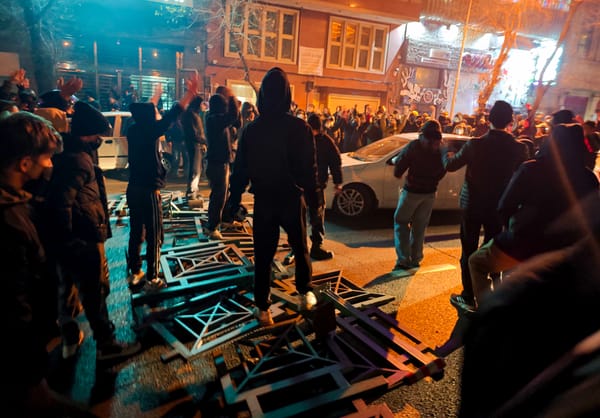
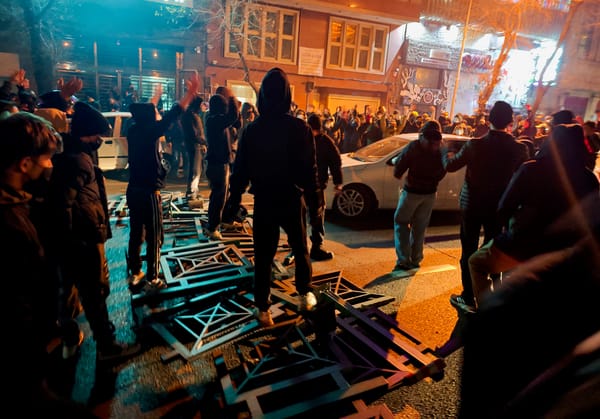
On December 28, 2025, protests erupted across multiple cities in Iran in response to currency collapse and spiraling living costs. As the exchange rate grew more volatile, sections of Tehran’s Grand Bazaar and commercial centers shuttered. Rapidly shifting prices made imports, pricing and trade impossible.
The state moved quickly to implement an emergency measure embedded in its 2025–2026 fiscal-year budget package: It removed preferential foreign exchange rates for essential goods and key production inputs. Officials presented the move as anti-corruption reform and promised direct compensation through cash transfers and targeted support. In practice, the change accelerated an already rapid rise in prices and further eroded purchasing power, shifting the burden onto households. Official inflation in December was reported to be around 42 percent, but the cost of basic groceries rose much faster at 72 percent compared to a year earlier, pushing staples such as bread and dairy out of reach for large segments of the working class. By early January, the removal of preferential foreign exchange rates had only deepened the squeeze on everyday consumption, and protests escalated into mass demonstrations across the country that lasted for weeks.
It was not the first time Iranian officials have provoked unrest by introducing regressive measures in the name of reform. Over the past decade, successive governments have framed price liberalization and currency adjustments as necessary steps to stabilize markets and curb insider profiteering and corruption. In practice, these policies have functioned as austerity measures, transforming service-based welfare programs into cash-based handouts that quickly lose value amid chronic inflation.
The 2010, and later 2019, fuel price hike are notable earlier examples of this shock politics, with the latter fomenting a mass uprising against deteriorating economic conditions. Both protests were put down with lethal repression. The current moment has followed the same arc at a higher intensity. This time, the masked austerity measures were implemented amid an economic protest. By mid-January the government was estimated to have killed thousands and had placed the country under an indefinite communication blackout (internet and phone) in one of the deadliest episodes in the Islamic Republic’s history since the purges of political dissent in the 1980s.