Governing Crisis – Sanctions, Austerity and Social Unrest in Iran
Recent protests triggered by currency collapse and price shocks expose how sanctions have reconfigured state power, enabling austerity and insider accumulation rather than relief.
Recent protests triggered by currency collapse and price shocks expose how sanctions have reconfigured state power, enabling austerity and insider accumulation rather than relief.
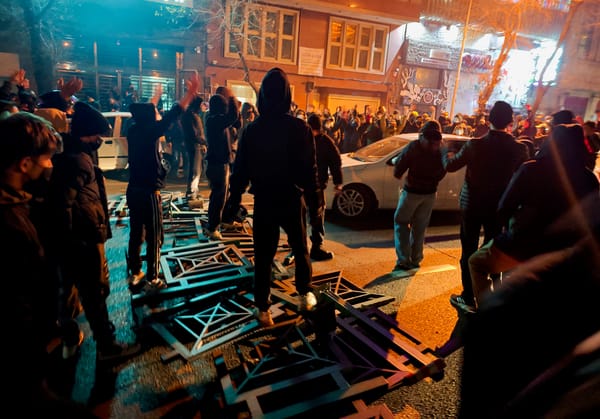
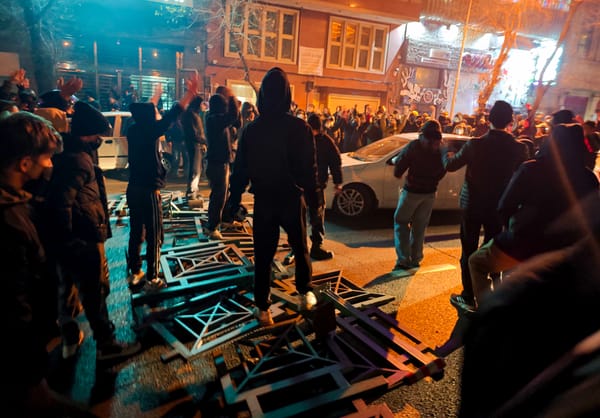
On December 28, 2025, protests erupted across multiple cities in Iran in response to currency collapse and spiraling living costs. As the exchange rate grew more volatile, sections of Tehran’s Grand Bazaar and commercial centers shuttered. Rapidly shifting prices made imports, pricing and trade impossible.
The state moved quickly to implement an emergency measure embedded in its 2025–2026 fiscal-year budget package: It removed preferential foreign exchange rates for essential goods and key production inputs. Officials presented the move as anti-corruption reform and promised direct compensation through cash transfers and targeted support. In practice, the change accelerated an already rapid rise in prices and further eroded purchasing power, shifting the burden onto households. Official inflation in December was reported to be around 42 percent, but the cost of basic groceries rose much faster at 72 percent compared to a year earlier, pushing staples such as bread and dairy out of reach for large segments of the working class. By early January, the removal of preferential foreign exchange rates had only deepened the squeeze on everyday consumption, and protests escalated into mass demonstrations across the country that lasted for weeks.
It was not the first time Iranian officials have provoked unrest by introducing regressive measures in the name of reform. Over the past decade, successive governments have framed price liberalization and currency adjustments as necessary steps to stabilize markets and curb insider profiteering and corruption. In practice, these policies have functioned as austerity measures, transforming service-based welfare programs into cash-based handouts that quickly lose value amid chronic inflation.
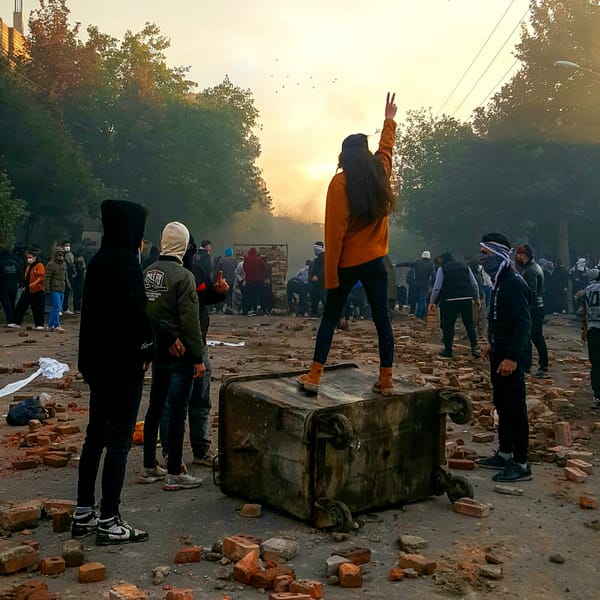
The 2010, and later 2019, fuel price hikes are notable earlier examples of this shock politics, with the latter fomenting a mass uprising against deteriorating economic conditions. Both protests were put down with lethal repression. The current moment has followed the same arc at a higher intensity. This time, the masked austerity measures were implemented amid an economic protest. By mid-January the government was estimated to have killed thousands and had placed the country under an indefinite communication blackout (internet and phone) in one of the deadliest episodes in the Islamic Republic’s history since the purges of political dissent in the 1980s.
Most commentary on political crisis in Iran oscillates between two convenient, reductive narratives. The problem is either corruption and mismanagement, as if Iran’s economy operates in a vacuum untouched by global capitalism, or, echoing the state’s own narrative, sanctions and imperialist hostility are treated as the singular root of the country’s problems. Both stories flatten a complicated reality. The more useful question is how sanctions have been absorbed into Iran’s political economy in ways that serve the interests of the ruling class. Sanctions have not suspended market-oriented restructuring in Iran. They have reshaped it by widening the state’s discretionary power over who gets access to dollars, permits and contracts, and by generating new opportunities for insider profiteering under the guise of reform. Any serious account of Iran’s crisis must confront both the external sanctions regime and the internal machinery that manages crisis through austerity and repression.
Any serious account of Iran’s crisis must confront both the external sanctions regime and the internal machinery that manages crisis through austerity and repression.
Sanctions have shaped Iran’s political economy since 1979, with sharp escalations in 2012 targeting oil and finance, in 2018 after the US withdrawal from the nuclear agreement (when sanctions were reimposed) and again in late 2025 with the reinstatement of UN and EU-level “snapback” sanctions. Over the past 15 years, these punitive measures have translated into chronic inflation, collapsing real wages and a deepening crisis of social reproduction. Since late 2017, livelihood struggles have repeatedly spilled into open contention, from the 2017–2018 uprising to the 2019 fuel protests to recurring, decentralized mobilizations across workplaces and communities. A decade-long wave of organized labor protest has also persisted with teachers, pensioners and contract oil and petrochemical workers mobilizing over contracts, wages, pensions and basic living costs.
Sanctions did not contribute to the crisis simply by reducing resources. They have also reshaped who gains and how. By creating hard-currency shortages and blocking routine cross-border payments, they pushed trade into opaque channels, weakened the currency and made basic pricing increasingly unstable. One outcome is what many inside Iran call the “trustee economy,” referring to the expansion of intermediaries that keep exports moving, especially oil, by routing payments around banking and SWIFT restrictions. These brokers—often linked to state or quasi-state networks—profit through fees, exchange-rate markups and control over when payments are released, including by delaying or withholding export revenues that are supposed to be brought back into the country. Since 2018, official statements have repeatedly claimed that a significant share of export foreign currency has not been repatriated, with some estimates as high as 30 percent, amounting to tens of billions of dollars.
A related but distinct mechanism operates within the domestic economy. The state has attempted to manage volatility through multiple exchange rates, preferential foreign exchange and discretionary import permissions, turning political access into profit. When hard currency is scarce, the state’s allocation regime channels subsidized dollars and import license through institutional gatekeeping that predictively favors politically connected firms, creating lucrative opportunities for those positioned closest to these bottlenecks.
The Debsh Tea company scandal offers one glaring example. Between 2019 and 2022, Debsh Tea, a privately owned importer and producer, received billions of dollars in preferential foreign exchange earmarked for essential imports. In late 2023, Iranian oversight bodies and judiciary-linked reporting alleged that a significant portion of this subsidized currency was not used for the declared imports and was instead diverted into open-market transactions—turning access to cheap dollars into a quick profit by capturing the gap between the preferential and market exchange rates. The sums reported—upwards of $3 billion—was large enough to cover years of national tea demand or finance major public investment.
Not every case becomes a national headline, but the mechanism is familiar. Similar audit controversies have surfaced before, involving preferential access to foreign currency that did not match verified import records or any documented return of the money. One widely cited instance is the Supreme Audit Court dispute over $4.8 billion in preferential foreign exchange reportedly disbursed to importers with no corresponding imports documented.
When the resulting legitimacy crisis becomes intolerable, the state rolls out corrective packages presented as anti-corruption reforms. In practice, these policies entrench austerity and deliver sudden price shocks. Health policy offers a clear example. The Daroyar reform—a 2022 overhaul of drug subsidies—ended preferential foreign exchange for medicine and shifted the subsidy to an insurance-based reimbursement system. In theory, patients would pay less at the pharmacy while insurers and the state covered the difference. In practice, the financing chain never stabilized: Delayed reimbursements and liquidity shortages increased out-of-pocket costs and produced persistent gaps in access for patients and pharmacies alike. Meanwhile, the government captured fiscal gains from changes in the exchange rate, banks benefited as suppliers and importers relied more heavily on high-cost borrowing. Fuel policy has followed a similar pattern. Price hikes were justified as a way to fund targeted redistribution through cash transfers, but transfers quickly lagged behind high inflation, leaving households to absorb the widening gap between what they received and the real cost of fuel.
The broader state response to the sanctions driven fiscal crisis follows a familiar path. Rather than meeting its obligations through stable public funding, it has leaned on privatization, debt-for-asset swaps and “productive use” (Movaledsazi) schemes that transfer public assets into private hands. A notable example is the pension system. Instead of paying down its debt to Social Security in cash, the government has increasingly transferred shares in state-owned firms, effectively forcing the pension system to finance benefits through dividends, asset sales and investment returns. This policy shifts risk onto retirees by tying their livelihoods to market performance and inflation rather than stable entitlements.
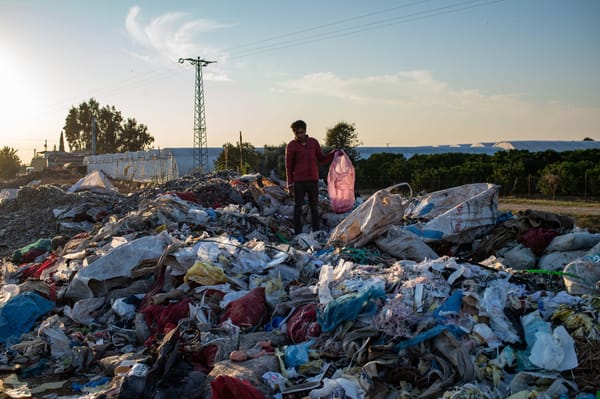
The result is a sanctioned political economy in which austerity becomes a governing tool, and scarcity generates profit for those with privileged access. Instead of protecting households through social provision, so-called anti-corruption reforms shift the costs and risks downward through devaluation and subsidy removal while preserving the allocation systems that advantage well-connected elites. This pattern is widely noted in sanctions-era analyses of inequality and distribution. Recent official estimates put poverty at roughly a third of the population; similarly, the World Bank estimates that close to 10 million people fell into poverty over the past decade.
The result is a sanctioned political economy in which austerity becomes a governing tool, and scarcity generates profit for those with privileged access.
The downward redistribution is visible in how quickly economic shocks travel outward from the commercial core to outlying towns and provinces and in the forms of anger they produce. In western Iran’s long marginalized regions, in towns like Abdanan, the crisis has hit earlier and harder than in many central provinces, leaving deep underinvestment, high unemployment and entrenched poverty. During the recent protest wave, demonstrators stormed a supermarket and tore open bags of rice, scattering the grain across the floor and into the street rather than carrying it away. By late December, a 10kg bag of rice was selling for around several million toman, roughly equivalent to a month of minimum wage income. The gesture was not theft so much as refusal and a public rejection of a system that turns a basic staple into a luxury while demanding that people accept humiliation as everyday submission.
When crisis is managed through shock transfer rather than redistribution, policy becomes part of the problem, producing a vicious cycle. As economic instability intensifies, the state responds with new rounds of austerity framed as reform. Households do not experience these measures as repair; they experience them as a cost shift that deepens the crisis of everyday survival. The usual channels for complaint and mediation lose credibility. People can petition officials and institutions, but those same institutions are either implementing the damaging reforms or lack the power to reverse them. As that legitimacy erodes, pressure accumulates until a trigger can diffuse economic hardship into a national protest moment. Once dissent spills outside institutional channels, the state increasingly treats it as disorder. With fewer credible mechanisms of incorporation left, repression becomes routine because it is the only tool remaining to retain control.
What has made this round of uprisings deadlier is the interplay between external and internal escalation. Iranians did not need outside encouragement to come to the streets: The currency collapse, unmatched wages to inflation and erosion of everyday survival were sufficient conditions for revolt. Rather, external escalation has raised the cost of dissent in a different way—less through material support than through narrative and signaling. When US and Israeli officials cast the protests as a theater of war and regime change, the state can more easily reframe mass dissent as a security threat and respond with counterinsurgency-style repression.
When US and Israeli officials cast the protests as a theater of war and regime change, the state can more easily reframe mass dissent as a security threat and respond with counterinsurgency-style repression.
Exiled opposition figures, most prominently the wannabe king, Reza Pahlavi (son of Iran’s deposed Shah in the 1979 revolution) have tried to cast the uprising as a transition movement and have urged escalation, including repeated calls for foreign intervention to facilitate Pahlavi’s return as the national leader. At the same time, US and Israeli officials have publicly gestured at their own involvement, boasting of assets on the ground, speaking casually of arming protestors and promising “help is on the way.” Their posturing only serves to strengthen the state’s claim that dissent is a foreign operation. Iranian officials have in turn framed the protests as an extension of the 12-day war with Israel in June 2025.
The result is a two-sided narrative that benefits everyone except ordinary Iranians. On one side, external signaling transforms real popular dissent into a proxy battlefield where death becomes collateral damage on the road to regime change. On the other, the Islamic Republic treats all regime change rhetoric as proof that protestors are terrorists, spies and enemy assets rather than citizens with legitimate grievances. In this sense, the response of the Iranian state and the politics of external powers share a core feature: both treat Iranian lives as expendable for the needs of power and profit.
The protests may be suppressed for now, but the conditions that generated them remain unchanged. There is little evidence that the state is able or willing to undertake the structural and welfare reforms needed to fundamentally address the crisis of everyday survival. While it cannot directly lift sanctions, it has shown little interest in reducing household exposure to inflation, curbing precarious living conditions or rebuilding the minimum credibility of welfare and representation. Currency instability and price volatility are increasingly governed as normal conditions, not emergencies to be solved. With each turn of the cycle from austerity to protest, the crisis deepens and heavier force becomes the default method of control. What comes next is uncertain, but the direction is not. As long as crisis is managed through austerity and bullets, and as long as external powers treat Iranian lives as instruments of pressure and regime change, the costs will keep rising and more will die.
[Ida Nikou holds a PhD in sociology from Stony Brook University.]
Editor's note: Due to the ongoing internet shutdown in Iran, some Iran-based websites were inaccessible at the time of publication. Links are nonetheless included for reference.
Support MERIP in providing critical, grounded reporting and analysis. Make a one-time or monthly donation today!