Death—or at least the manner in which it occurs—is central to Aslı Odman’s understanding of life. For the past decade and a half, the 50-year-old lecturer at Mimar Sinan Fine Arts University’s department of urban and regional planning in Istanbul, Turkey, has spent much of her free time scanning local media reports and talking to her network of informants, tracking down people who have died in workplace accidents.

The list is long. Turkey, despite its inclusion in the G20 and membership in the Organization of Economic Cooperation and Development (OECD), ranks among the world’s worst places for such deaths. In 2024, 1,987 people died while engaged in activities related to their work, an average of more than five people per day, according to İSİG Meclisi, the Istanbul-based non-governmental organization of which Odman is a founding member. Statistics from the International Labour Organization paint an equally grim picture: 11.2 people died in Turkey for every 100,000 workers in 2024. In Britain, that number was 0.8.

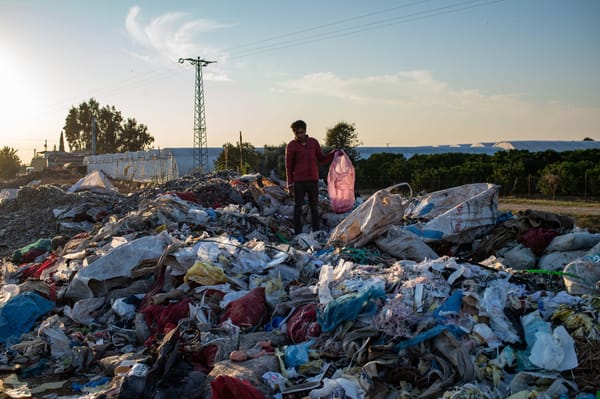
Few who visit Istanbul see this dark underbelly, though its intimations are all over the city: in the raucous alleyways of the historic Pera district, with its bars, restaurants and boutique shops, where garbage pickers dig through bins for plastic scraps; in the many outlet malls selling discounted name brands cut and stitched in the garment factories scattered around the city; and slightly further afield in the booming suburban outskirts where the landscape bristles with construction cranes erecting shiny new residential towers advertising luxury lifestyles to a mostly international audience. 

The recorded number of lives lost to these industries, as shocking as it is, only represents the “tip of the iceberg,” Odman says. The figures are based on what she and her fellow volunteers at İSİG Meclisi can find in public records or glean from their network of contacts. The worst cases sometimes break through into the Turkish media, like the 2023 death of Vezir Mohammad Nourtani, an undocumented Afghan laborer killed by his boss and five accomplices at an illegal coal mine in Zonguldak, on Turkey’s Black Sea coast. Most, however, go uncounted, especially when it comes to undocumented workers who lack family ties in Turkey, and in some cases even proper identification, like the case of Arifullah Fazli, the undocumented Afghan laborer whose death I stumbled into while investigating migrant labor exploitation in Turkey’s recycling sector in late 2022. Fazli died while attempting to dislodge plastic waste that had become stuck in an industrial compactor, and until today there has been no accountability. Deaths like Fazli’s quietly disappear into a legal and bureaucratic maze, their bodies either buried in the many Cemeteries of the Unnamed (Kimsesiz Mezarlığı) scattered around the country or quietly returned to their families back home.  

Turkey’s rapid economic growth over the past quarter century under the leadership of the Justice and Development Party (AKP) has relied heavily on labor-intensive industries—mining, construction, textiles, recycling—all of which are top contributors to İSİG Meclisi’s list of workplace deaths. In this constellation, the recycling sector has been particularly deadly, Odman says. Like ship breaking—where she first began looking at such crimes—plastic recycling is a labor-intensive activity that processes highly toxic waste materials, much of them imported, in dangerous work environments. Both industries face tight profit margins and try to widen them by exploiting undocumented labor and bypassing regulations meant to keep humans as well as the environment safe. Unlike ship breaking, though, plastic recycling has enjoyed special treatment in Turkey in recent years.

 In 2017, just as China was preparing to exit the global trade in plastic waste, the AKP launched its Zero Waste Project, led by Turkey’s First Lady, Emine Erdoğan. With the goal of making Turkey a world leader in waste management and recycling, the government showered both industries with tax exemptions and cheap loans, among other incentives. With China’s exit, wealthy nations, including those in Europe, scrambled to find new destinations for their trash. Exports to Turkey skyrocketed, jumping from under 100 million kilograms in 2017 to 425 million in 2024. The Zero Waste Project has been lauded by the United Nations, the World Bank and the Food and Agriculture Organization, and Turkey’s First Lady now chairs the UN’s High-Level Advisory Board on Zero Waste. In its eighth year, the pro-government newspaper Daily Sabah claims the project has helped raise the domestic recycling rate from 13 percent to 36 percent while adding 7.5 billion euros to the Turkish economy.

But behind the accolades are some sobering realities. Regulations to clean up Turkey’s recycling sector have failed. By its nature, the recycling industry is notoriously ineffective and unprofitable. In its entire 40-odd-year history, it has only managed to transform around 9 percent of plastic waste into new plastic products, and even that only in degraded forms, limiting the number of times it can be recycled. Like China before it, Turkey has struggled to bring the illicit trade in plastic waste under control, taking in hundreds of thousands of tons of dirty, often unrecyclable, waste from Europe every year. To turn a profit, the sector has relied on undocumented migrants, who provide a ready supply of cheap, disposable labor to sort, shred, bury and burn much of that waste. Odman’s data shows that starting in 2018, as exports of plastic waste to Turkey increased, so did the proportion of migrant deaths in Turkey’s recycling sector, more than doubling by 2022. 

Each death traces the arc of two converging stories: On one side are the poor and desperate, arriving in Turkey from the east through a gauntlet of border guards, smugglers and criminals; on the other is a growing mountain of trash, the discarded remnants of voracious western lifestyles, slipping unaccounted through ports and past regulators to be bought, reclassified and resold by shady brokers.

The Rules and How to Break Them

Before departing a European port, each piece of plastic must be classified into one of two categories: green or amber. The most valuable is uncontaminated, single-polymer plastic (or a specific polymer mixture), known as green-listed waste; less valuable is contaminated and mixed waste, meaning plastic that contains toxic additives or is tainted by household or industrial products. Mixed can also mean unsorted waste, which lowers its value because of the labor costs associated with sorting it. Under European regulatory regimes, all of this waste is amber-listed.

The trade in green-listed waste between EU and OECD countries is, at least for now, relatively free from oversight. When it comes to exports to non-OECD countries, even green-listed waste requires prior notification and consent from the receiving country, an onerous process in which the exporter—mostly waste management and recycling companies—must detail the route the waste will take, the company that will receive it and proof that the receiving company has the capacity to process the waste in an environmentally sound way. Amber-listed waste is currently banned for export to all non-OECD countries while exports to OECD countries require the same complicated and lengthy bureaucratic process non-OECD countries face importing clean waste.

Recycling companies seeking ways to get rid of unprofitable plastic waste will use tactics like mislabeling waste as green-listed when it is in fact amber and paying companies in the destination country to receive it anyway.

The rules are elaborate and ripe for circumvention. Recycling companies seeking ways to get rid of unprofitable plastic waste will use tactics like mislabeling waste as green-listed when it is in fact amber and paying companies in the destination country to receive it anyway. The latter occurs regularly with waste from Europe, particularly Britain and German waste transiting through the port in Rotterdam: Europe’s logistics hub for the plastic waste trade. Clean waste may also be front-loaded in a shipping container to obscure mixed or contaminated waste hidden behind it.

The bustling illicit trade has spawned a new category of middlemen, often just a single person with a laptop hired by exporters to facilitate the process. These so-called “waste brokers” were supposed to help provide a more integrated approach to managing commodified waste streams like plastic. Instead, they have become an integral part of circumventing the regulations. In 2023, a report by the Environmental Investigation Agency (EIA), an independent environmental watchdog based in Britain, found that Dutch middlemen play a key role in facilitating illegal shipments of British plastic waste to Turkey. A year later, the Dutch Environmental Crime Threat Assessment, published annually by the Dutch government department tasked with monitoring waste exports, came to the same conclusion. Its covert investigation into how these brokers operate found that they often buy the lowest quality waste at a discounted price. “The batches are resold by these dubious traders, sometimes several times, passing via other traders or through different countries, making the flow untraceable,” the investigation found. “Ultimately, the waste is exported illegally to Asia and Turkey, for example, where it is not properly processed.”

Not only are the rules easy to circumvent, breaking them comes with minimal costs. When illicit exports are discovered, the brokers claim to be merely facilitators and blame the exporting company for the rule-breaking. Moreover, for every illicit shipment identified, potentially thousands more are slipping through undetected. The waste trade system relies primarily on documentation from the exporter about the nature of the waste and the reliability of the receiving company to process it. The only way to verify the documents is to physically inspect the shipping containers, but in Britain and The Netherlands, whose ports are responsible for the vast majority of European plastic waste exports to Turkey, there are only five and 14 inspectors respectively. Rotterdam port alone handles more than one million shipping containers of European waste every year. “So, you can imagine, we also need the collaboration of other partners,” Enno Christan, one of the Dutch inspectors told me. 

It is hard to fault the inspectors for the weak oversight. The resources and tools they have to inspect waste can be paper thin and, frankly, crude, including a smell test where inspectors will open a shipping container and determine by the odor if contaminated waste is being mislabeled as clean. Even advanced sorting guns that use near-infrared (NIR) spectroscopy have limited efficacy: They can only inspect what is directly under the sensor, making it difficult to determine the content of an entire container without the time-consuming work of physically opening and unloading it.

A chemical engineer at a recycling facility in Istanbul’s Bayrampaşa district, requesting anonymity to protect his employer’s reputation, told me he regularly received mixed plastic waste from Vanden. One of Britain’s largest plastic waste exporters to Turkey, last year the company announced that it would be cutting out the recycling component of its operation entirely, passing on the messiest—and least profitable—stage in the recycled plastics supply chain to its clients around the world. “When you see this,” he said, pointing to shards of plastic in a large polypropylene sack at the recycling facility, “it’s almost the same—the materials, the colors, maybe hardness. Very similar.” It was only by opening the bags of waste and testing the plastic that he was able to confirm that it was, in fact, mixed waste. Once that was done, the shipment should have been flagged and returned to Britain. Instead, the engineer told me, upon such discoveries his company would settle the matter internally with Vanden, negotiating discounts for future shipments. “To send back to UK or Europe,” he said, “is very complicated.”

Neither Vanden’s office in Turkey nor its office in Britain responded to multiple requests for comment, and I was unable to independently verify the chemical engineer's claim. But according to a 2025 investigation I helped produce, in partnership with the British environmental news organization, ENDS Report, some of Britain’s top plastic waste exporters to Turkey, including Roydon Resource Recovery and Monoworld, have been caught repeatedly breaking the rules. Amy Youngman, the EIA’s legal and policy specialist, told me these companies are rarely punished in any way that might jeopardize their operations. “Because they’re seen as performing an essential service, helping governments meet the recycling targets they’ve promised the public,” she said, “they’re considered too big to fail.”

The reluctance of governments to hold large companies to account has made tackling the issue much more complicated, a researcher with the Dutch department tasked with monitoring waste exports told me recently at a gathering of waste crime experts in Amsterdam, requesting anonymity. The illicit trade in plastic waste, she said, is “the white-collar environmental crime,” dominated by established companies that rely on fraudulent documentation, unscrupulous middlemen and a lack of oversight in pursuit of higher profits. Its victims are the world’s most marginalized and vulnerable, young men and boys like Arifullah Fazli, caught in the endless churn of plastic waste and the profits it generates.

‘These Deaths Happen Every Day’ 

On July 1, 2025, I received a video from Aslı Odman on WhatsApp. It depicted a June incident at a major recycling facility in Antalya’s government-sponsored Organized Industrial Zone. A worker, who appeared to be a teenager, had fallen into an industrial shredder while trying to push through plastic waste with his feet and was being removed from the machine by paramedics, still alive, his legs missing. He was from Uzbekistan, the source of a large number of laborers in Turkey, many of them without legal documentation. Unlike Fazli’s death in an obscure factory in a far-off corner of Istanbul’s industrial wastelands, this incident occurred at the symbolic heart of the new, industrialized Turkey, drawing the attention of Turkish media.

Organized Industrial Zones are government-supported districts where key industries receive economic incentives to help them establish Turkish expertise and bring in foreign investment. The Antalya Zone is home to at least seven recycling facilities. Turkish press reports did not identify the one where the incident occurred, nor did any report delve into the employment status of the Uzbek worker. 

The lack of details in media reports was not surprising. Recycling’s privileged position, including Emine Erdoğan’s connection to the Zero Waste Project, means many of the owners of major recycling operations boast powerful political allies. “Most of the recyclers—I mean the big ones of course—have a connection with one party or another,” said Sedat Gündoğdu, a marine biologist at Çukurova University and one of Turkey’s leading experts on plastic pollution. “For instance, Adanus Plastic: The owner is the former manager of the ruling party branch in the Yureğir district in Adana. Another is a member of local parliament in a political party. But some importers have strong connections with the opposition party, too, like SASA, which is one of the largest polyester producers, and also importing PET, the waste,” he told me, referring to the common polyester plastic used for drink bottles and food containers. “Now, the CEO of this group is a former opposition party parliamentarian.”

Given the powerful forces behind the industry, those who have a stake in it have little tolerance for critique. Last April, when I confronted the president of Istanbul’s recyclers association, Yuksel Yilmaz, about the deaths in his sector, his categorical denials bordered on the absurd. “There is absolutely no illegal activity in Turkey—no such thing,” he said. “Right now, our sector is actually better than Europe’s with its machinery, equipment, organization and the importance given to workers. Occupational health and safety are at the highest level.”

Industry representatives like Yilmaz say Turkey has solved the Gordian knot of illicit activity in the waste trade and profiteering in the recycling sector, something even a rising superpower like China failed to untangle. They point to the MoTAT system, Turkey’s mobile hazardous waste tracking network, which uses GPS trackers on shipping containers to monitor the movement of imported waste from the moment it enters Turkey until it is delivered to the processing facility. Yilmaz insisted the system ensures waste goes where it is intended and cannot be diverted.

But there is reason to doubt these claims. Assuming hazardous (amber-listed) waste is correctly labeled when it arrives in Turkey, which is often not the case, and makes an uninterrupted journey to the intended importer, once it arrives at that facility oversight comes to an end. Often the importing company will state on paper that it has the capacity to handle the entire recycling process, including cleaning, sorting and shredding, Gündoğdu said, but in fact it will subcontract that work—the most labor intensive—out to another, often unlicensed, facility, like the one where Fazli died. “The waste is removed from the MoTAT-tagged shipping container and loaded onto another truck,” Gündoğdu explained, “at which point it’s no longer tracked in the system. It can then go wherever. I see these trucks full of waste on Turkey’s roads all the time.”

New rules coming into effect in November 2026 will make Turkey even more central to Europe’s waste management strategy. As an OECD country, Turkey will then be one of the few non-EU nations authorized to import waste from European nations. The regulations also attempt to tighten oversight of European plastic waste exports. For instance, even exports of green-listed waste to OECD countries outside the EU will require prior notification and consent from the receiving country. Turkish recyclers will need to be audited by an independent third party before they are allowed to receive imported waste. But that procedure is unlikely to prevent violations, Gündoğdu told me. In fact, these audits have already been adopted in Turkey via a government licensing regime for Turkish importers, but corruption—whether bribes or connections with influential local politicians—makes licenses too easy to obtain.

Recycling, when it is possible, is dirty and expensive. It requires cheap, disposable bodies to be economically viable. Multiple Turkish recyclers told me it would be impossible to make a profit in the sector without using migrant labor.

The problem, most experts agree, is that the new regulations do not address the overarching issue at play: Recycling, when it is possible, is dirty and expensive. It requires cheap, disposable bodies to be economically viable. Multiple Turkish recyclers told me it would be impossible to make a profit in the sector without using migrant labor. Everyone is doing it, I was told whenever I walked into a recycling facility and found migrant laborers working there, from the small, unlicensed operators in Cebeci to the major players in industrial cities like Gebze, Adana and Antalya.

Meanwhile, the levels of plastic waste are rising quickly. In the absence of laws to massively reduce virgin plastic production and its use in our societies, the pressure to export more waste will only increase, leading to more abuse and more dead workers in Turkey. Such deaths have already become so common that a Taliban official at the Afghan consulate in Istanbul was surprised when I told him I was investigating them. “These deaths happen every day,” he said. “This is not a story.” 

‘The Most Exploitable Workers in Turkey’

For Aslı Odman, every death reveals something meaningful. The patchwork narrative of Turkey’s economic rise, she says, is a macabre quilt of tragic tales, feverishly stitched together with little regard for the lives caught up in its growth calculus. Undocumented workers have become an essential resource for Turkey, she says.

“The employers, small ones, but also the big ones, they can afford to let an undocumented migrant worker die,” she says. “We call it blood money. If the family is in Turkey, it gets blood money so it doesn't follow the penal case. They don't run after it. They get the blood money and they’re out. An employer can really calculate how many workers he can let die during the work process and continue to make a profit.”

It is doubtful Arifullah Fazli’s family received any blood money. Despite several attempts I was not able to reach them because of the remoteness of their village in Afghanistan. Three years after his death, the investigation has not made much progress, primarily because there is no family member in Turkey to keep the case moving forward, lawyers in Istanbul told me. A quiet, gentle person who never spoke a bad word about anyone, according to co-workers, his goal was to reach Europe and earn some money to help his family survive the devastating collapse of the Afghan economy after the Taliban takeover of Afghanistan.

Turkey, because of its geographical location, is destined to be a transit country for people like Fazli, seeking refuge from war, environmental disaster and economic collapse. And its vast pool of refugees—2.7 million officially registered as of November 2025—provides an obvious source of cheap labor.

Turkey, because of its geographical location, is destined to be a transit country for people like Fazli, seeking refuge from war, environmental disaster and economic collapse. And its vast pool of refugees—2.7 million officially registered as of November 2025—provides an obvious source of cheap labor. Unofficially, the numbers are thought to be even higher. Because of Turkey’s special status under the 1951 Refugee Convention whereby most refugees are classified as “conditional,” their treatment is governed less by international norms and more by internal contingencies, often political. Many irregular migrants choose not to register as refugees because the process under Turkish law can be onerous and time consuming, often forcing already traumatized people to live in remote cities in Turkey’s interior. This situation leaves them without a clear path to resettlement or the right to work and with no access to the networks that can help sustain them financially and psychologically.

These undocumented migrants are the most vulnerable and the most in demand in Turkey’s deadliest industries, including recycling. “Afghans are better for the employer than Syrians, for example, because they're more destitute,” Odman tells me. “They are therefore the most exploitable workers in Turkey.”

Ercüment Akdeniz, a journalist and the former chairman of the Labour Party, described to me a hierarchy of migrant value in Turkey. Syrians, because of the 2016 Turkey-EU migration deal, are entitled to some level of government support. Iranians, he said, tend to be better-educated political refugees who work white-collar jobs like teachers, doctors and skilled workers. Sub-Saharan Africans are in demand in the warehousing sector. Uzbek and Turkmen, because of their language skills, work in the entertainment, tourism and restaurant sectors. “When we look at Afghans,” Akdeniz said, “we see them mostly in animal husbandry, agriculture, textile and construction. In the field of waste paper, plastic and recycling, from what I have observed, Pakistanis are the most common workers. Then come Afghans, followed by Syrians and others.”

But things are changing. When I began investigating Turkey’s recycling sector in 2022, Afghans were facing a mass deportation campaign as the AKP tried to calm growing discontent over the numbers of refugees and migrants in Turkey. Many Afghan workers had gone underground, living inside the factories where they worked, under constant fear of arrest. When I returned to Istanbul in the spring of 2025, Afghans were mostly gone from Istanbul’s recycling districts, replaced by Syrians and young men and boys from Sub-Saharan Africa. Pakistanis were still there, struggling and searching desperately for a way to escape to Europe.

Odman believes the reliance on this kind of easily exploitable labor will not end in Turkey any time soon. Despite the deportation campaigns, cheap undocumented labor remains the backbone of many industrial sectors. As Europe continues to fortify its borders, many will find themselves trapped in Turkey, at the mercy of exploitative bosses. And deaths will continue. Odman says she and her colleagues at İSİG Meclisi are prepared to spend the rest of their lives documenting who these people were. For them, it is necessary work.

“We do this, first of all, to say: you exist,” she tells me. “You exist by dying. We keep the data with their names and ages and nationalities, sometimes the hour they die, the conditions under which they die. It's an homage after they die. But we do it in order to defend life.” 

This investigation was developed with the support of Journalismfund Europe. A version of the article is forthcoming, in Dutch, for De Groene Amsterdammer.

[Adnan Khan is a freelance journalist based between the Netherlands and Turkey.]

Support MERIP

Support MERIP during our year-end campaign! Make a one-time or monthly donation today!

DONATE NOW!

Share this post

Written by

The Politics of “Unskilled" Labor in Qatar—An Interview with Natasha Iskander

The Politics of “Unskilled" Labor in Qatar—An Interview with Natasha Iskander

'We Want to Breathe'—Dispatch from Gabes, Tunisia

Dhouha Djerbi 8 min read

The Limits of Protection and Profits—Five Years into the Abraham Accords

Arang Keshavarzian 11 min read

On the Road to Rafah—The Sumud Convoy and New Maghrebi Geographies of Resistance

Raouf Farrah 12 min read